Solstice’s Nanadie drilling reshapes its copper-gold ambitions

Solstice Minerals has emerged from FY2026 with a larger exploration story, a A$45.3 million liquidity base and drilling that extends Nanadie beyond its existing resource footprint. The company remains loss-making and pre-production, leaving future value tied to resource growth and exploration execution.
- 629.1m composite intercept at 0.50% copper and 0.17g/t gold
- Nanadie mineralisation identified across at least 1.3km of strike
- A$32.6m placement lifted cash and short-term deposits to A$45.3m
- FY2026 comprehensive loss widened to A$9.16m
- Yarri and Ringlock could be sold or demerged after strategic review

Nanadie drilling drives Solstice’s transformation
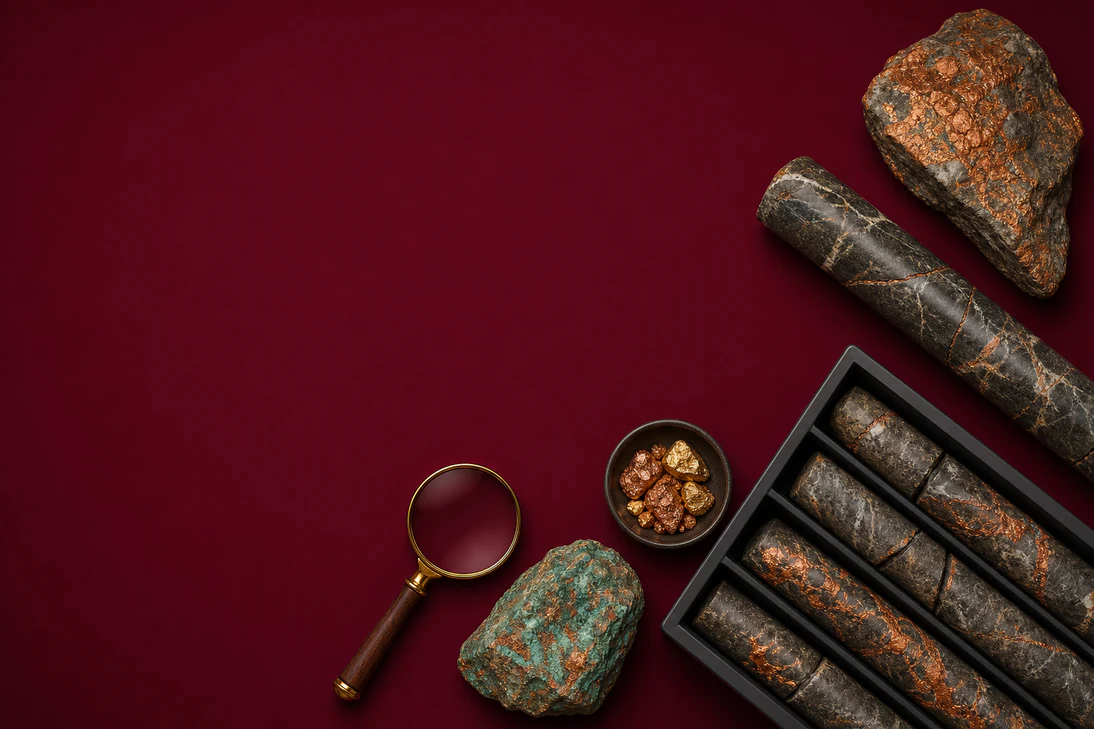
The numbers that matter most in Solstice Minerals Limited’s (ASX:SLS) annual report are underground, not on the income statement. Its first diamond hole at the Nanadie Copper-Gold Project returned a 629.1-metre composite interval grading 0.50% copper and 0.17 grams per tonne gold from surface to end of hole. The interval includes oxide material and zones of unmineralised waste, so it is not a standalone estimate of mineable ore, but it has materially expanded the exploration narrative around the Western Australian project.
Solstice says drilling has now outlined mineralisation over at least 1.3 kilometres of strike and remains open at depth. One hole, NRCD005, intersected more than 1% copper roughly 700 metres vertically below surface and about 500 metres below the current resource. At 30 June 2026, however, the formal Nanadie resource remained an Inferred estimate of 40.4 million tonnes at 0.40% copper and 0.10g/t gold, containing 162,000 tonnes of copper and 130,000 ounces of gold. The drilling has expanded the company’s exploration targets, not yet its reported resource.
A well-funded exploration campaign
The balance sheet gives Solstice room to keep testing that gap. The company raised approximately A$32.6 million through a placement at A$1 a share during the year, while option exercises added a further A$6.24 million in cash. It finished June with A$15.26 million in cash and A$30 million in term deposits, or A$45.26 million across cash and short-term deposits. Solstice reported no debt.
That funding is being deployed aggressively: two reverse-circulation rigs and one diamond rig were operating at Nanadie at year-end, with another diamond rig planned. The company had completed and received assays for 32 RC holes totalling 7,560 metres, while 11 diamond tails accounted for 2,574 metres of core. Several additional diamond holes remained pending assays at the reporting date, leaving the next resource update dependent on both geological continuity and the quality of those results.
Financial loss reflects exploration intensity
Solstice’s comprehensive loss widened to A$9.16 million from A$3.03 million a year earlier, while exploration and evaluation costs rose to A$6.83 million from A$2.70 million. The company said its accounting policy expenses exploration expenditure incurred after acquiring exploration rights and before a final investment decision. Share-based payment expense also increased to A$2.03 million.
Those figures describe an explorer rather than a producer: there is no operating revenue and no dividend. Operating cash outflow increased to A$6.66 million, although the capital raising and option exercises more than offset that spending during the year. The current cash position supports the planned programme, but Solstice acknowledges that unplanned activity or a larger development effort could require additional funding, potentially through further equity.
Gold portfolio placed under review
Nanadie is now the clear priority, and that has prompted Solstice to review its Eastern Goldfields assets. The company is considering a potential full or partial sale, or a demerger, of the Yarri and Ringlock projects. Any demerger would require shareholder and other approvals, and the report does not establish that a transaction will proceed.
The assets still have exploration appeal. At Yarri, the Bluetooth prospect has produced shallow gold intercepts including 18 metres at 3.06g/t, while Edjudina Range drilling confirmed high-grade structures in fresh rock. Ringlock, meanwhile, retains nickel sulphide and untested gold potential. The strategic question is whether these projects are worth more inside a diversified exploration vehicle or as separately funded assets, particularly while management concentrates capital and attention on Nanadie.
The next test is resource conversion
Solstice has successfully turned Nanadie from a modest inferred resource into a much larger drilling proposition. That is an important exploration milestone, but not the same thing as demonstrating economic viability. Metallurgy, continuity, resource confidence, permitting, development studies and future copper prices will determine whether the broad intercepts can ultimately support a mine.
The immediate catalysts are more assays, continued drilling through the balance of 2026 and a potential update to the Nanadie resource. The company’s challenge is now less about finding mineralisation than proving how much of it is continuous, recoverable and economically relevant before the exploration budget begins to look like a development budget.
Bottom Line?
Nanadie has supplied the scale and the funding is in place to keep drilling, but the decisive step is converting wide exploration intercepts into a higher-confidence resource and a credible development case.
Questions in the middle?
- How much will the pending diamond and RC assays add to Nanadie’s formal resource?
- Can the 1.3-kilometre mineralised system demonstrate sufficient continuity and metallurgy for future development studies?
- Will Yarri and Ringlock be sold, demerged or retained, and what value could that decision unlock for shareholders?