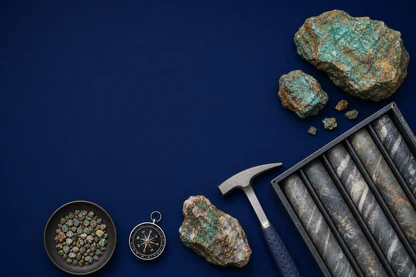
CZR uncovers deeper high-grade gold at Croydon as iron targets expand

CZR Resources has reported its strongest Top Camp gold intercept to date, including 0.70 metres at 67.2 grams per tonne, while rock chips point to high-grade iron targets near BHP’s Yarrie operations. The results strengthen the exploration case, but further drilling is needed to establish continuity, thickness and scale.
- 3.66m at 13.6g/t gold from 151.8m, including 0.70m at 67.2g/t
- Second Top Camp lode returns 3.97m at 5.11g/t gold from 264.2m
- Eight of 22 iron-bearing Yarrie samples exceed 60% Fe
- Yarraloola sampling returns up to 58.27% Fe across the Darnells area
- RC drilling has recommenced at Croydon, with iron-project drilling targeted for 2027
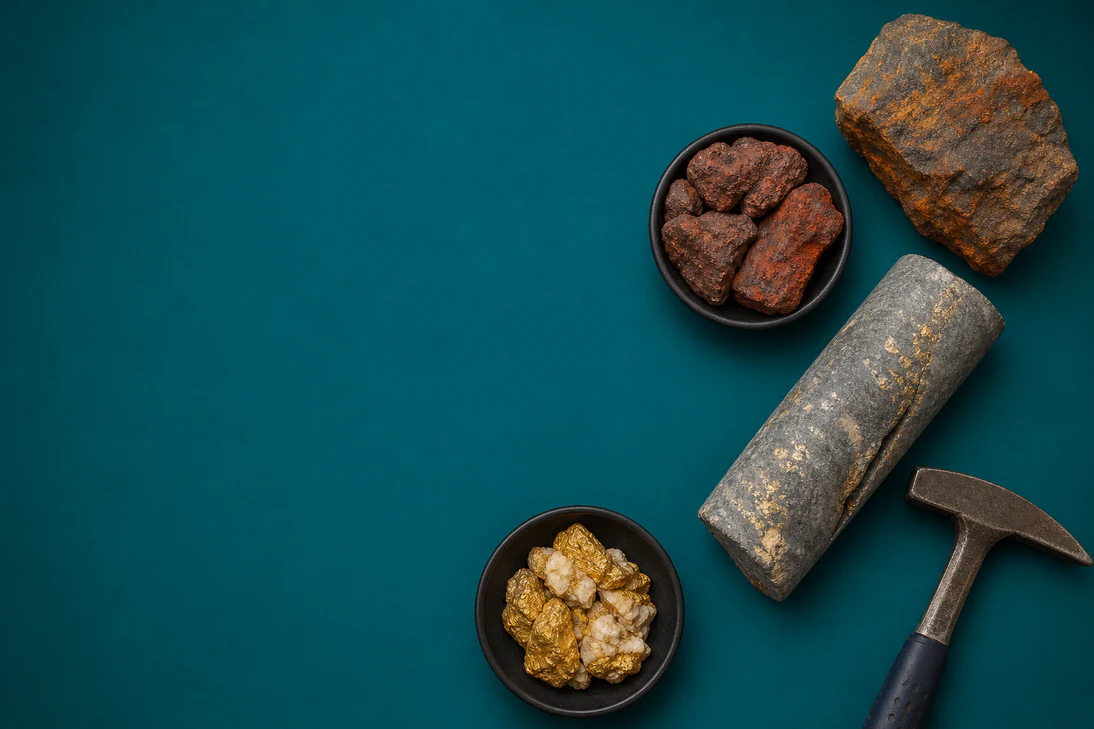
 Add us as a preferred source on Google
Top Camp delivers CZR’s strongest gold intercept
CZR Resources Ltd (ASX:CZR) has extended the high-grade core of its Top Camp discovery at the Croydon Gold Project, with a diamond hole returning 3.66 metres at 13.6 grams per tonne gold from 151.8 metres. The interval includes 0.70 metres at 67.2g/t, the best result reported from Top Camp to date.
The same hole identified a second high-grade zone deeper down, returning 3.97 metres at 5.11g/t gold from 264.2 metres, including 0.99 metres at 20.0g/t. CZR said the results extend mineralisation down-dip and at depth, and support an interpretation of multiple lodes within a north-plunging shoot. The widths are downhole measurements; the company estimates true widths at 70% to 90% of those figures.
The result builds on the earlier Top Camp drilling, which reported a 7.7-metre intersection at 2.09g/t gold. But the latest four-hole diamond program also contained an important qualification: one hole returned no significant gold in its strongly altered zones, while another produced only 3.65 metres at 0.54g/t. CZR said this may indicate the high-grade plunge is steeper or more tightly constrained than initially interpreted.
Yarrie samples outline iron targets beside BHP operations
The announcement also broadens CZR’s exploration story beyond gold. At Yarrie, 22 iron-bearing rock-chip samples were collected across the Kennedy Gap, Cabbage Tree and DeGrey prospects, with eight grading above 60% iron. The standout results were 67.91% Fe at DeGrey, 66.58% at Cabbage Tree and 66.33% at Kennedy Gap.
Kennedy Gap sits on the northern boundary of BHP’s Yarrie site, where mining operations extend to the tenement boundary. CZR said the latest sampling expanded the prospective target area to approximately 800 metres by 350 metres and is now assessing drilling plans. At Cabbage Tree, the results sit near historical high-grade drilling, while the DeGrey sample came from blue-grey hematite that may point to a buried structural target. Rock chips, however, establish grade at sampled outcrop rather than thickness or continuity.
Yarraloola sampling reinforces Darnells CID potential
At Yarraloola, a follow-up program of 69 samples across Darnells returned grades of up to 58.27% Fe. The strongest new assays included 58.27%, 57.71% and 56.10% Fe, with textures such as pisoidal hematite cores, vitreous goethite and fossil wood that CZR describes as characteristic of mature channel iron deposit mineralisation.
Combined with the 35 samples reported in July, the program now covers 104 samples across a substantial portion of the tenement. A completed LiDAR survey will be used to rank targets by tonnage, grade and access, although heritage surveys are expected before drilling can begin, likely in early 2027. CZR’s previous update had already reported Yarraloola iron results of up to 60.05% Fe, making the latest work more of an extension of the target-generation case than a standalone discovery.
RC drilling returns as follow-up work moves into view
RC drilling has recommenced at Croydon, targeting the Franks Patch and Baskerville areas after recent aircore results. CZR plans to use slim-line RC drilling to test beneath those intersections and into fresh rock, while further RC work at Top Camp is intended to define the extent of the high-grade mineralisation and test its up-plunge zone.
The immediate investment question is whether the striking Top Camp grades can be connected into a coherent body rather than remaining isolated high-grade intercepts. CZR says there are not yet enough drill samples for a mineral resource estimate. At Yarrie and Yarraloola, the next evidence will need to come from drilling that demonstrates thickness, continuity and mineable geometry, not simply more attractive surface assays.
Bottom Line?
The next Croydon drilling should show whether Top Camp’s high grades form a continuous shoot, while the iron prospects still require heritage clearance and drilling before their scale can be judged.
Questions in the middle?
- Can follow-up RC drilling confirm continuity around the high-grade Top Camp intercepts and clarify the plunge geometry?
- Will drilling at Yarrie convert the strong surface iron grades into sufficiently thick and continuous mineralisation?
- How much of the Yarraloola Darnells target will remain high-grade once heritage access and subsurface testing begin?
Sources
1-
High-grade results extend Top Camp gold discovery (opens in a new tab)Verified source. CZR Resources Ltd · 19 Oct 2026