AGC Finds More Gold in Evergreen’s Historic Core

Australian Gold and Copper has uncovered previously untested gold mineralisation across a 1.9km corridor at Evergreen after assaying 2,161 historic core and RC samples. The results add shallow oxide hits while further RC assays and a proposed 3,000m drilling program remain ahead.
- 2,161 historic core and RC samples assayed
- 3m at 2.0g/t gold from 99m in BRD018
- 6m at 1.1g/t gold from 155m in BRD012
- Gold mineralisation traced across an approximately 1.9km Evergreen corridor
- Further assays pending from 21-hole RC campaign

 Add us as a preferred source on Google
Historic Core Reveals New Evergreen Gold
Australian Gold and Copper Ltd (ASX:AGC) has found gold in parts of its Evergreen drilling archive that earlier explorers never assayed, turning old core into a low-cost source of fresh exploration results. The program has returned 3m at 2.0g/t gold from 99m in hole BRD018, including 1m at 4.2g/t, and 6m at 1.1g/t from 155m in BRD012, including 1m at 2.3g/t.
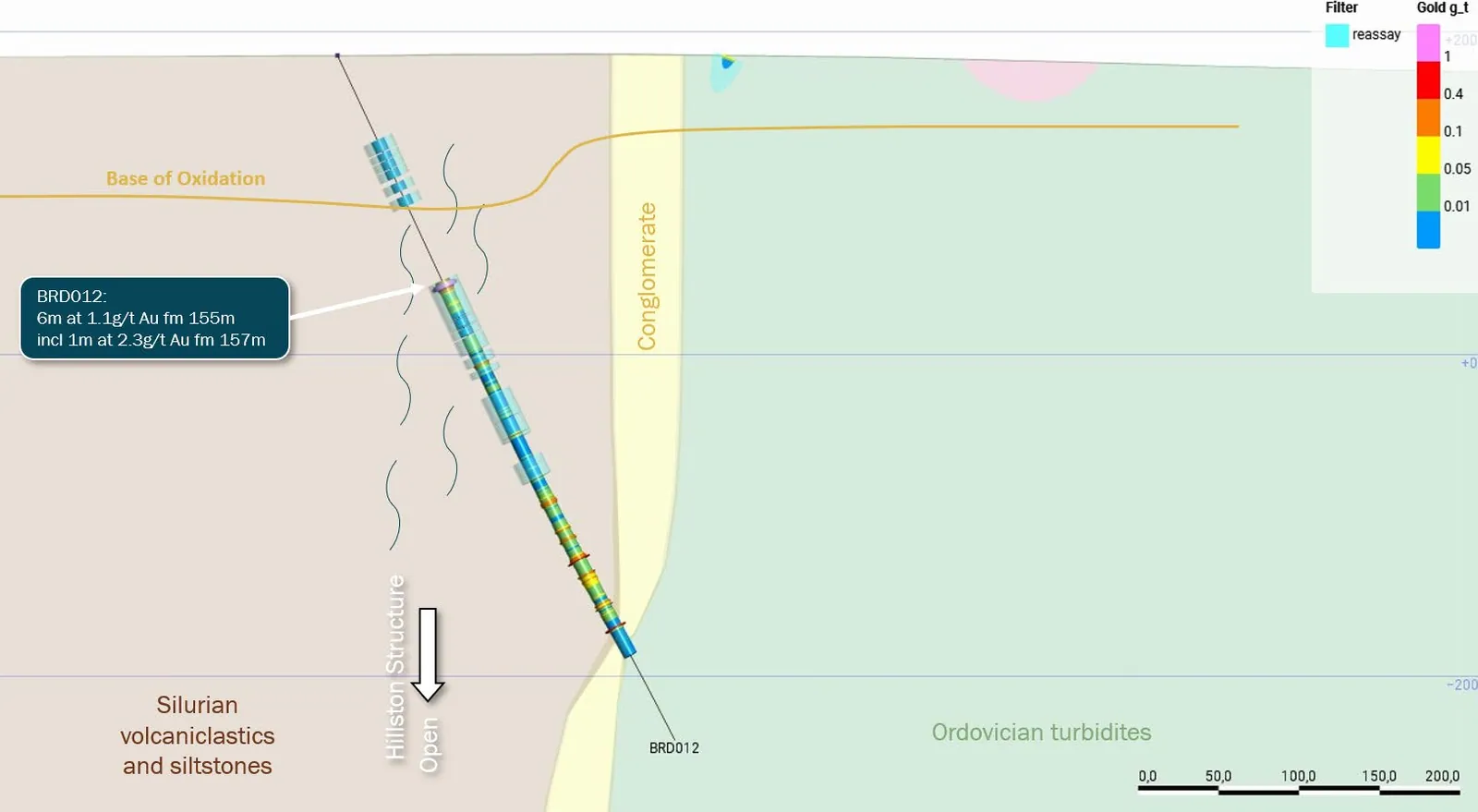
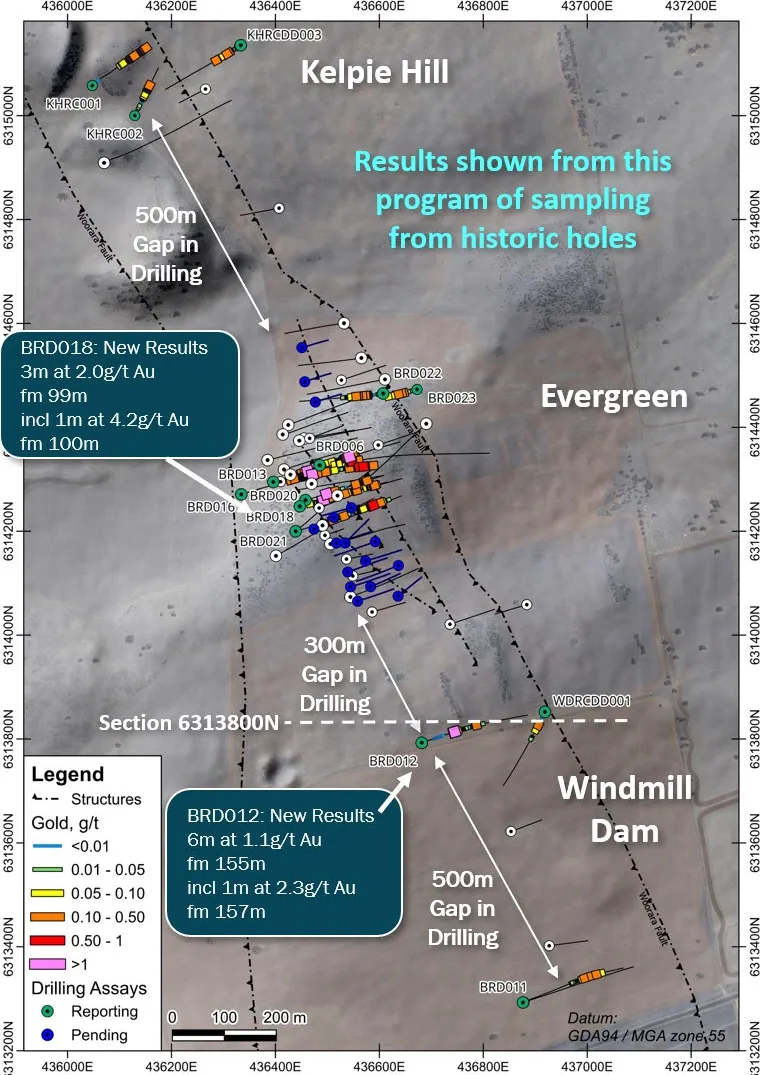
The BRD018 interval is in oxide material within the Hillston structure, while BRD012 was drilled about 300 metres south of AGC’s Evergreen drilling. Both intersections are downhole widths, and the company has not yet established their true widths.
Sampling Expands the Mineralised Corridor
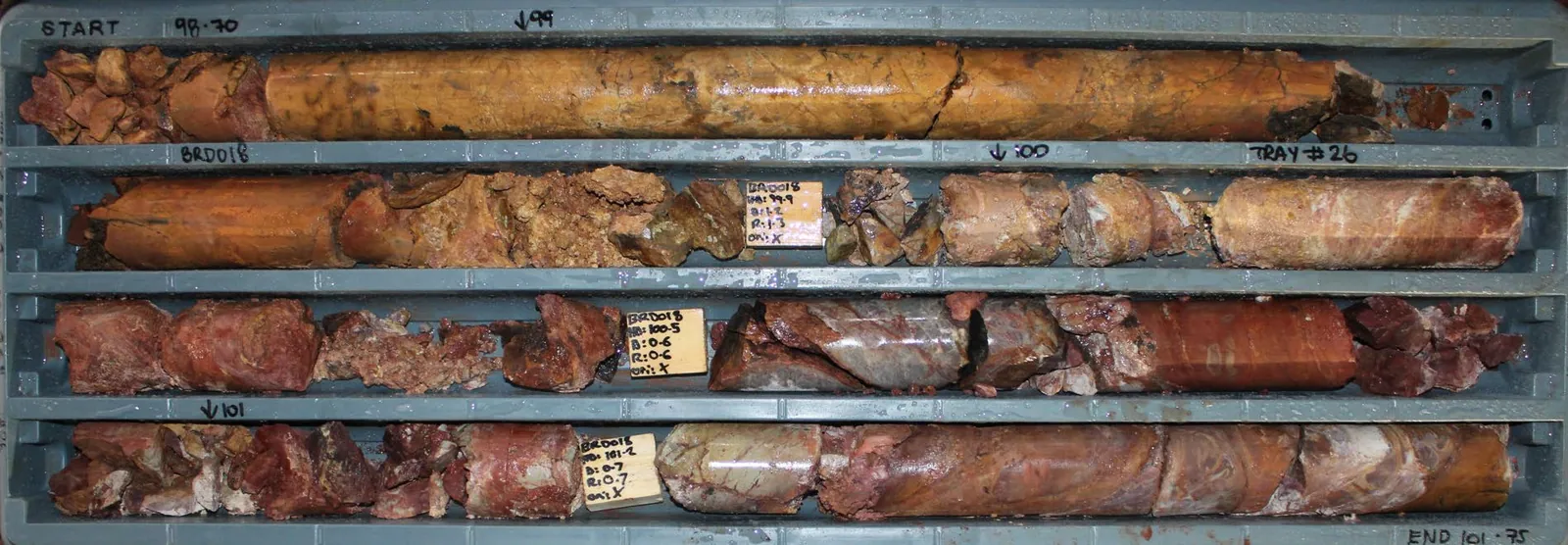
AGC said assays had now been received for 2,161 samples, including 1,171 half-core samples from previously uncut core and 663 one-metre RC samples that had not previously been sent to a laboratory. The work also included paired assays and overlapping intervals to test historic results and improve the project’s geochemical coverage.
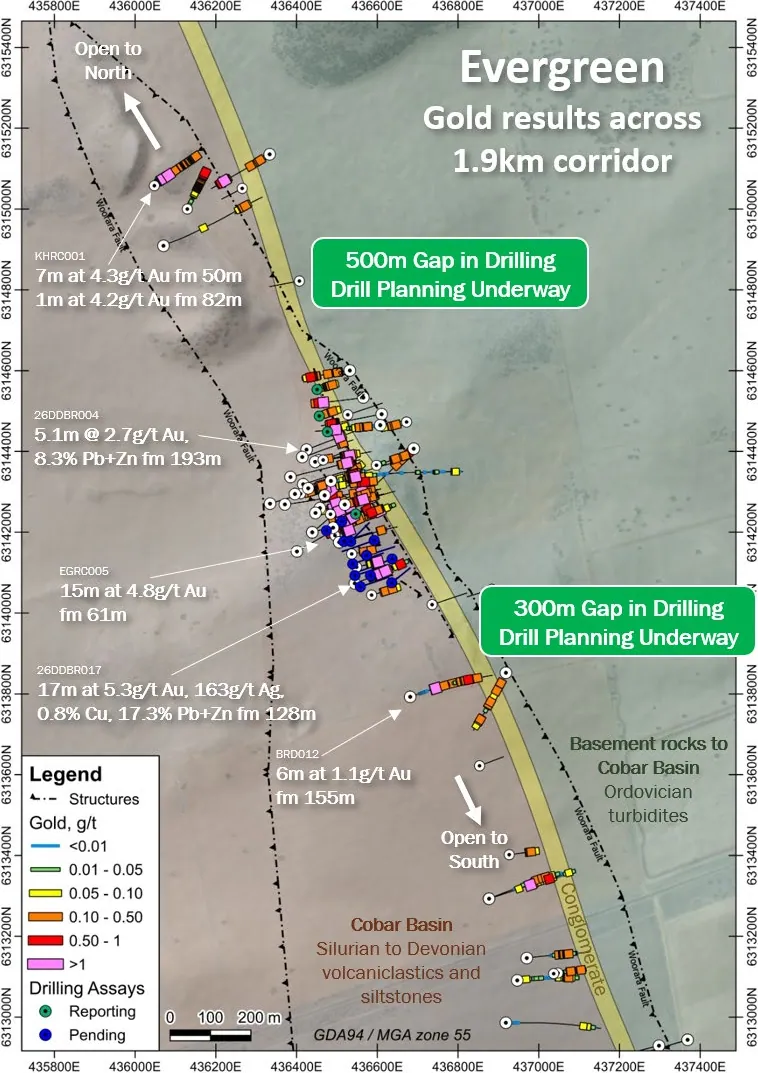
The new data, combined with AGC’s recent drilling, supports an approximately 1.9km corridor running from Kelpie Hill through Evergreen and south beyond Windmill Dam. That emerging footprint builds on the company’s high-grade Evergreen discovery and its continuing effort to understand both the shallow oxide zone and the deeper polymetallic system.
More Drilling Data Still to Come
The assay program is not complete. AGC has identified additional historic core for sampling and expects to report further results as the material is re-logged, tested and incorporated into its geological interpretation.
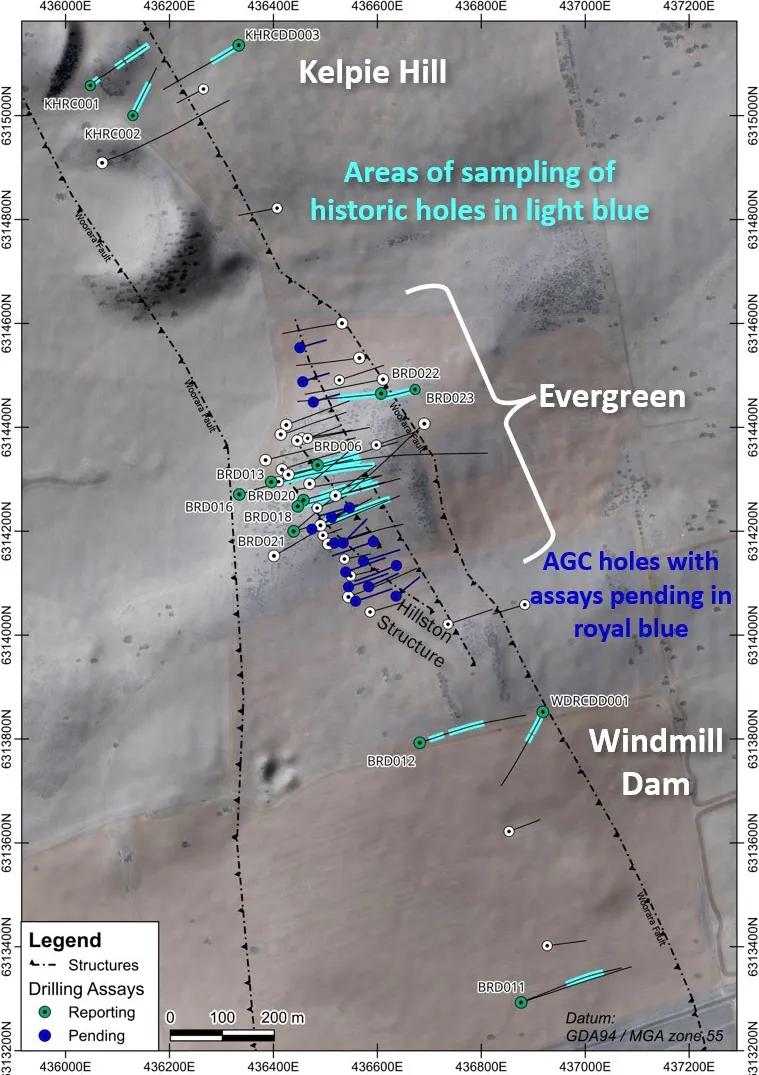
Results are also pending from the 21-hole RC program targeting the Hillston structure. The company is seeking regulatory approvals for a further 3,000 metres of RC drilling at Evergreen, aimed at testing extensions to the shallow mineralised system. Those next results will be important in determining whether the new intercepts represent a coherent, drillable zone rather than isolated additions to a long but still early-stage exploration corridor.
Get ASX:AGC news the moment it breaks
 iPhone & iPad
 Android
Bottom Line?
The archive is adding useful gold data at modest exploration cost, but continuity, true widths and the pending RC assays will determine how much substance sits behind the 1.9km corridor.
Questions in the middle?
- Will the pending Hillston RC assays confirm continuity between the historic intercepts and AGC’s recent high-grade results?
- How do the reported downhole widths translate into true geological widths?
- Will approvals for the proposed 3,000m RC program allow AGC to test the corridor’s key gaps?
Sources
1-
Historic Sampling Adds Gold Intercepts Across Evergreen (opens in a new tab)Official market announcement. Australian Gold and Copper Ltd · 28 Oct 2026 · austgoldcopper.com.au