PLS adds cheaper Fortescue power to its Pilgangoora growth engine

PLS has paired record quarterly production with a 20-year Fortescue power agreement expected to cut Pilgangoora’s FOB operating costs by A$15 to A$20 a tonne. The deal adds to a much larger investment cycle, with the A$1.9 billion P2000 expansion now under construction and FY27 capital guidance lifted to A$1.13 billion to A$1.195 billion.
- Record quarterly production of 267.6kt after the Ngungaju restart
- Fortescue PPA targets A$15 to A$20/t lower FOB costs from 2029
- P2000 expansion approved at A$1.9 billion with first ore due in September quarter 2029
- FY27 capex guidance rises to A$1.13 billion to A$1.195 billion
- US$700 million notes strengthen funding ahead of the investment cycle
 Add us as a preferred source on Google
Fortescue power deal reshapes Pilgangoora’s cost base
PLS Group Limited (ASX:PLS) has secured a long-term power supply for its expanding Pilgangoora lithium operation, signing a 20-year agreement with Fortescue that is expected to reduce FOB operating costs by approximately A$15 to A$20 a tonne from the P2000 cost base. The agreement will supply at least 325 GWh of electricity annually from 2029, although the supply is not firm and remains subject to conditions precedent, approvals, construction and commissioning.
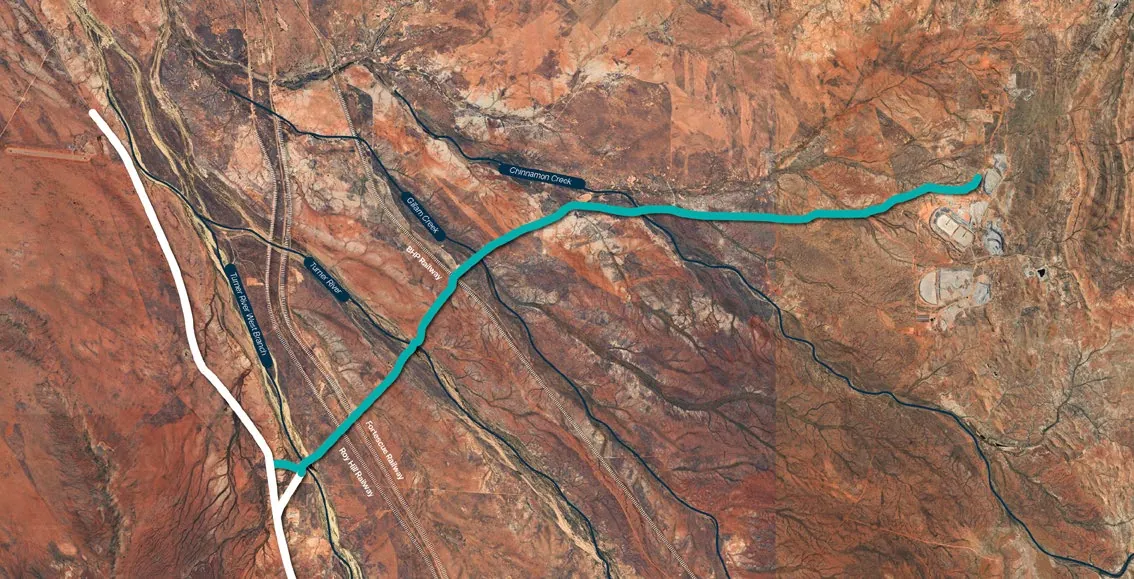
The Fortescue Green Grid connection will require about A$150 million of transmission and power infrastructure spending through FY29. A new roughly 25-kilometre, 220kV line will connect Pilgangoora to Fortescue’s Turner River solar farm, with more than 100MW of transmission capacity. That is above P2000’s expected requirements and gives PLS room to consider future options including underground mining and fleet electrification, without another transmission investment according to the company.
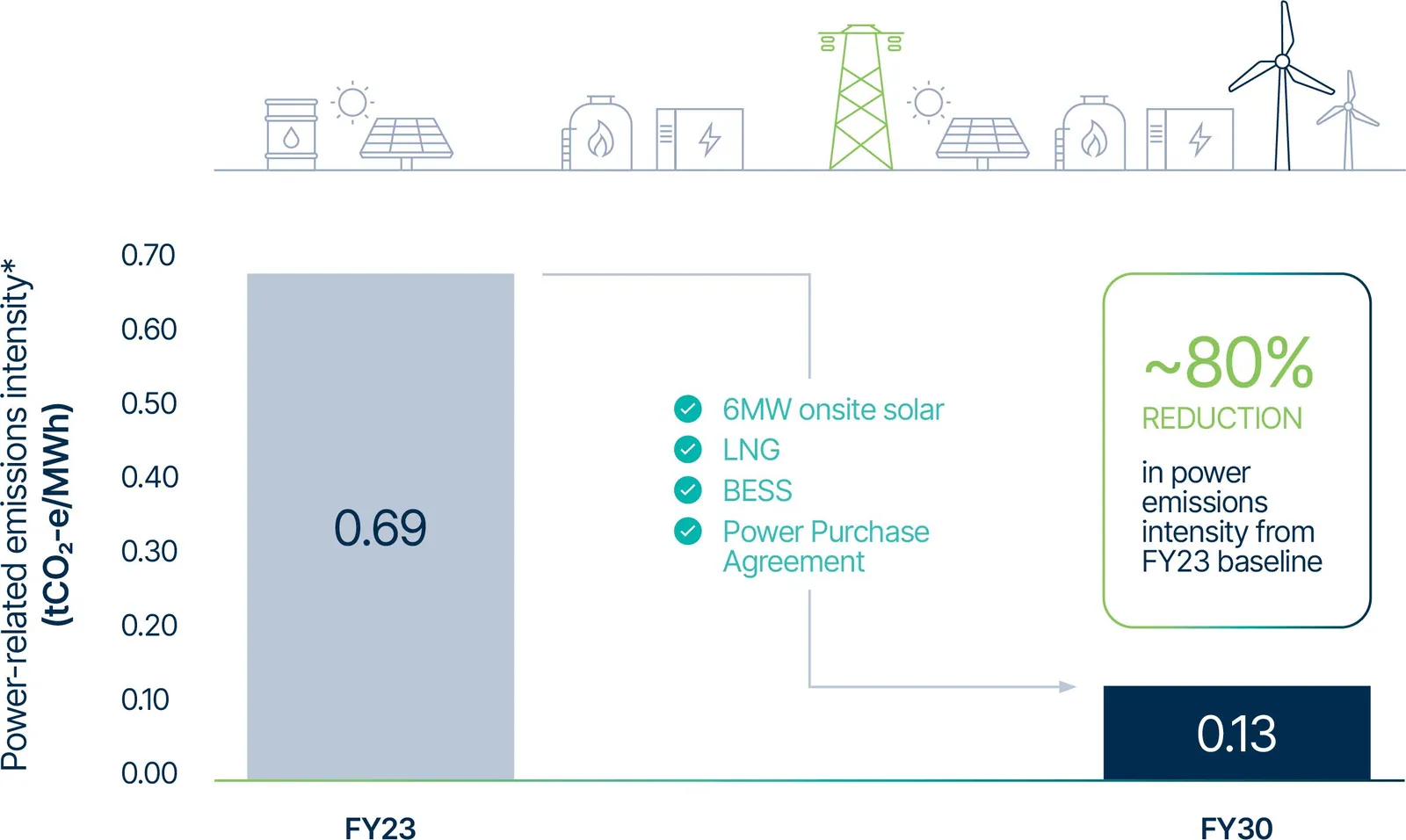
The agreement arrives alongside the P2000 expansion approval, which had targeted roughly 2Mtpa of spodumene concentrate from Pilgangoora by 2029. PLS says the power arrangement improves the economics of that project and supports a forecast reduction of up to about 80% in power-related emissions intensity by FY30, from a FY23 baseline of 0.69 tCO2-e/MWh to approximately 0.13 tCO2-e/MWh. Those outcomes depend partly on Fortescue delivering the projected Green Grid configuration and emissions profile.
Record production meets softer pricing and heavier spending
Pilgangoora produced a quarterly record 267.6kt of spodumene concentrate in the three months to 30 September, up 25% from the previous quarter. The increase followed the Ngungaju plant restart, which returned to full operational status by the end of October, and stronger performance at the Pilgan plant. Sales were 223.6kt, down 11%, after a 15kt shipment was delayed by Port Hedland delays and moved into October.
Revenue fell 24% to A$563 million as the estimated realised price declined 14% to US$1,809/t on a roughly SC5.2 basis, or US$2,077/t on an SC6 equivalent basis. The price remained provisional: PLS said the estimated realised price had fallen to US$1,754/t by 26 October, while negative provisional pricing adjustments linked to September quarter sales were estimated at A$88 million. Unit operating costs nevertheless dropped 12% to A$539/t, helped by operating efficiencies and a higher volume of capitalised waste.
Cash margin from operations was A$392 million, excluding the estimated A$88 million provisional pricing adjustment, while cash stood at A$2.217 billion at quarter end. The balance followed the payment of a A$161 million fully franked final dividend, A$42 million of Colina-related tenement acquisitions and A$185 million of quarterly capital expenditure. The company’s cash generation remains substantial, but the investment burden is moving sharply higher.
P2000 spending moves from study to execution
PLS has lifted FY27 capital expenditure guidance to A$1.13 billion to A$1.195 billion, while leaving production guidance at 1,030kt to 1,100kt and FOB unit cost guidance at A$575/t to A$625/t. The revised figure includes A$500 million for P2000 and A$185 million of enhancing infrastructure spending, covering the Fortescue connection, a sealed access road, a new 1,200-bed permanent village and a mine services facility.
The scale-up is being supported by the US$700 million notes issue, which was priced at an 8% coupon and matures in 2032. PLS says the additional debt provides funding flexibility through the capital program, but it also means the company enters a period of heavier spending while lithium prices remain exposed to provisional adjustments and market volatility.
P2000 is expected to lift Pilgangoora’s production capacity to about 2.0Mtpa through the new Jimmagunya processing plant, with first ore targeted for the September quarter of calendar 2029. PLS estimates an incremental post-tax NPV of A$2.7 billion and a 29.5% post-tax IRR, based on a long-term SC6 price assumption of US$1,620/t. Those figures are forecasts rather than realised returns, and the project remains exposed to construction, commissioning, cost and commodity-price risks.
Get ASX:PLS news the moment it breaks
 iPhone & iPad
 Android
Bottom Line?
PLS is converting Pilgangoora into a larger and potentially lower-cost operation, but the next test is execution: the power connection, P2000 build and rising capex must arrive before the promised scale benefits do.
Questions in the middle?
- Can Fortescue and PLS complete the approvals, construction and commissioning required to begin non-firm power supply in 2029?
- Will the A$1.9 billion P2000 expansion remain within its capital and schedule assumptions as construction progresses?
- How much pressure will lithium pricing and provisional adjustments place on cash generation during the peak investment years?
Sources
3-
PLS signs long term power agreement (opens in a new tab)Verified source. PLS Group Limited · 28 Oct 2026 · pls.com
-
September Quarter FY27 Activities Presentation (opens in a new tab)Verified source. PLS Group Limited · 28 Oct 2026 · pls.com
-
September 2026 Quarterly Activities Report (opens in a new tab)Verified source. PLS Group Limited · 28 Oct 2026 · pls.com