PC Gold uncovers a new Spring Hill drilling pipeline

PC Gold has identified 37 exploration targets outside the Spring Hill resource after consolidating 40 years of historical data, including nine Tier 1 prospects scheduled for drilling. Newly recovered channel results may also contribute to the planned December 2026 resource update, although most historical results remain unverified.
- 37 targets defined outside the current MRE across approximately 10,300ha
- 16 targets classified as drill-ready, including nine Tier 1 priorities
- Historical results include 16m at 4.12g/t gold at Steve’s Gully and 5m at 24.4g/t at First Bite
- Tier 1 drilling to begin with Steve’s Gully within three weeks
- Channel data may support the December 2026 MRE update after verification

 Add us as a preferred source on Google
PC Gold Limited (ASX:PC2) has turned Spring Hill’s historical clutter into a ranked exploration pipeline, identifying 37 targets beyond the existing Mineral Resource Estimate and putting nine of them into the “drill now” category. The program reviewed 175 historical reports, digitised 3,600 pages and consolidated data from 658 drill holes, more than 1,100 rock-chip and channel samples and 6,500 soil samples across the approximately 10,300-hectare Northern Territory package.
Nine Tier 1 targets move toward drilling
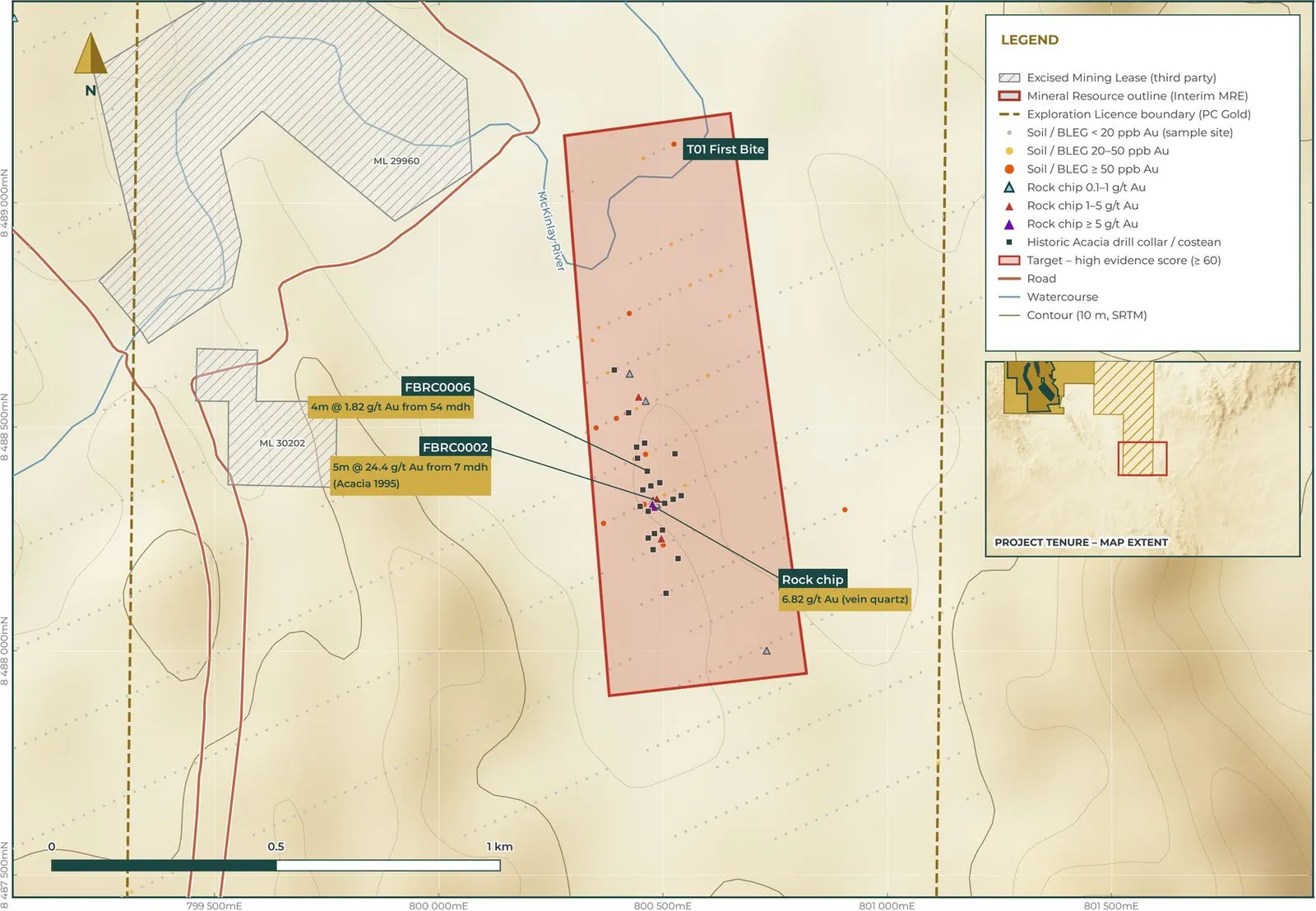
The immediate attraction is not the number 37 so much as the quality of a handful of targets that had been left sitting in old reports. Steve’s Gully carries a historical intersection of 16 metres at 4.12g/t gold from 63 metres, including 2 metres at 13.60g/t, despite having received no work since 1994. First Bite returned 5 metres at 24.4g/t from only 7 metres in 1995-96, with roughly 60 metres of vertical testing across 265 metres of strike.
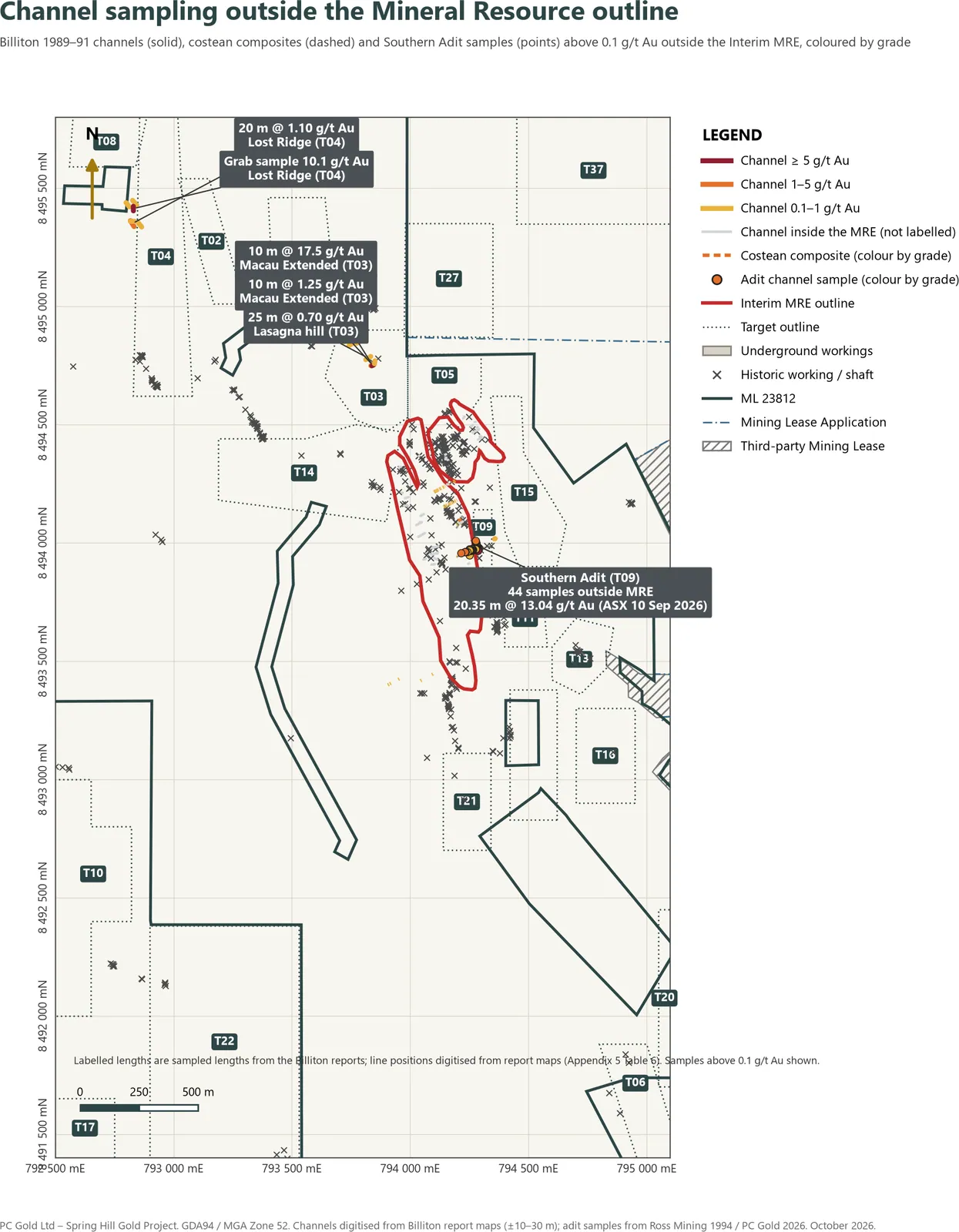
Other Tier 1 targets include Vein Heaven, Macau Extended, Main Lode North, Gentry’s Chance, Chop Suey, the Zbonski trend and the Southern Adit. The Macau Extended trend combines historical channel sampling of 10 metres at 17.5g/t with more recent drilling, including a 0.73-metre intercept at 459g/t. That target sits within the same extension story covered by the recent Macau drilling, which reported Macau Extended across 950 metres of strike north of the existing resource.
Recovered channel data could reshape the resource boundary
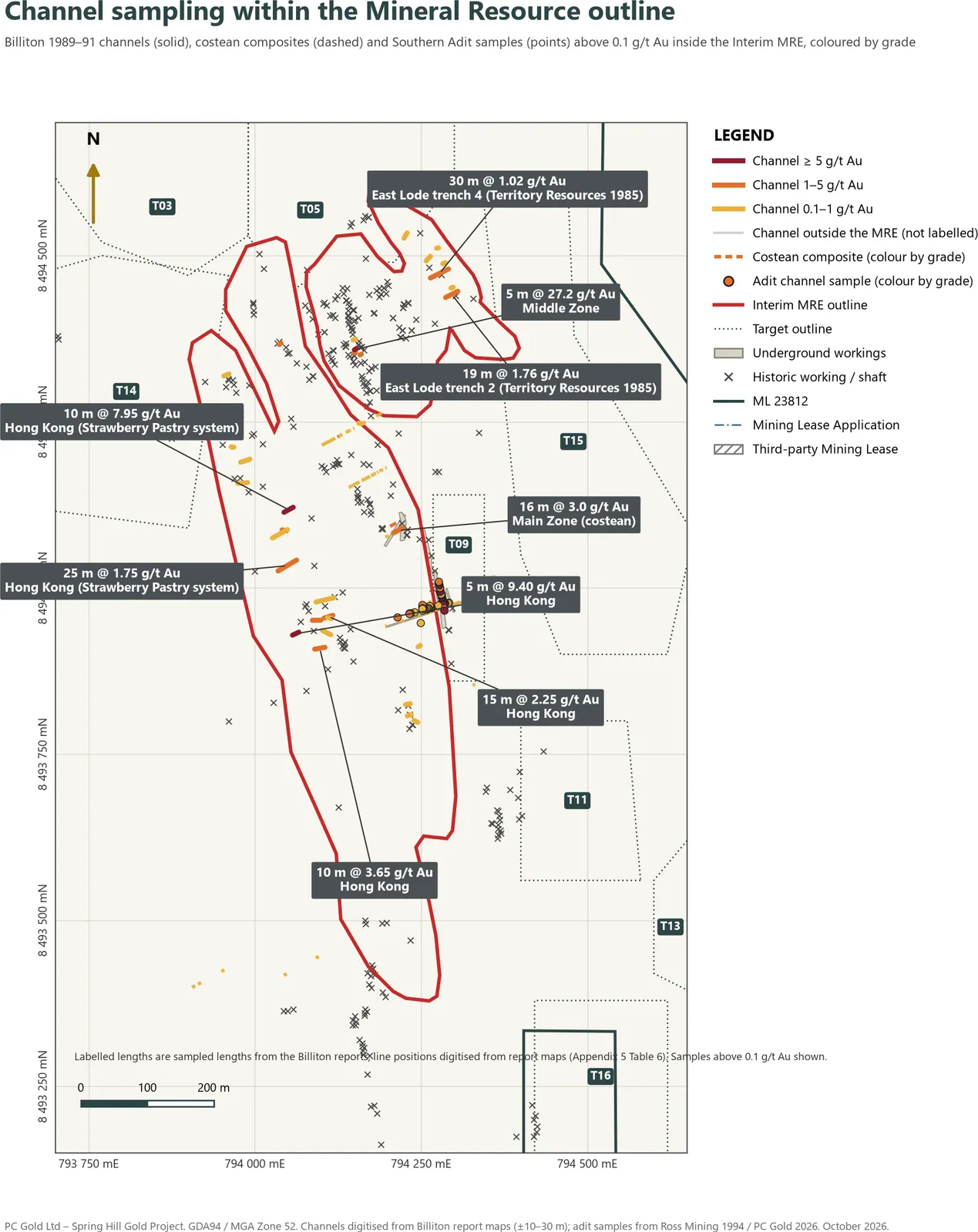
The review also unearthed surface channel data that had not previously been incorporated into the resource model. Within and adjacent to the MRE, results include 5 metres at 9.4g/t at Hong Kong, 5 metres at 27.2g/t in the Middle Zone, 10 metres at 7.95g/t at Hong Kong, a 16-metre Main Zone costean composite at 3.0g/t and 25 metres at 1.75g/t on the adjoining Strawberry Pastry sheeted-vein system.
PC Gold says those records will be checked against the source reports, sample locations and quality-control information before being assessed by the Mineral Resource Competent Person for possible inclusion in the December 2026 update. The company’s current interim MRE stands at 43.6 million tonnes at 1.1g/t gold for 1.51 million ounces at a 0.5g/t cut-off, but the newly recovered material is not yet part of that estimate.
A large pipeline remains untested
The targeting exercise was broader than a hunt for old high-grade assays. PC Gold ranked each target using historical evidence, an assay-free geological prospectivity model and satellite alteration data from ASTER and Sentinel-2. Eight prospectivity-only areas and seven spectral reconnaissance areas were also identified, including a four-kilometre belt along the McKinlay Granite contact where no sampling has been completed.
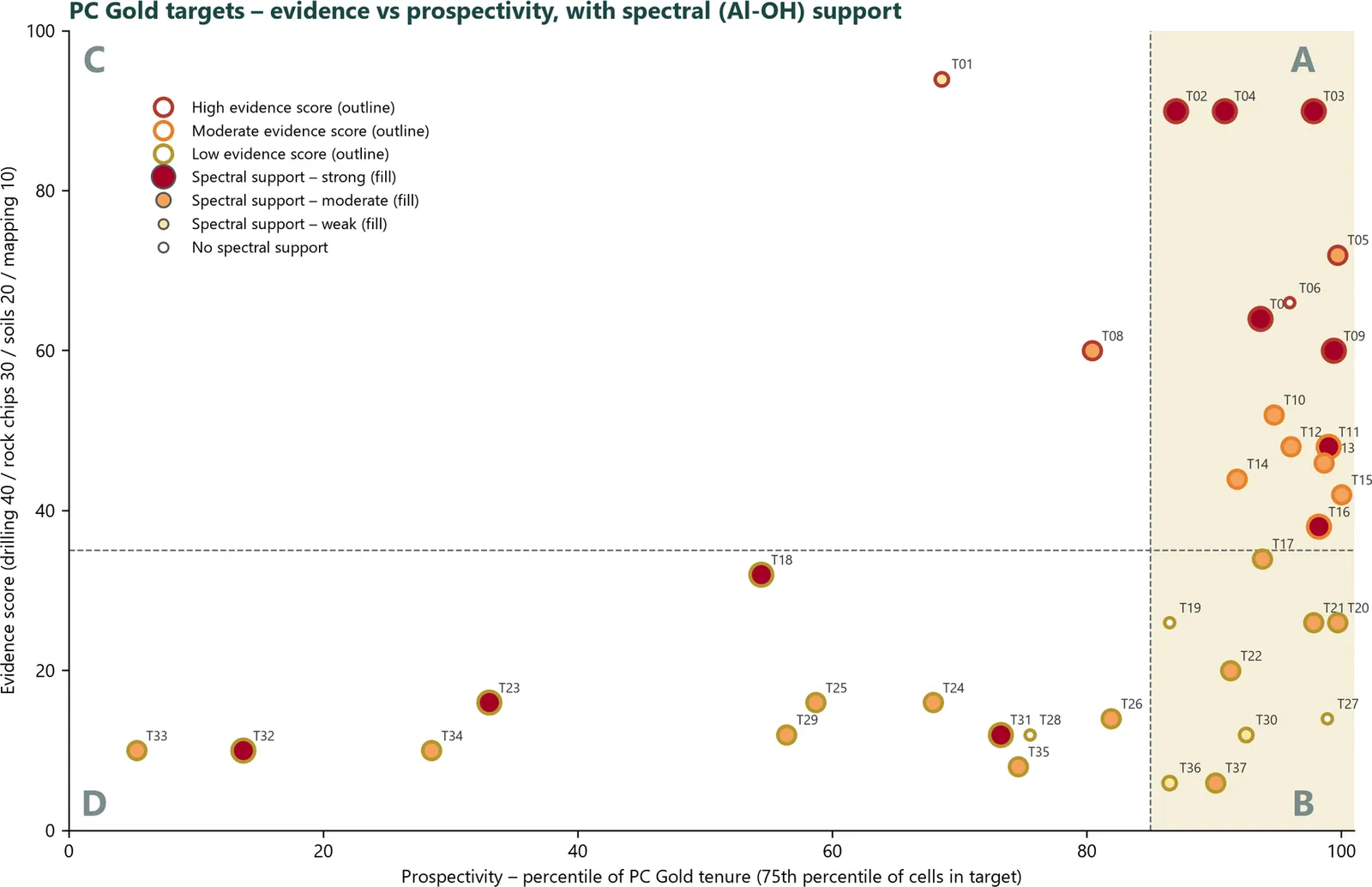
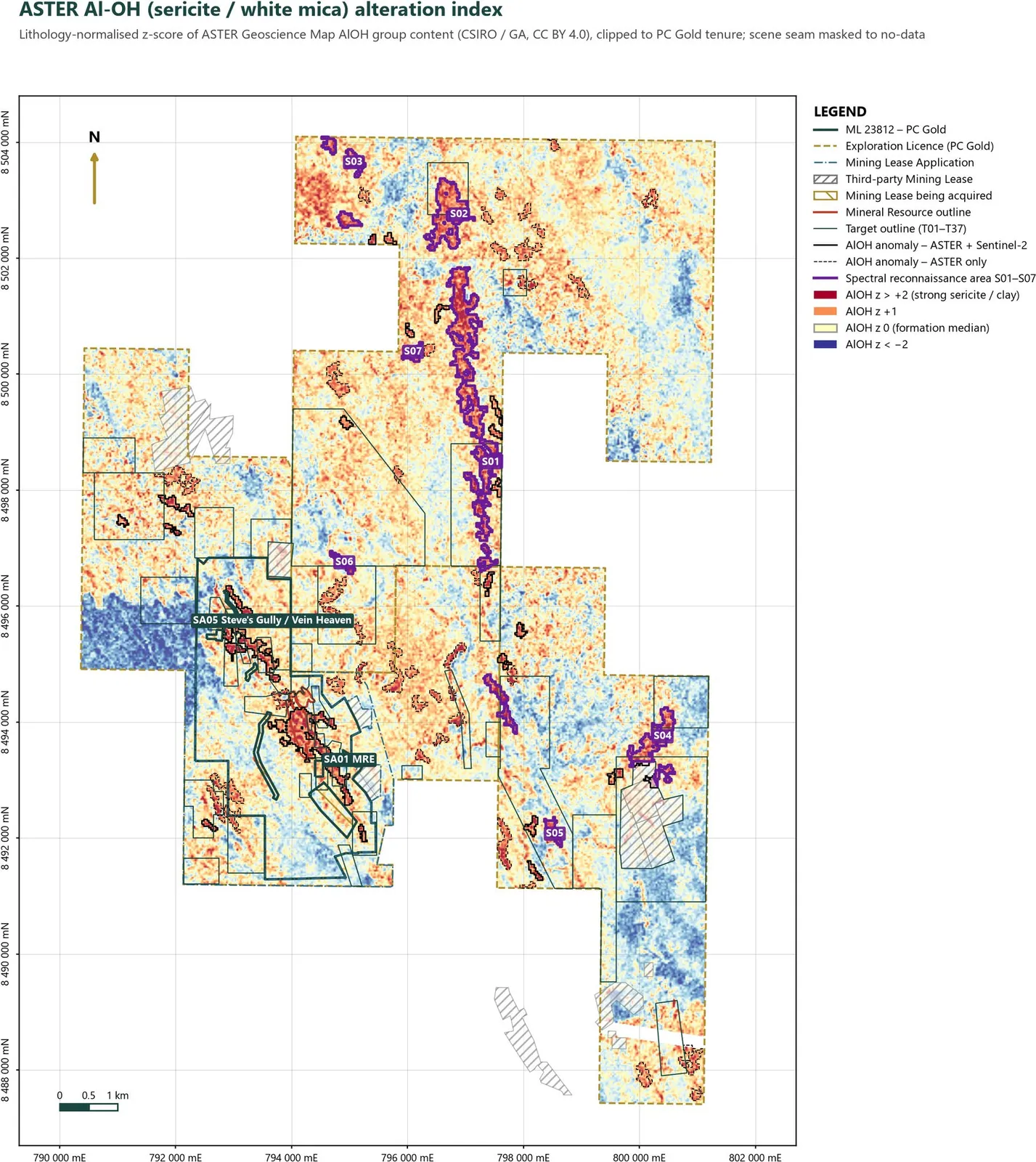
That distinction matters. Satellite alteration responses are surface signals, not evidence of gold mineralisation, and the company says the historical results were not independently verified or originally reported under JORC 2012. Drill intersections are generally downhole lengths with true widths unknown, while some high-grade rock-chip results may represent dumps or mullock rather than in-situ mineralisation.
Drilling schedule creates the next test
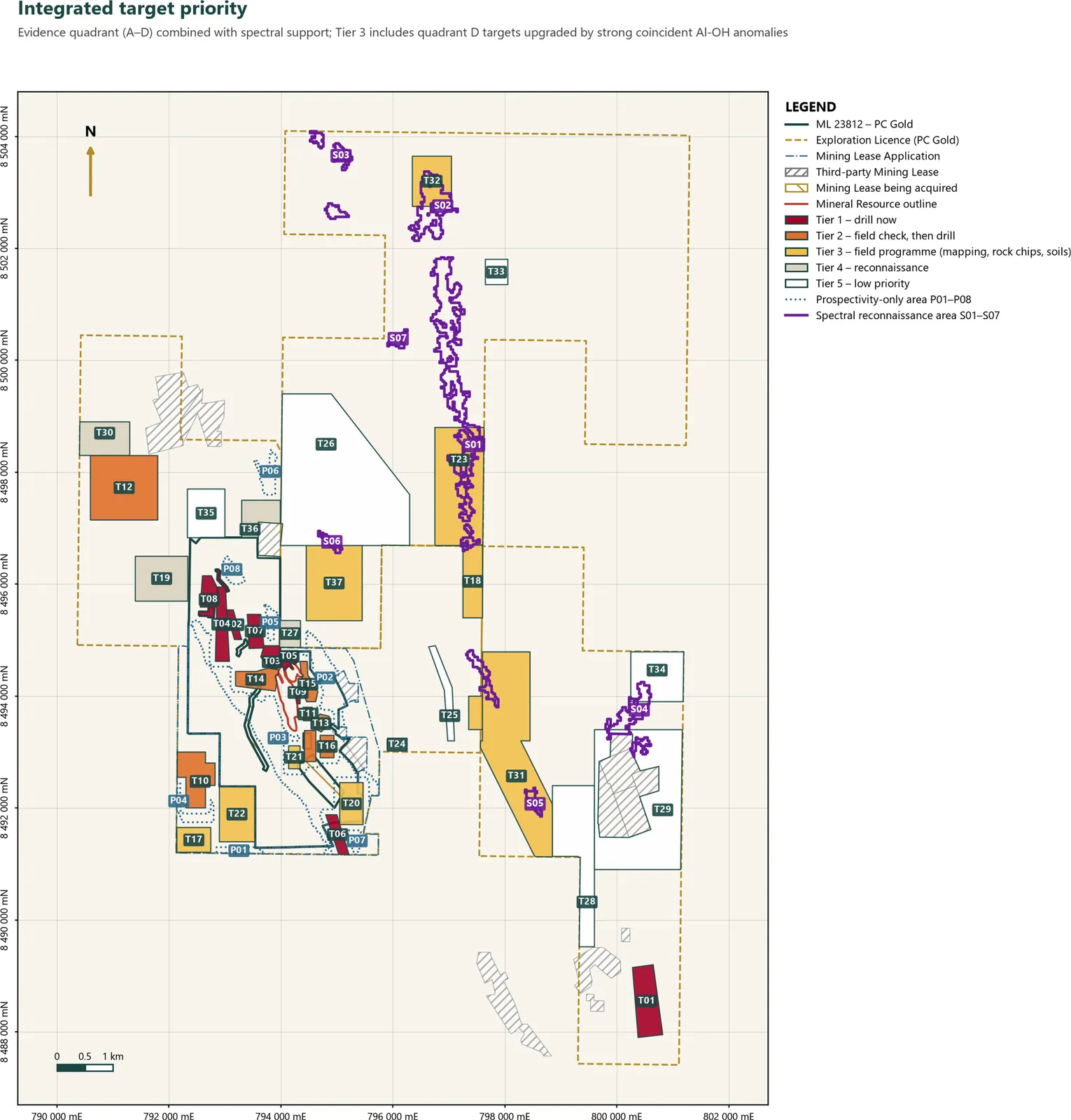
PC Gold plans to begin Tier 1 drilling at Steve’s Gully within three weeks, followed by Vein Heaven early next year and ongoing work at Macau Extended. The Southern Adit is also scheduled for drilling in the fourth quarter of calendar 2026, while mapping, channel sampling and soil programs will advance the lower-ranked targets.
The story now moves from data management to field verification. The first assays from Steve’s Gully, Vein Heaven and the other Tier 1 prospects will show whether the impressive historical hits represent repeatable mineralised systems or isolated reminders of exploration’s uneven past. The December resource update will provide a second test, but only for channel data that survives verification and competent-person review.
Get ASX:PC2 news the moment it breaks
 iPhone & iPad
 Android
Bottom Line?
PC Gold has created a substantial exploration runway, but the value of the pipeline will depend on repeat drilling, true-width confirmation and whether recovered channel data can be accepted into the December resource model.
Questions in the middle?
- Will new drilling at Steve’s Gully and Vein Heaven confirm continuity beyond the historical high-grade intercepts?
- How much of the newly digitised channel sampling will pass verification and contribute to the December 2026 MRE?
- Can PC Gold advance regional targets while keeping pre-feasibility work, permitting and tenure matters on schedule?
Sources
1-
Regional Targeting Defines Significant Exploration Pipeline (opens in a new tab)Verified company source. PC Gold Ltd · 29 Oct 2026 · pcgold.com.au