19.3kt graphite produced as Syrah begins Vidalia commercial ramp-up

4 min read
8:55am on Thursday 29th of October, 2026 AEDT ~8am, 29th Oct, 26
Syrah Resources delivered a stronger Balama quarter and began ramping Vidalia’s US anode-material facility towards commercial sales. But higher cost guidance, negative operating cash flow and unresolved loan defaults leave the balance sheet as the central risk.
- 19.3kt of graphite produced at Balama at 88% recovery
- 18.1kt sold at a US$583/t CIF average price
- Vidalia commercial ramp-up began ahead of targeted December-quarter sales
- Balama and Vidalia cost guidance increased
- US$76m cash balance included US$55m of restricted cash
 Add us as a preferred source on Google
Balama production rebounds as costs rise
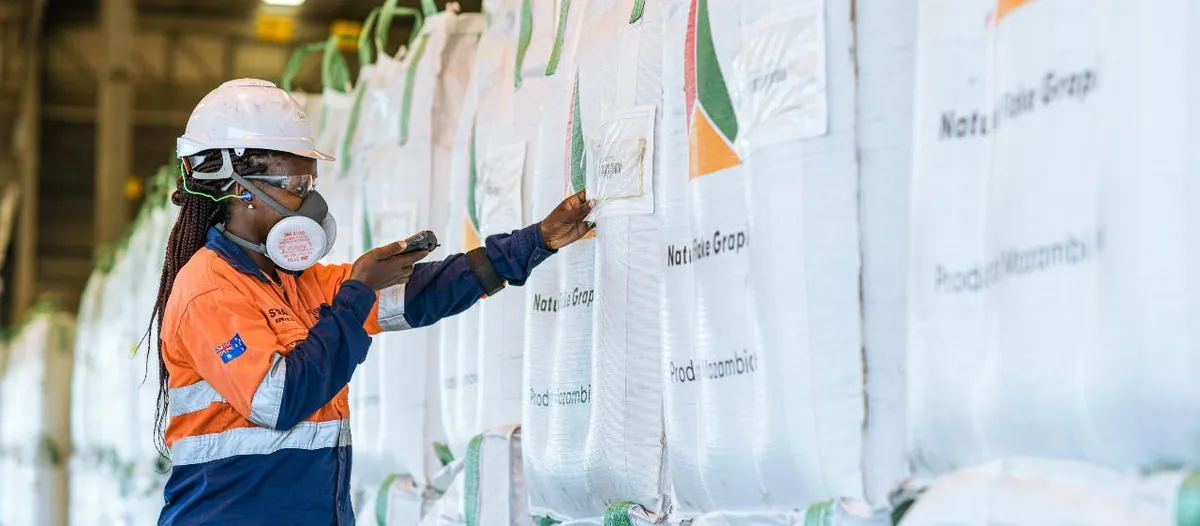
Syrah Resources Limited (ASX:SYR) produced 19.3kt of natural graphite at its Balama operation in Mozambique during the September quarter, recovering 88% of the material processed. It sold 18.1kt to third-party customers at a weighted average price of US$583 per tonne CIF, including initial sales to POSCO Future M under the Balama offtake agreement.
The operational improvement came with a less comfortable cost profile. Balama’s C1 cost was US$581/t during operating periods, but rose to US$840/t when fixed costs from non-operating periods were included. Syrah has lifted near-term campaign cost guidance to US$500-US$550/t and medium-term guidance to US$480-US$520/t, compared with the previous medium-term range of US$430-US$480/t. The company cited labour costs, changes to contract mining and the transition to owned mining equipment, alongside elevated diesel prices.
Sales volumes were materially higher than in the June quarter, when Balama had produced only 2.3kt and sold 6.5kt. The average selling price nevertheless fell from US$736/t, partly because fines represented a larger share of the latest sales mix. Syrah said customer activity remained cautious amid uncertainty over US import tariffs and China’s graphite export settings.
Vidalia moves from qualification towards commercial inventory
At Vidalia in Louisiana, Syrah began ramping commercial operations in September, building saleable active anode material inventory while final customer qualification work continues. The facility has produced more than 550t of AAM for qualification and inventory purposes, with first commercial sales targeted for the December 2026 quarter, subject to final approvals from customers.
The timing matters because the 11.25ktpa facility is intended to underpin Syrah’s US battery-material strategy and its offtake arrangements with Tesla and Lucid. Earlier coverage recorded Vidalia qualification progress, including 150t produced for final customer qualification. The remaining process includes technical testing, process-control demonstrations, consistent production at required rates and customer audits.
Syrah has also increased Vidalia’s steady-state operating cost guidance to US$4.85-US$5.25/kg of AAM, from US$4.30-US$4.80/kg. It received approximately US$8m from the US Section 45X production credit during the quarter and estimates future credits of US$6m-US$7m a year before the scheme phases down from 2030.
Cash position depends on restricted funds and refinancing
Syrah ended September with US$76m in cash and cash equivalents, including US$55m of restricted cash and about US$21m unrestricted. Operating activities consumed US$18.68m during the quarter, while capital expenditure was US$3.1m. The reported cash position also benefited from the Section 45X receipt and did not include the further US$15m DFC loan disbursement that the company said would be received shortly.
That expected funding was the subject of US$15 million DFC funding, which earlier coverage said came with a temporary waiver of existing loan defaults. Syrah’s latest report says interest and related fees due on the DFC loan from May remain unpaid and that several events of default under the DFC and DOE loans have not been resolved.
The company is still working to implement non-binding strategic funding proposals involving the DFC, the US Department of Energy and AustralianSuper. The proposals contemplate debt conversion or exchange, additional liquidity and no cash interest or principal repayments for three years, but remain subject to binding documents and multiple approvals. Syrah expects financial close in the first half of 2027, leaving the near-term funding picture dependent on transactions that are not yet final.
Get ASX:SYR news the moment it breaks
 iPhone & iPad
 Android
Bottom Line?
The operating recovery is real, but the investment case still turns on Vidalia qualification, higher-cost execution and whether non-binding funding proposals become a binding balance-sheet solution.
Questions in the middle?
- Will Vidalia secure final customer qualification and begin commercial AAM sales in the December 2026 quarter?
- Can Syrah resolve the outstanding DOE and DFC loan defaults before the proposed funding transactions reach financial close?
- How much of the reported cash balance is practically available as Balama and Vidalia ramp-up costs continue?
Sources
2-
September 2026 Quarterly Activities Presentation (opens in a new tab)Verified source. Syrah Resources Limited · 29 Oct 2026
-
September 2026 Quarterly Activities and Cashflow Report (opens in a new tab)Official market announcement. Syrah Resources Limited · 29 Oct 2026 · syrahresources.com.au