Bison Resources advances Bald Peaks toward maiden drilling

Bison Resources has expanded its Bald Peaks land position more than fourfold and lodged a Notice of Intent for seven maiden drill pads in Nevada. The exploration push comes as the company awaits results from 900 new rock chip and soil samples, with A$3.514 million in cash at quarter end.
- 144 additional Bald Peaks claims expand the project to 184 claims
- Seven planned drill sites will test a 1.5km Carlin-type anomaly
- 310 rock chip and 590 soil samples awaiting analysis
- 4,000 line-kilometre magnetic and radiometric survey completed
- A$3.514 million cash balance equates to 2.32 quarters of reported funding
 Add us as a preferred source on Google
Seven drill sites target Bald Peaks anomaly
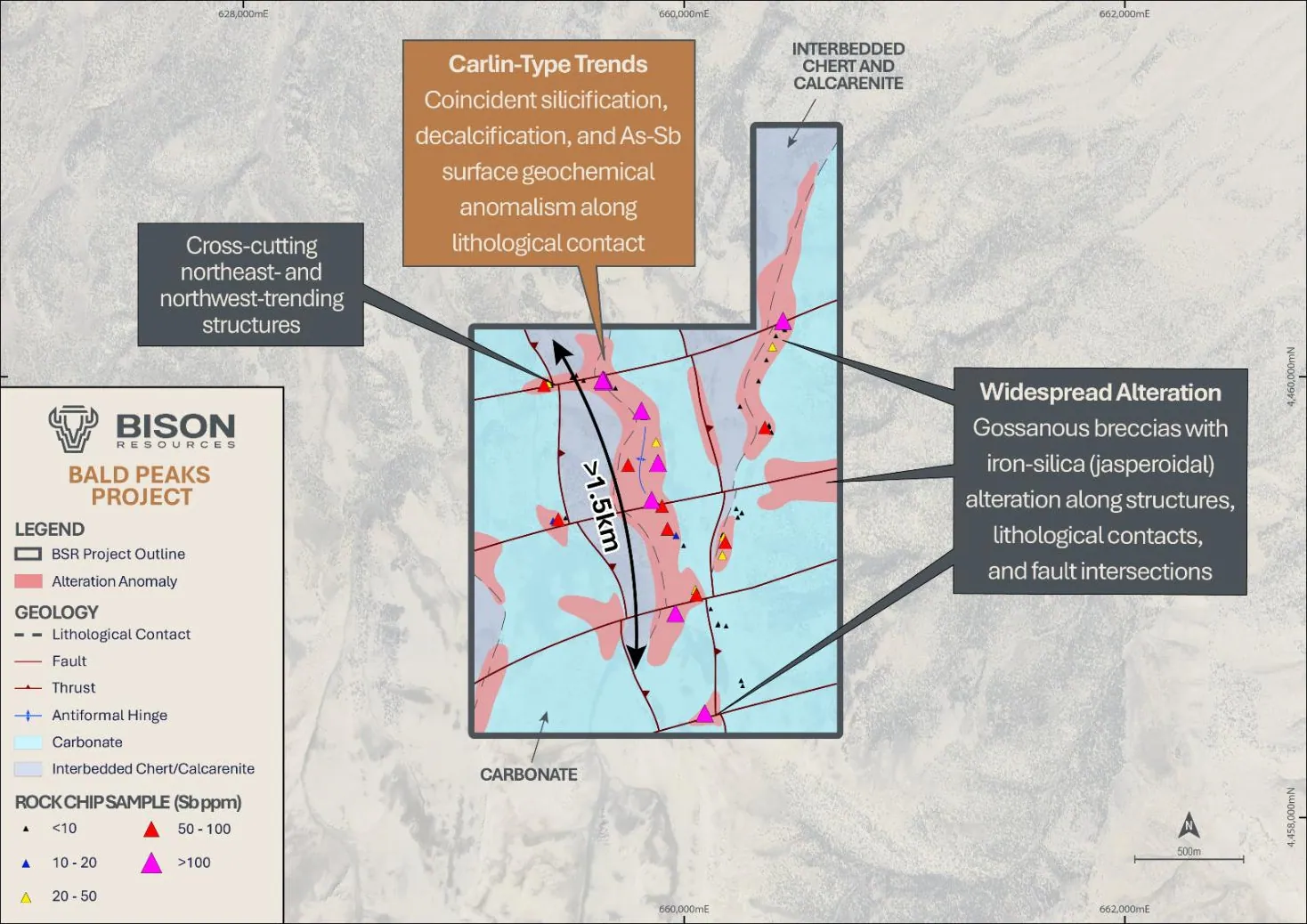
Bison Resources Limited (ASX:BSR) has moved its Bald Peaks project from surface exploration towards a maiden drill test, lodging a Notice of Intent with the US Bureau of Land Management for seven planned drill pads. The proposed reverse-circulation holes will average about 300 metres and target the heart of a 1.5-kilometre arsenic-antimony geochemical and alteration anomaly at the intersection of major faults.
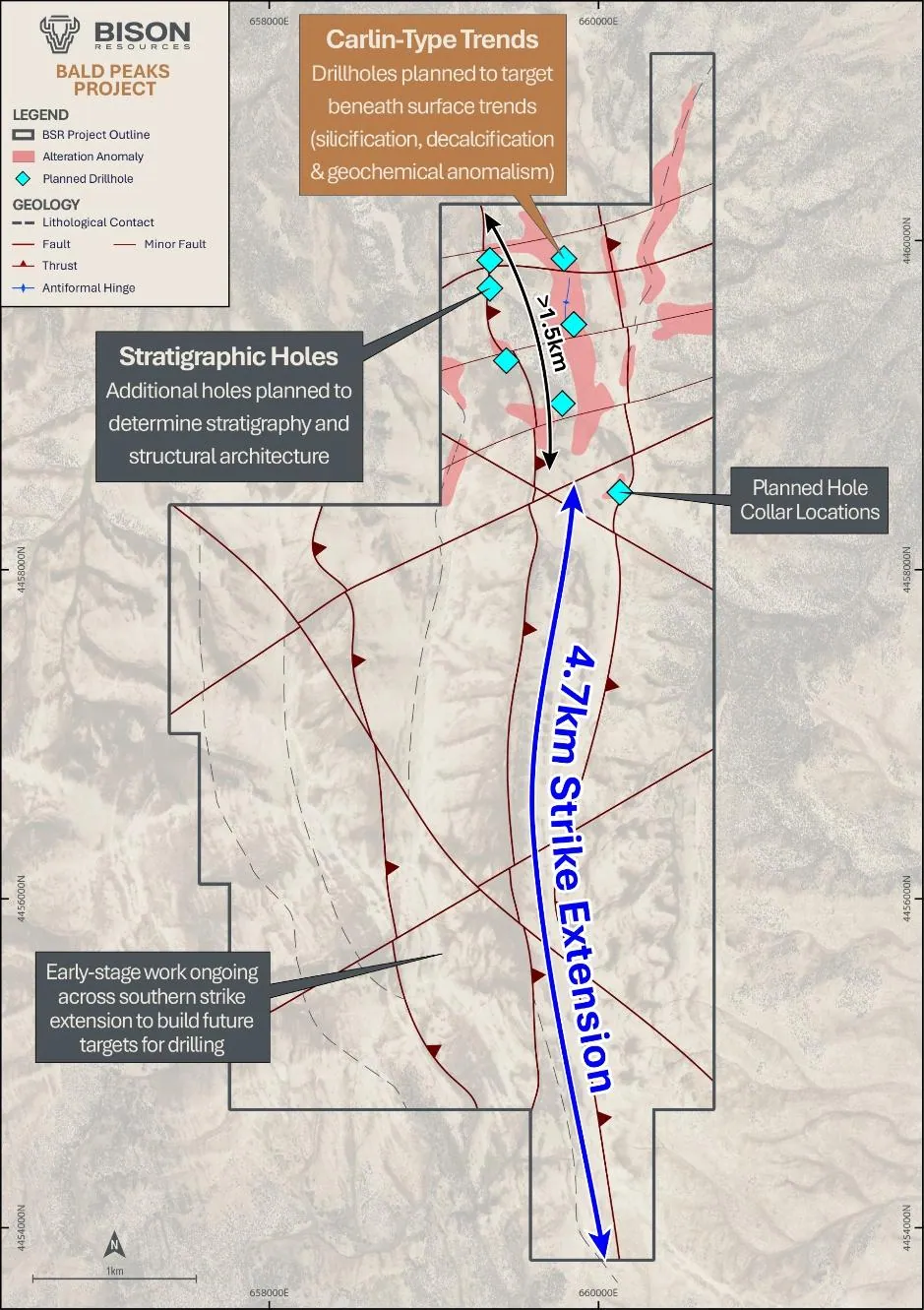
The permit step does not mean drilling has started or received final approval. Bison says the holes are intended to test the thickness of the prospective host rocks, map the structure and help vector towards a possible mineralised core, with final collar positions subject to incoming assays and ongoing modelling.
Mapping adds scale but assays remain outstanding
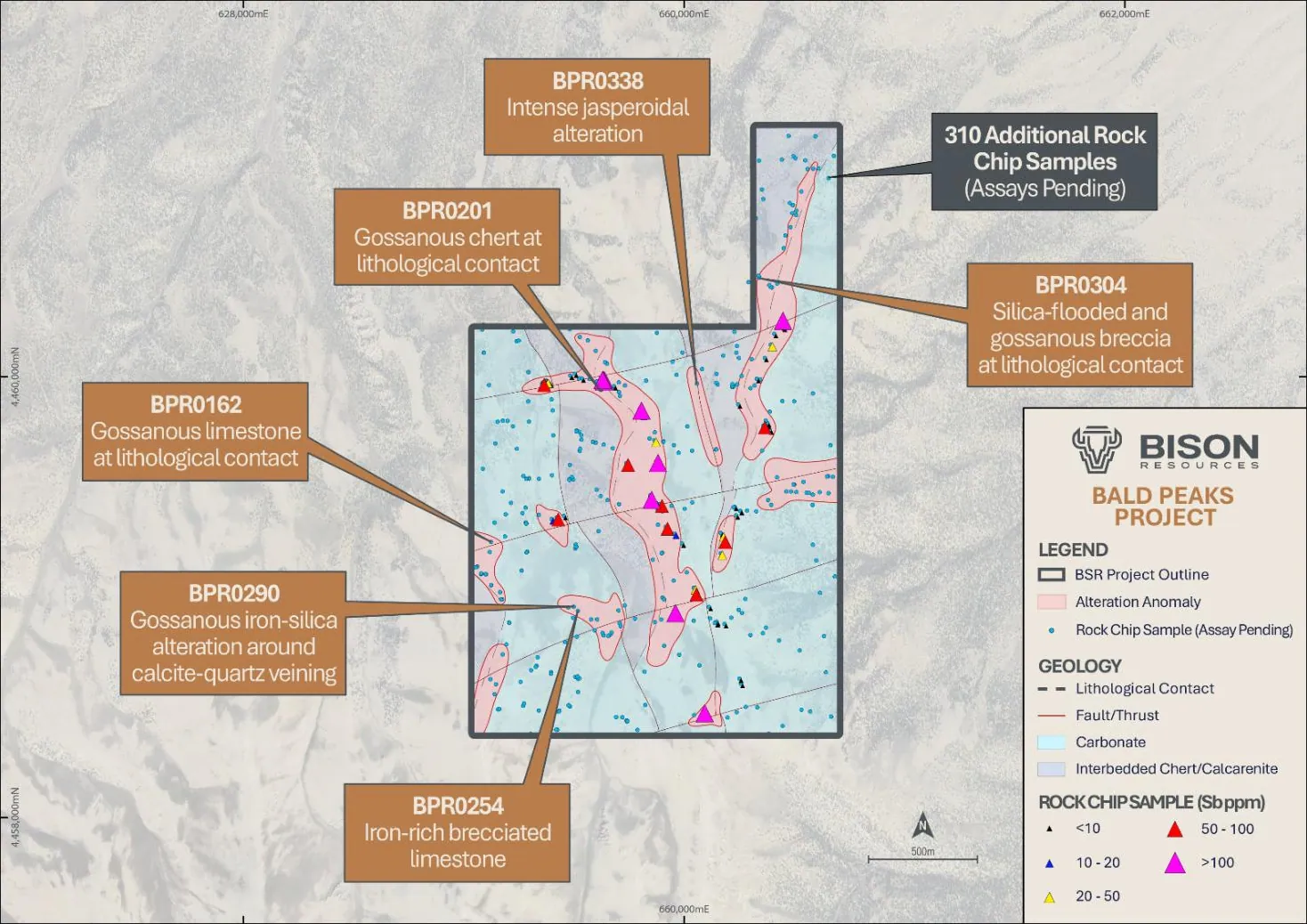
Quarterly fieldwork extended jasperoidal alteration and gossanous breccia corridors along contacts between carbonate and chert units, as well as around intersecting thrusts and faults. Bison describes these features as consistent with recognised indicators of Carlin-type mineral systems, but the geological interpretation remains an exploration model rather than a discovery of economic mineralisation.
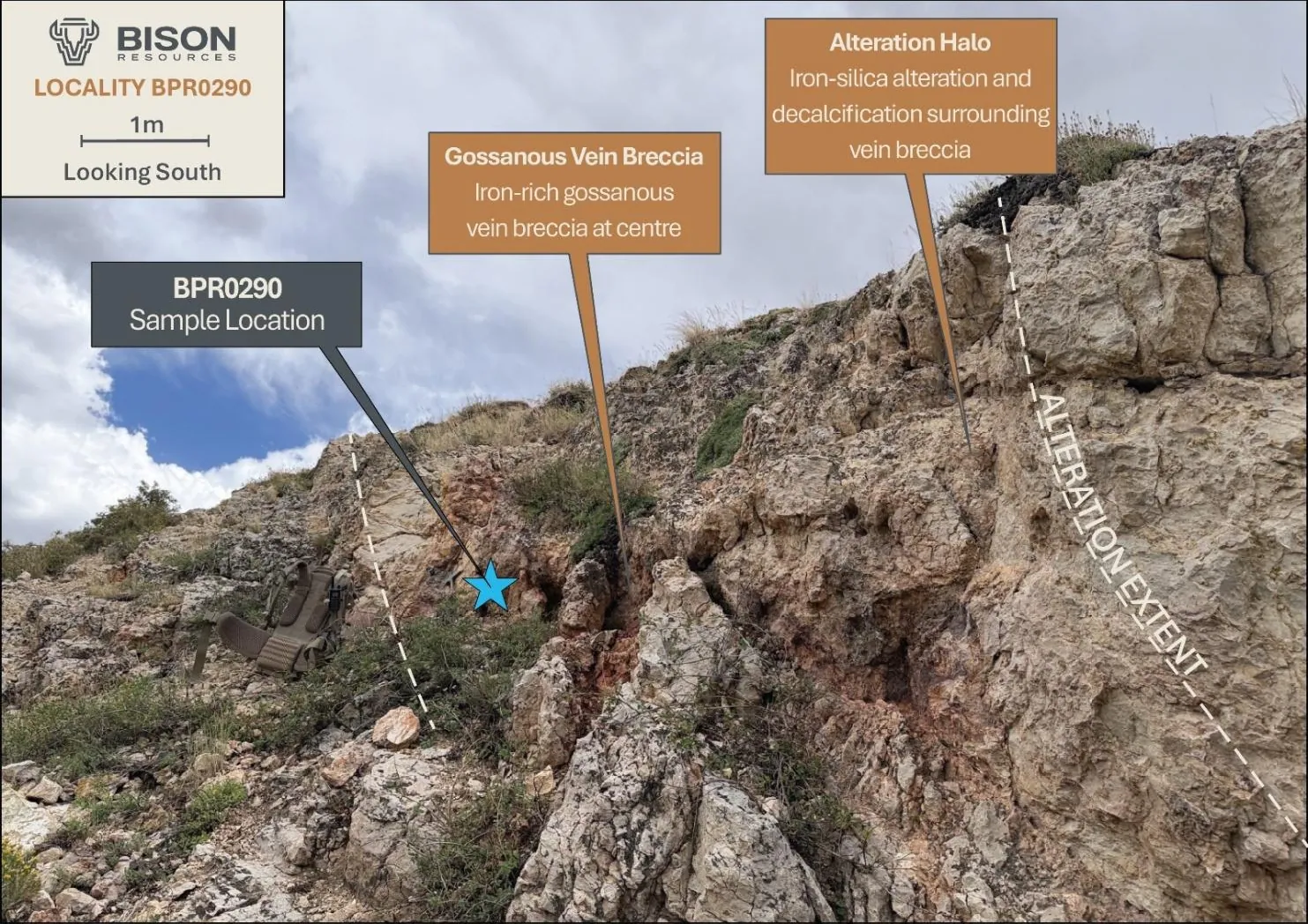
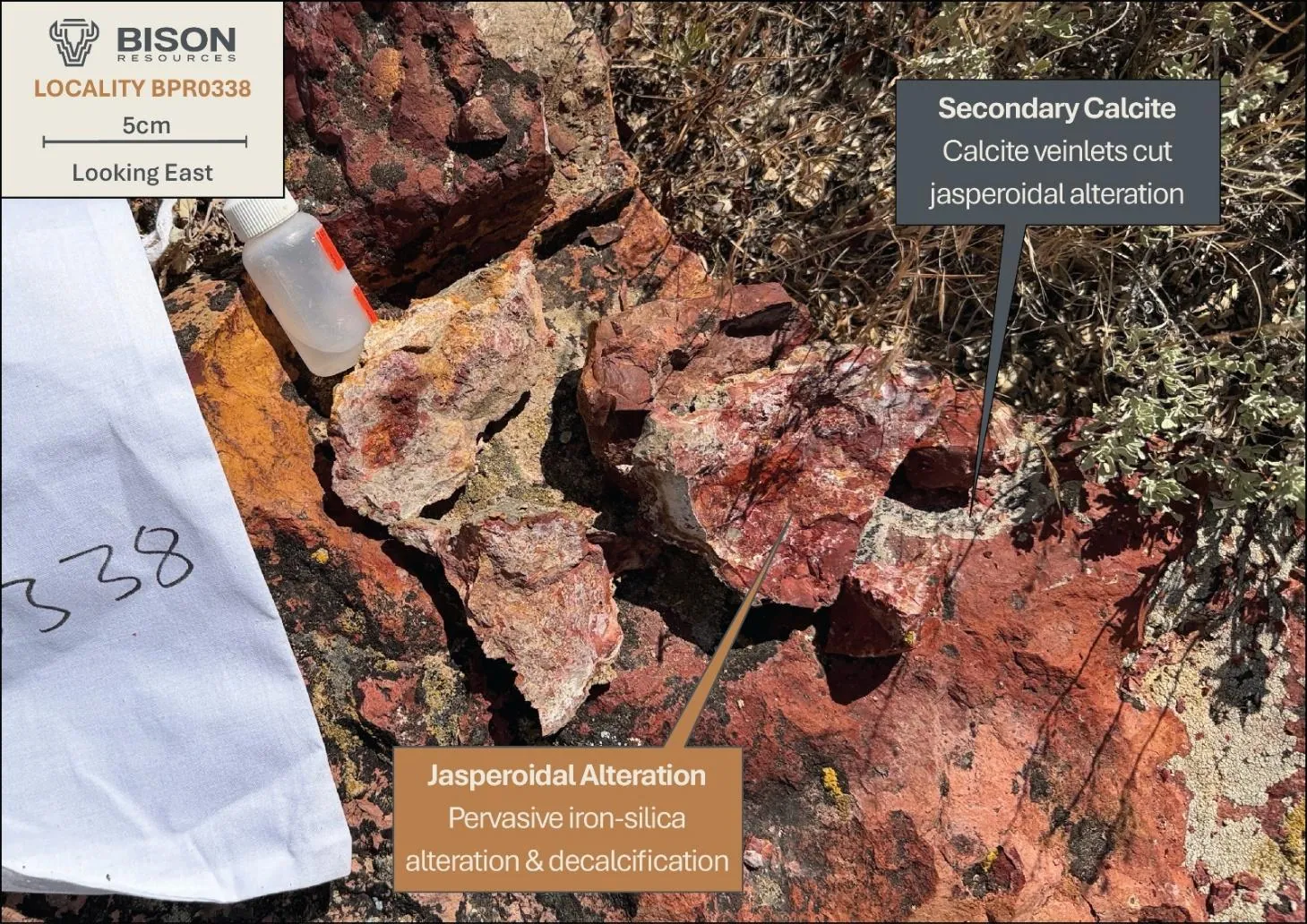
The company collected 310 additional rock chip samples and 590 soil samples across Bald Peaks, with all results still pending at 30 September. The soil program used a nominal 100-metre grid across the project, designed to define pathfinder trends and identify possible concealed targets. This builds on the earlier Bald Peaks sampling campaign which had already outlined additional jasperoid and breccia trends, according to the company's August coverage.
Nevada survey sharpens four-project targeting
Bison also completed more than 4,000 line kilometres of high-resolution airborne magnetic and radiometric surveying across its four Nevada projects: Bald Peaks, Ruby Lake, Cherry Springs and Medicine Range. Preliminary interpretation placed the Bald Peaks anomaly within a magnetic low near northeast-trending faults and north-northwest-trending thrusts, a setting the company says resembles regional Carlin-type deposits.
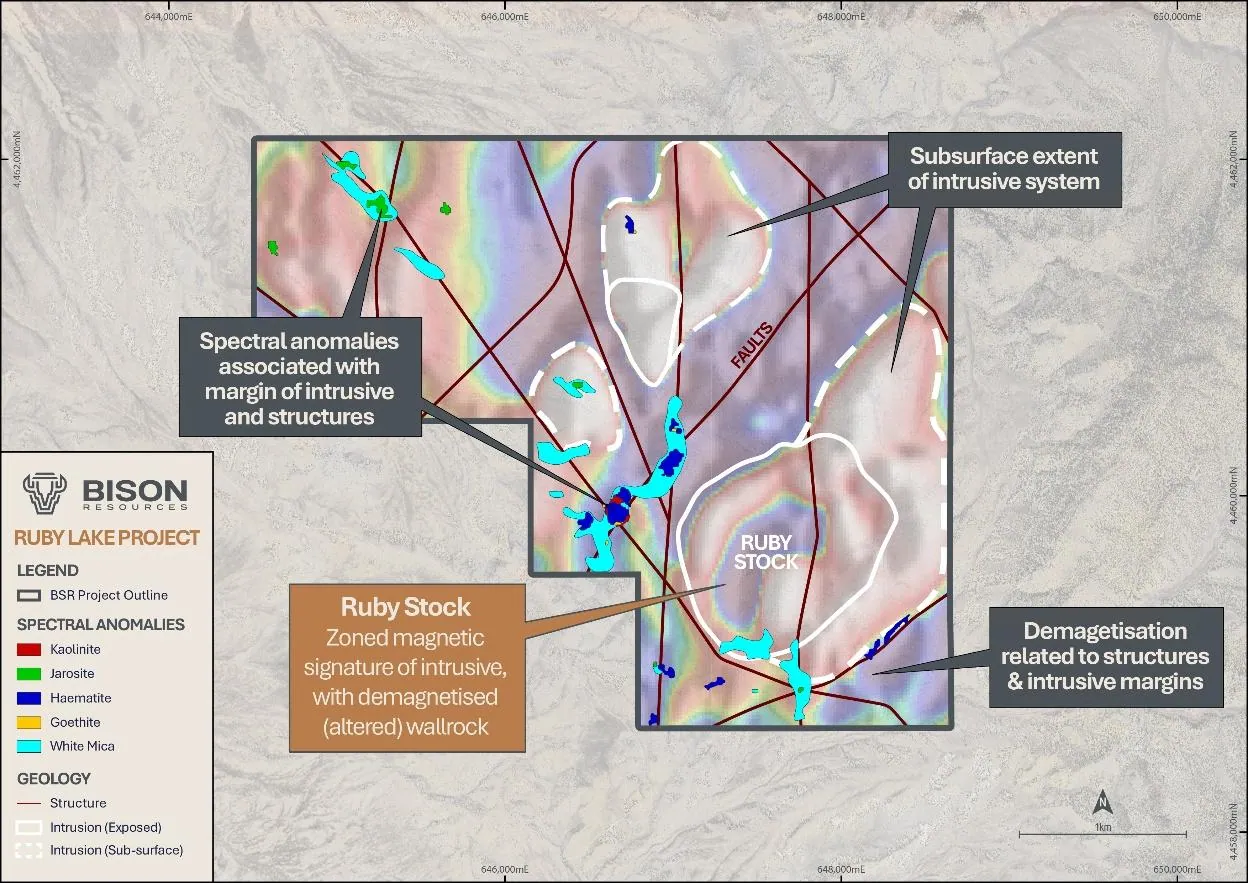
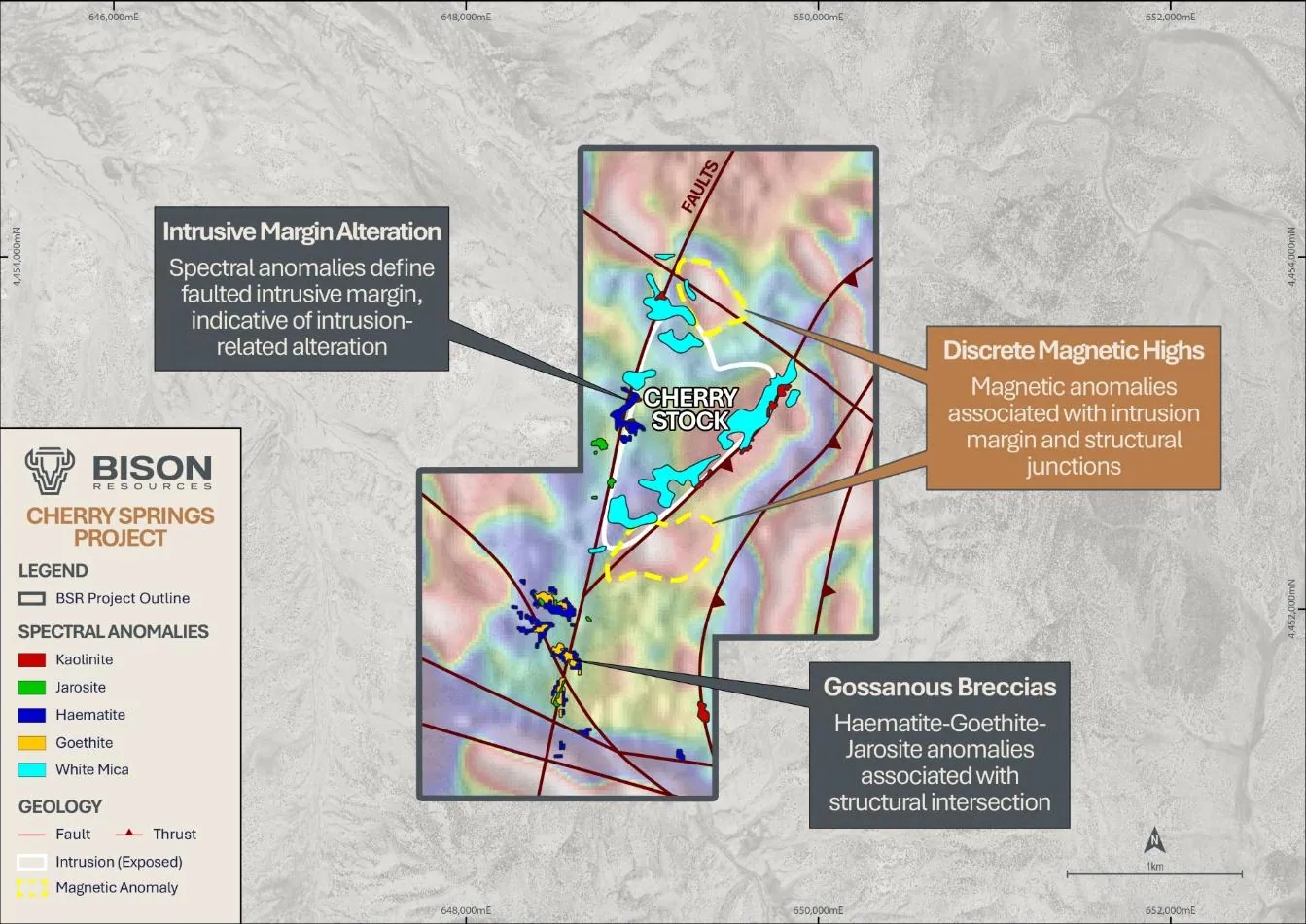
The same dataset has expanded the exploration picture elsewhere in the portfolio. At Ruby Lake, magnetic imagery suggests the exposed Ruby Stock forms part of a larger subsurface igneous complex, while Cherry Springs contains discrete magnetic highs along the Cherry Stock margin and at structural intersections. Those targets support further work, but the immediate field test is Bald Peaks.
Claim expansion secures southern extensions
Bison added 144 unpatented lode claims at Bald Peaks during the quarter, taking the project from 40 claims covering about 3.3 square kilometres to 184 claims covering roughly 15.4 square kilometres. The expanded ground follows the company's identified geochemical and structural trends to the south and secures strike extensions of the Carlin-type anomaly and associated spectral features.
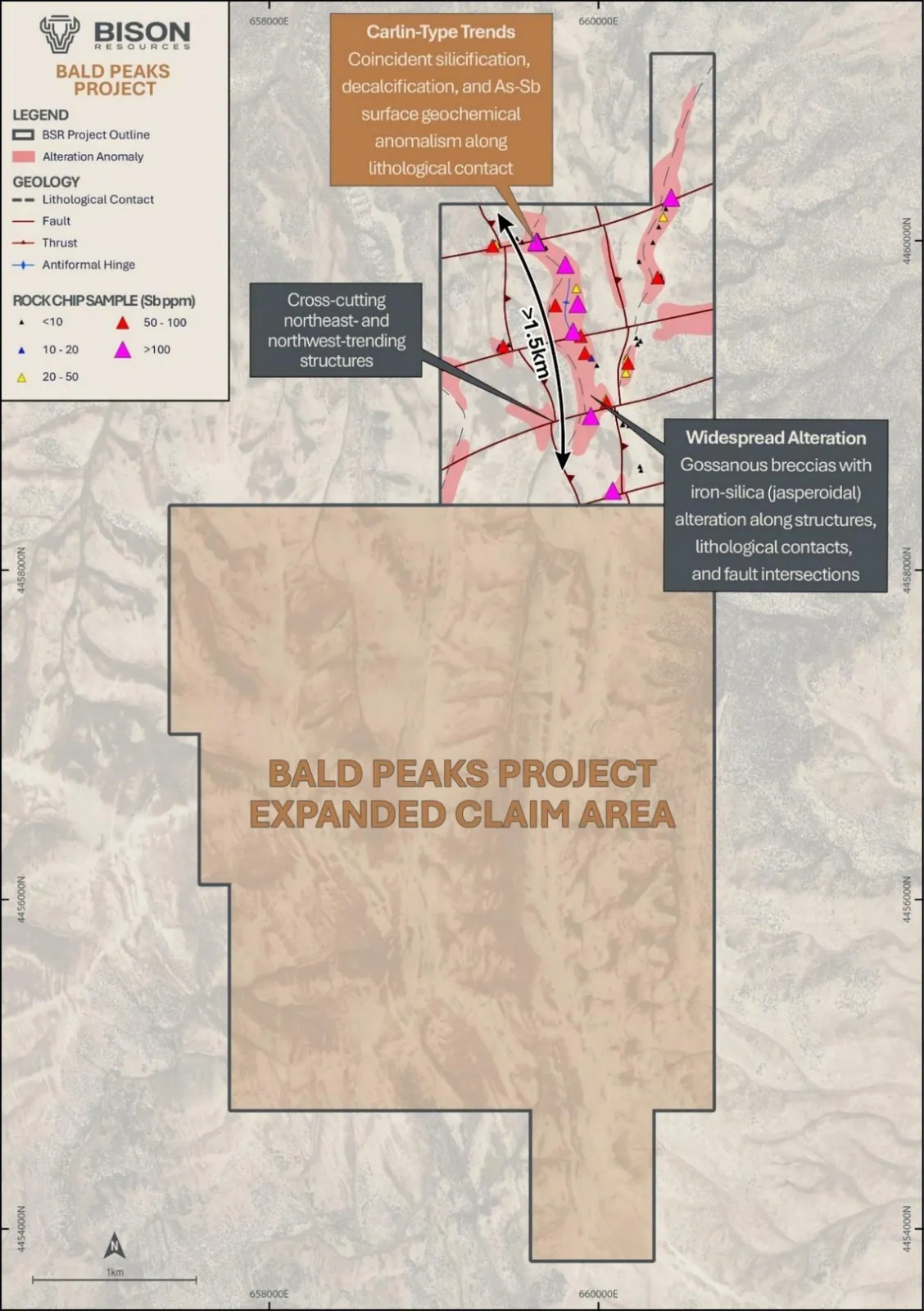
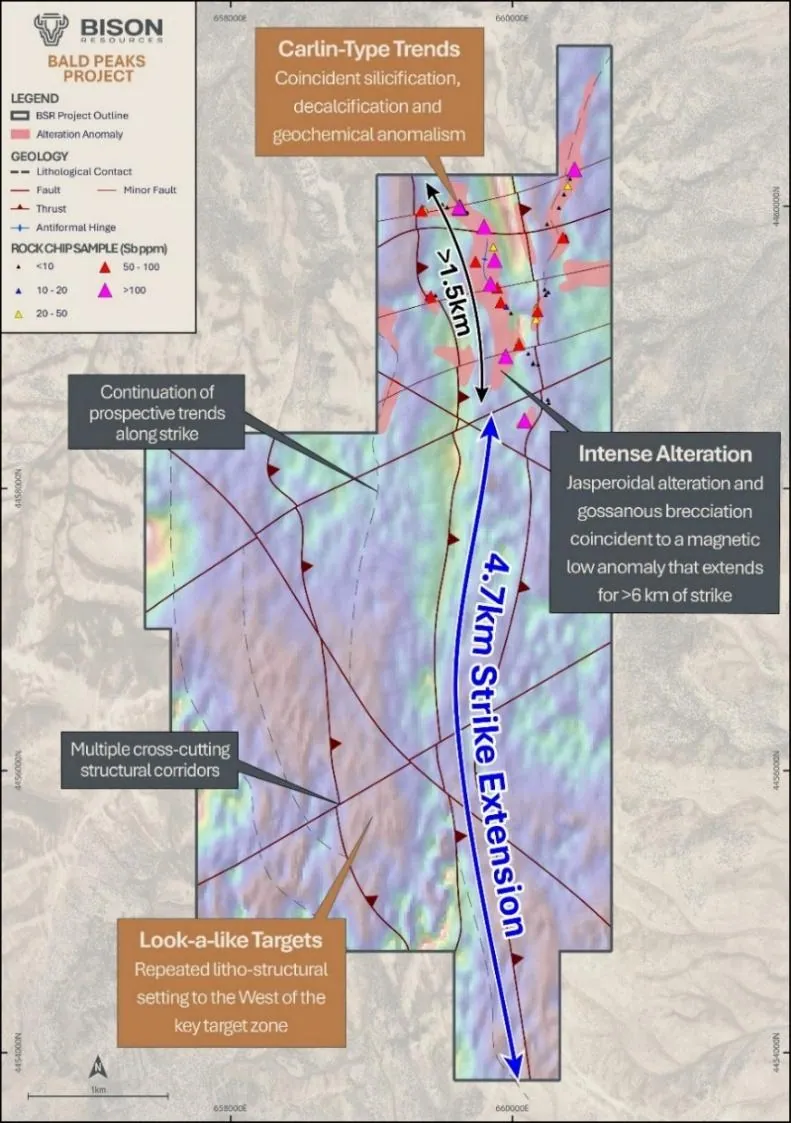
Across Nevada, Bison now holds 456 claims covering approximately 38.1 square kilometres. The increase gives the company more room to pursue the anomaly beyond the initial drill area, including a southern strike extension of about 4.7 kilometres that remains a target for future work.
Cash balance gives limited room for exploration
Bison finished September with A$3.514 million in cash and spent A$1.147 million on exploration during the quarter. Its Appendix 5B reports A$1.513 million of net operating cash outflows for the period and estimates 2.32 quarters of funding based on the quarter-end balance and reported outgoings. That is a snapshot rather than a forecast: drilling, permitting and assay activity could alter the spending rate.
The next meaningful evidence will come from the 900 pending samples and the BLM process, followed by the maiden holes themselves. Until those results arrive, Bald Peaks offers an increasingly well-defined target and a larger land position, but not yet the mineralised core Bison is seeking.
Get ASX:BSR news the moment it breaks
 iPhone & iPad
 Android
Bottom Line?
Bald Peaks is now approaching its first drill test, but the investment case still turns on assays, permitting and whether the planned holes intersect mineralisation rather than just alteration.
Questions in the middle?
- Will the 310 rock chip and 590 soil samples extend or strengthen the existing arsenic-antimony anomaly?
- How quickly will the BLM process allow Bison to move from a Notice of Intent to drilling?
- Can the A$3.514 million cash balance fund the maiden program without a further capital raising?
Sources
1-
Quarterly Activities/Appendix 5B Cash Flow Report (opens in a new tab)Verified source. Bison Resources Limited · 30 Oct 2026