Element 25 Turns Butcherbird Into a Launchpad for Global Manganese

Element 25 has moved its Butcherbird manganese expansion into physical execution, targeting mechanical completion in the first quarter of 2027 while pursuing a much larger battery-materials strategy. The company is also positioning a planned Louisiana HPMSM facility as a US$166 million-supported foothold in non-China supply chains, although financing and permitting remain outstanding.
- Butcherbird expansion targets 1.1Mtpa of manganese concentrate
- Mechanical completion targeted for Q1 2027
- 101.4Mt reserve supports an estimated 18.3-year mine life
- Louisiana HPMSM facility planned at 65,000tpa
- US$166 million Department of Energy grant support remains part of the funding plan
 Add us as a preferred source on Google
Butcherbird moves from preparation to construction
Element 25 Limited (ASX:E25) is presenting Butcherbird as more than a feasibility-stage manganese project: the Western Australian mine expansion has entered physical execution, with early works delivered, major equipment ordered and detailed engineering materially advanced. The company is targeting mechanical completion in the first quarter of 2027 for a redesigned processing facility intended to produce 1.1 million tonnes a year of manganese concentrate.
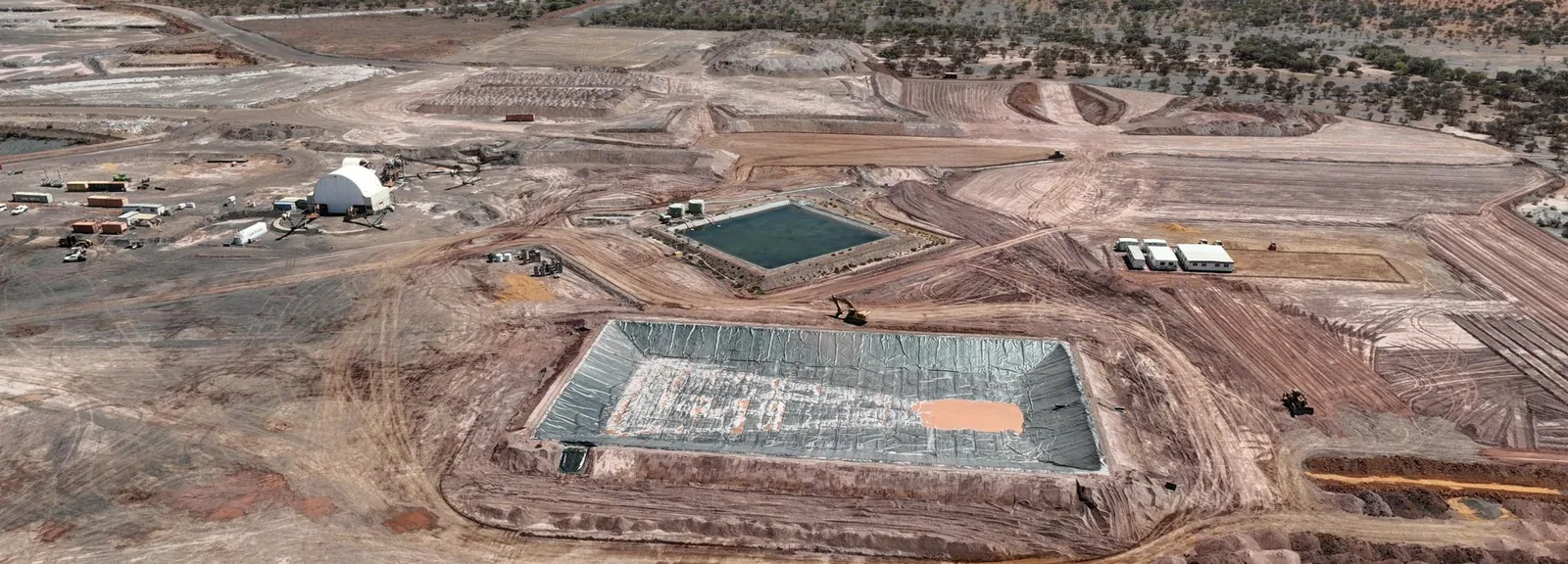
The progress builds on the early works milestone reported this month, which included site clearing, bulk earthworks, process-water infrastructure and upgraded site services. Element 25 says the main equipment packages have been awarded and are in manufacture, while mining, haulage, port and offtake arrangements have been completed. It also says the Northern Australia Infrastructure Facility contractual close process is approaching completion, but the presentation does not state that funding has been drawn.
Mine economics rest on a large reserve and modest footprint
Butcherbird’s stated base is a 274 million tonne mineral resource grading 10% manganese and a 101.4 million tonne reserve grading 10.4%. The reserve supports an estimated 18.3-year mine life, while the company says it uses only about 40% of the global resource, leaving potential for future expansion that remains conceptual rather than established production.
The January 2025 feasibility case cited in the presentation assumes 6.1 million tonnes of ore mined annually to produce 1.1 million tonnes of 31.6% manganese concentrate. It forecasts an undiscounted annual cash flow of A$70.5 million, pre-tax real NPV8 of A$561 million, post-tax real NPV8 of A$379 million and a pre-tax IRR of 96%, based on an estimated A$64.8 million capital cost. Those are study outputs, not operating results, and remain exposed to construction, financing, commissioning, pricing and execution risk.
Louisiana plan targets the refining bottleneck
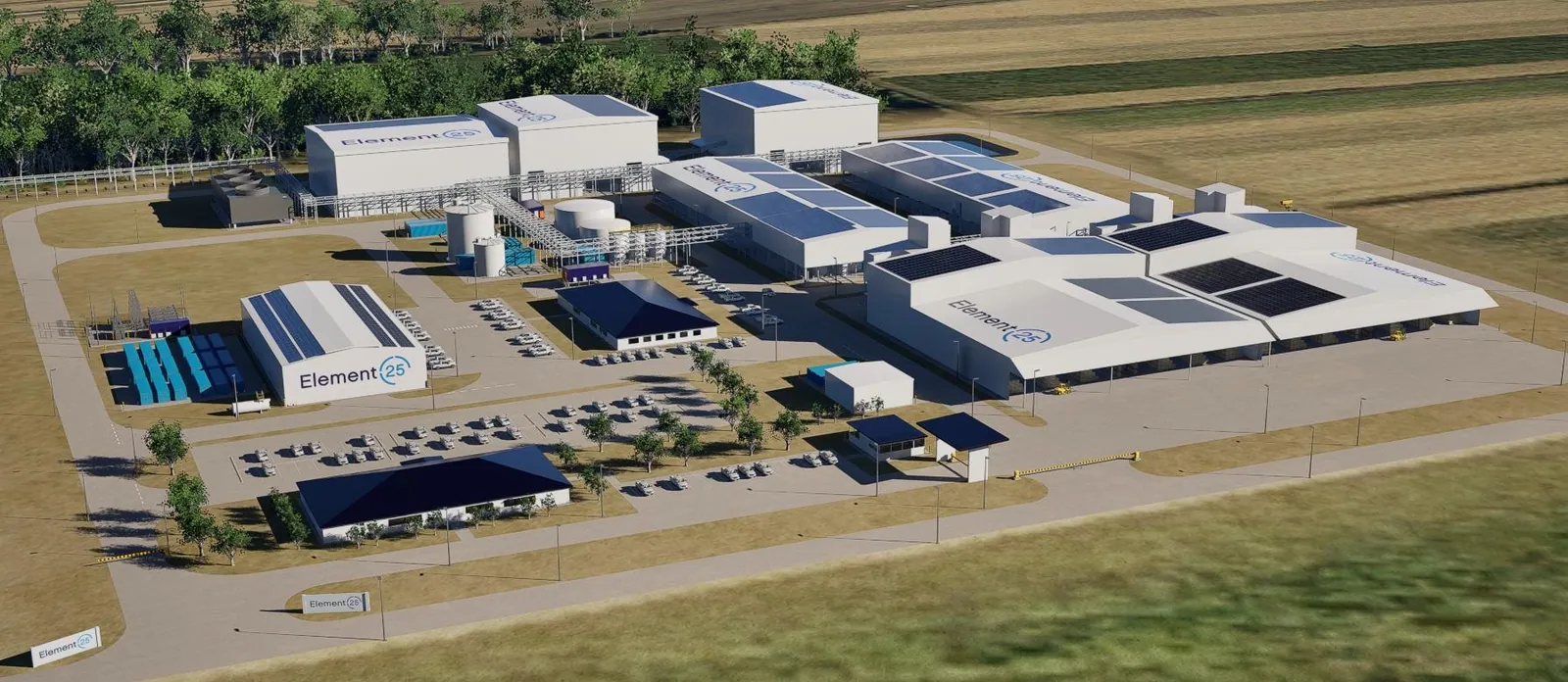
The longer-term ambition is to convert Australian manganese into battery-grade high-purity manganese sulphate monohydrate, or HPMSM, in the United States. Element 25 outlines a planned Louisiana facility with capacity of 65,000 tonnes per year, developed with General Motors and Stellantis and supported by a US$166 million US Department of Energy grant. The company says the project is designed to use local reagents and feed into a lower-carbon, non-China battery supply chain.
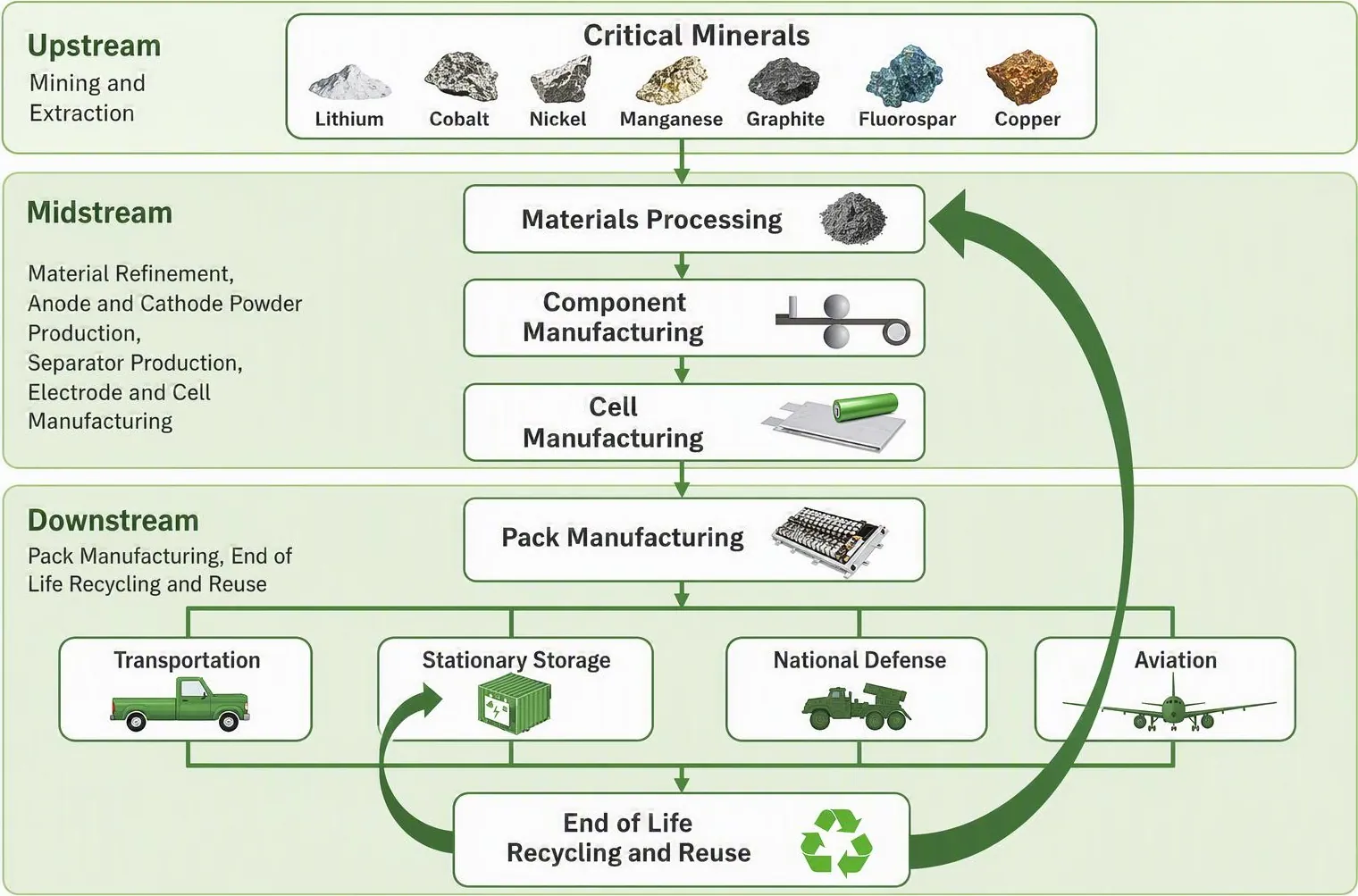
That facility remains subject to successful project financing and permitting. The presentation’s strategic case rests on the expected growth of higher-manganese battery chemistries, including lithium-manganese-rich cells, as well as demand from grid storage and defence applications. Element 25 also points to a proposed HPMSM development pathway in Japan with Nissan Chemical Corporation, alongside longer-term expansion opportunities in Europe and Asia, but these plans are at different stages and are not equivalent to an operating asset.
Execution now matters more than the strategy deck
The immediate test is straightforward: whether Element 25 can turn a construction-ready plan into a functioning plant while securing the remaining finance and maintaining the Q1 2027 mechanical-completion target. The company says the Butcherbird expansion has a granted mining lease, permits, existing infrastructure and a construction schedule of about 12 months, but the scale-up still has to pass through procurement, construction, commissioning and ramp-up.
For the Louisiana project, the unresolved questions are larger. The grant support and OEM relationships improve the project’s strategic positioning, yet they do not remove the need for project financing, permits and demonstrated process performance at commercial scale. The next material evidence will be funding close at Butcherbird, progress through main-plant construction and a clearer financing and permitting pathway for Louisiana.
Get ASX:E25 news the moment it breaks
 iPhone & iPad
 Android
Bottom Line?
Butcherbird is becoming an execution story: Q1 2027 mechanical completion and financing close are the near-term gates, while Louisiana remains a promising but unfinanced and unpermitted second act.
Questions in the middle?
- Will Element 25 complete NAIF financial close and fund the remaining Butcherbird construction without changing the project’s capital structure?
- Can the expanded processing plant achieve its 1.1Mtpa concentrate target after mechanical completion and commissioning?
- When will the Louisiana HPMSM project secure financing and permitting, and how binding are the proposed customer arrangements?
Sources
1-
Investor Update - IMARC Conference (opens in a new tab)Verified company source. Element 25 Limited · 29 Oct 2026 · element25.com.au