H2G’s Sodium-Ion Batteries Clear First Commercial Hurdle

H2G says its first PowerSafe stackable sodium-ion battery shipments have sold out, with products now available across Australia’s three eastern states. The company reported a sodium-ion sales pipeline above $4 million, alongside a $10 million-plus supercapacitor pipeline and quarter-end cash of $881,000.
- First PowerSafe Model S battery shipments sold
- Sodium-ion sales pipeline exceeds $4 million
- Supercapacitor and SuperBattery pipeline exceeds $10 million
- Sodium-ion products remain ineligible for federal battery rebates
- Quarter-end cash of $881,000 after $771,000 R&D receipt
 Add us as a preferred source on Google
First PowerSafe Shipments Sold
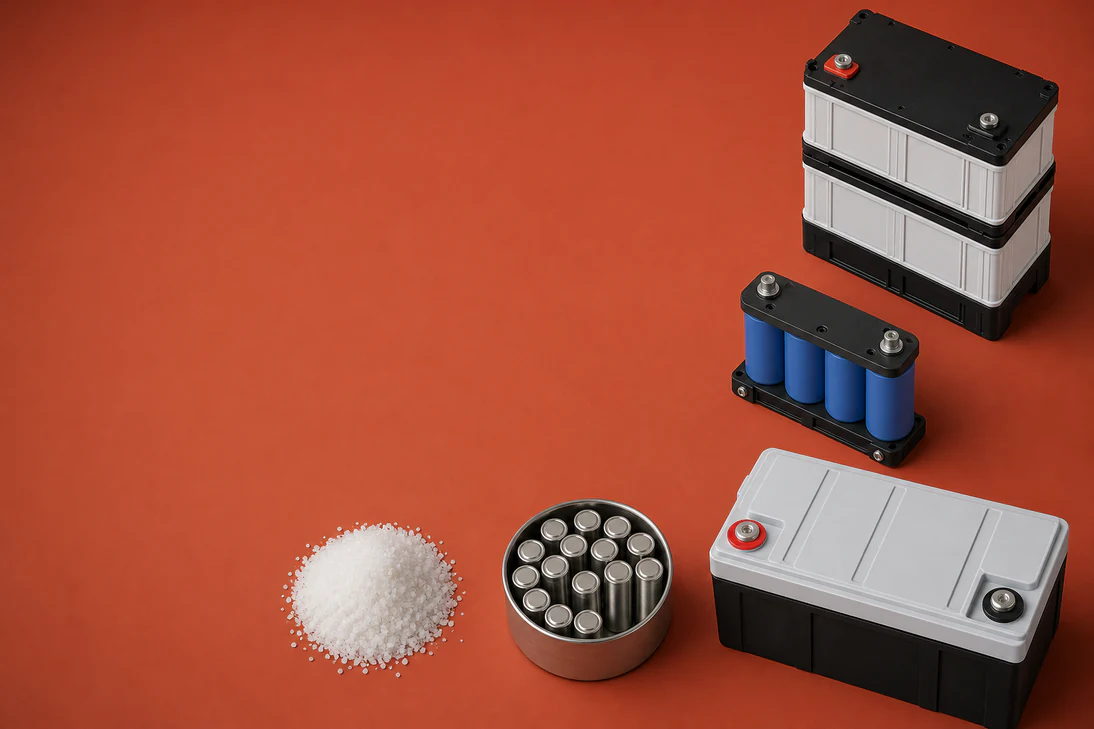
H2G Limited (ASX:H2G) has moved its PowerSafe sodium-ion battery range from product launch into early commercial delivery, reporting that its first shipments of the stackable Model S battery and compatible inverters have now sold. The products are available across New South Wales, Victoria and South Australia, while H2G has begun training installers in New South Wales and southern Queensland.
The company said customer acceptance of the sodium-ion technology had been rapid, although the filing does not disclose the value of the shipments, recognised revenue or gross margin. H2G’s reported sodium-ion sales pipeline stands above $4 million, compared with the $4.5 million pipeline reported in its earlier sodium-ion sales pipeline update. Discussions are continuing with distribution partners, installation companies and developers pursuing wholesale opportunities in apartment and housing projects.
Model S reduces the maximum package weight for a 20 kilowatt-hour battery from 250 kilograms to 43 kilograms, according to H2G. That is a practical change for handling and installation, particularly in the residential market the company is targeting first. The company also says the battery cell passed UL9540A testing across nail penetration, overcharge and thermal runaway tests without fire or explosion; those are company-reported product claims rather than independently verified findings in the announcement.
Rebate Ineligibility Remains the Commercial Hurdle
The biggest constraint in the update is regulatory rather than technical. H2G said sodium-ion batteries are still not eligible for Clean Energy Council registration under the Australian standard being adopted by the industry, leaving them unable to qualify for the Federal Government rebate passed on to consumers. The company is seeking access to those incentives, but gave no timetable for a change to the standard or for CEC eligibility.
H2G is pairing the batteries with its own CEC-approved inverters, including 6 kilowatt, 12 kilowatt and three-phase 12 kilowatt versions. It is also pursuing industrial applications where the company says fire safety, insurance considerations and end-of-life costs are priorities, including developments, petrol stations, utilities, eco-resorts and bushfire-prone properties.
Supercapacitor Pipeline Exceeds $10 Million
A separate growth avenue remains Skeleton Technologies’ supercapacitor and SuperBattery systems, which H2G is marketing to data centres and critical infrastructure as alternatives to lithium-ion systems for high-power applications. The pipeline exceeds $10 million, but H2G said conversion to orders has been slow because operators face significant technical uncertainty around grid support and critical-power solutions.
Cash improved to $881,000 at 30 September, helped by the receipt of a $771,000 R&D tax claim. Net operating cash flow was positive at $224,000 for the quarter, although the filing does not indicate that this level is representative of underlying trading: the R&D receipt was the main disclosed cash inflow. H2G reported $158,000 in payments to directors and their associates, including wages, superannuation, consulting fees and office lease payments.
The commercial test now is straightforward but demanding: whether initial sales can become recurring revenue without the benefit of the federal rebate, and whether distribution and installer capacity can turn stated pipelines into binding orders. The next quarterly report should provide a clearer indication of that conversion, as well as whether sodium-ion products have moved closer to CEC registration.
Get ASX:H2G news the moment it breaks
 iPhone & iPad
 Android
Bottom Line?
Initial shipments and installer expansion are encouraging, but the $4 million sodium-ion pipeline still needs to become recognised revenue while rebate eligibility remains unresolved.
Questions in the middle?
- How much revenue and margin did the first sold shipments contribute, and can sales continue without federal rebate support?
- When will sodium-ion batteries become eligible for CEC registration and government incentives?
- Can H2G convert the combined battery and supercapacitor pipelines into binding orders before cash requirements rise?
Sources
1-
Quarterly Activities/Appendix 4C Cash Flow Report (opens in a new tab)Official market announcement. H2g Limited · 30 Oct 2026 · h2g.com.au