Mount Ridley adds vanadium-rich titanomagnetite to Selectro platform

3 min read
9:32am on Tuesday 3rd of November, 2026 AEDT ~9am, 3rd Nov, 26
Mount Ridley Mines says its patent-pending Selectro process recovered 95.5% of vanadium from a third-party titanomagnetite sample, while also recovering titanium and iron. The result broadens the process beyond scandium and bauxite, although commercial economics and scale-up remain untested.
- 95.5% vanadium recovery from titanomagnetite
- 48.6% titanium and 77.6% iron recovery
- Two-stage leach avoided high-temperature salt roasting
- Titanomagnetite becomes Selectro’s third demonstrated feed type
- Demonstration plant design and producer engagement ahead
 Add us as a preferred source on Google
Titanomagnetite delivers 95.5% vanadium recovery
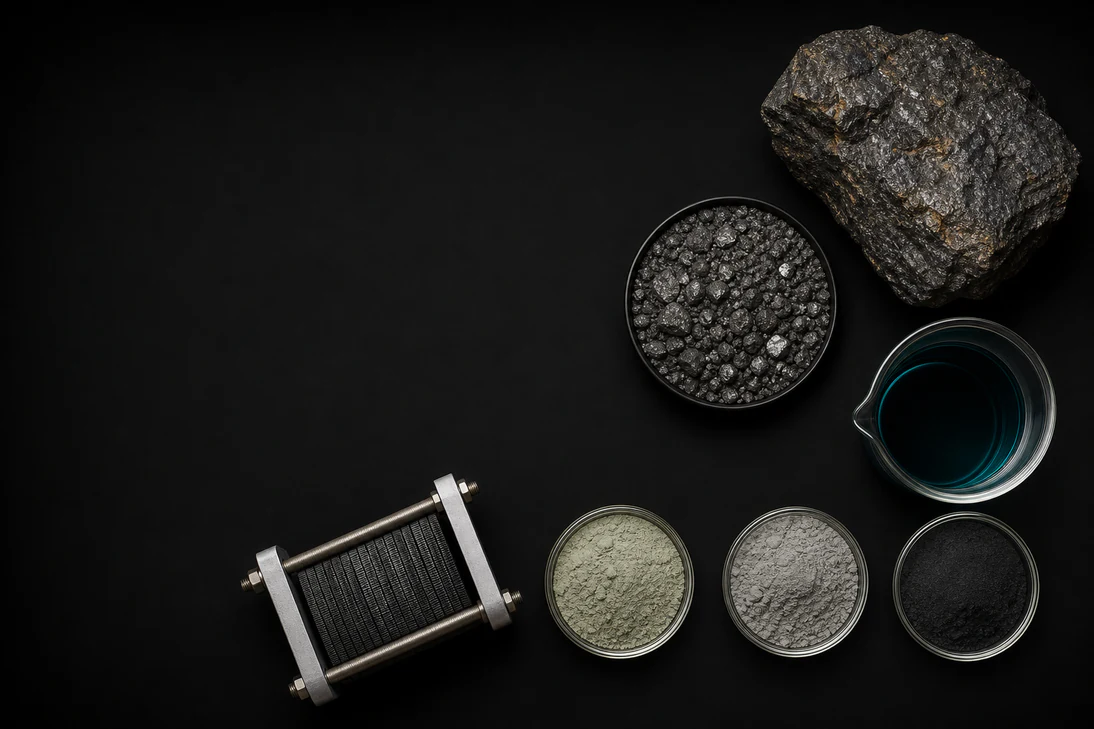
Mount Ridley Mines Limited (ASX:MRD) has added a major vanadium-bearing feed to its Selectro processing platform, recovering 95.5% of vanadium from a third-party titanomagnetite sample. The same two-stage test also recovered 48.6% of titanium and 77.6% of iron, giving the company a broader result than the vanadium-only pathway typically associated with this mineral.
The sample contained 1.30% V2O5, 14.2% TiO2 and 52.3% iron. Mount Ridley says the combined recoveries were calculated by comparing residue and head assays, consistent with the method used in its earlier bauxite testing.
Two-stage leaching separates vanadium from titanium
Selectro first leached vanadium and iron preferentially over titanium. That left a residue grading 21.5% TiO2, up from 14.2% in the original sample. A second leach using fresh solution then lifted titanium recovery from 9% in the first stage to 48% overall, while also recovering additional vanadium and iron.
Mount Ridley attributes the weaker first-stage titanium recovery to solution loading, with iron and vanadium heavily occupying the solution. The company says the second-stage improvement suggests the leach conditions could be refined further, but the test does not disclose operating costs, reagent consumption, product specifications or a commercial flowsheet.
Selectro expands from scandium and bauxite
Titanomagnetite is now the third distinct feed type tested by Selectro, following Grass Patch clay and bauxite. The result extends a platform whose earlier work included strong bauxite recoveries, with the company reporting 94.9% gallium, 91.9% aluminium and 96.7% iron recovery from that feed.
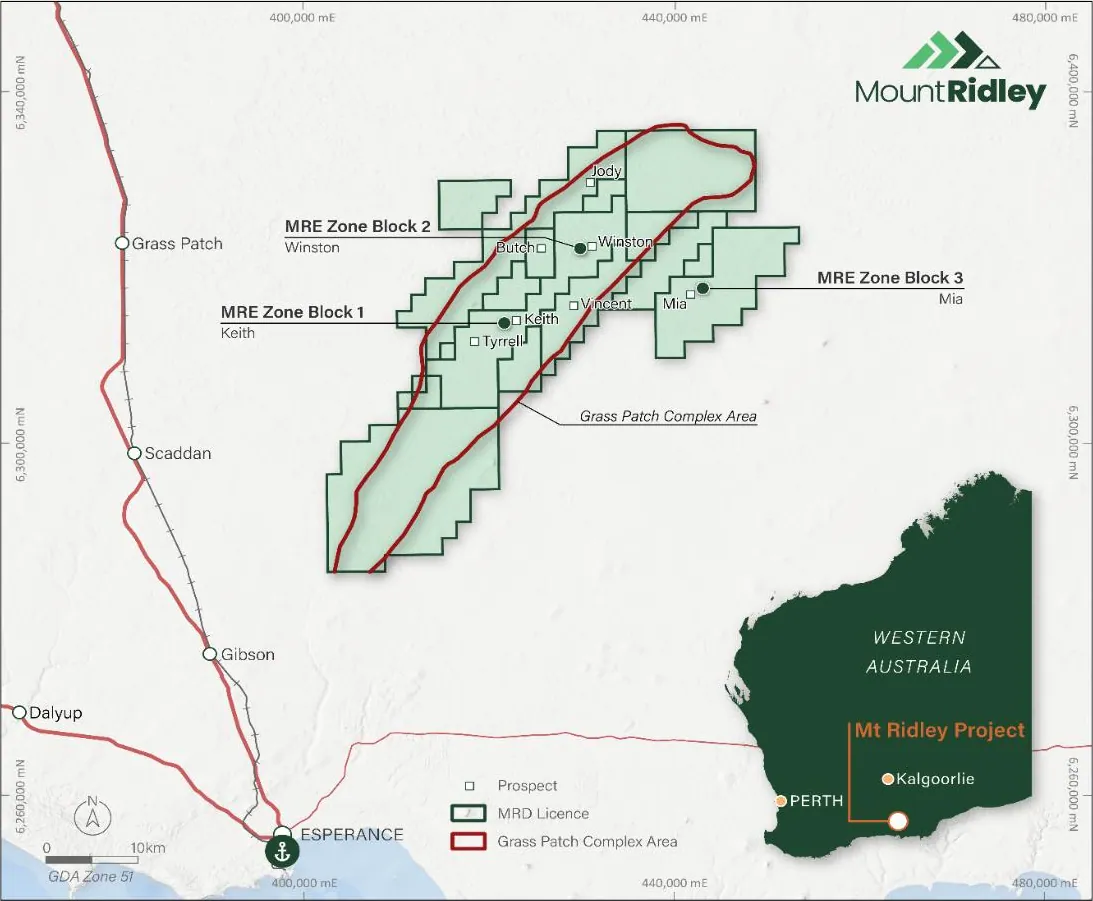
The new result also reconnects the processing work with Mount Ridley’s Grass Patch project. Titanium-scandium alloys are being assessed alongside aluminium-scandium alloys through the company’s CSIRO Kick-Start program with Lab22, while the Grass Patch project contains a 946.1 million-tonne Inferred scandium Mineral Resource. That resource and the latest scandium work were reported alongside 946.1Mt scandium resource, but the current announcement concerns a separate third-party titanomagnetite sample.
Demonstration plant becomes the next commercial test
Mount Ridley says it is discussing the design of a Selectro demonstration plant with engineering groups. Having tested three feed types, the plant could potentially be used to showcase the process on both company material and third-party feeds, supporting discussions with vanadium and titanium producers.
The immediate work programme includes a larger bauxite test intended to demonstrate separation and purification through a full mine-to-metal pathway. Additional third-party feed testing may follow in calendar 2027 or be considered case by case. The titanomagnetite result is encouraging on recovery, but the important commercial questions now shift to scale-up, reagent intensity, product quality and whether the two-stage process can deliver competitive economics without the high-temperature salt roast used in conventional titanomagnetite processing.
Get ASX:MRD news the moment it breaks
 iPhone & iPad
 Android
Bottom Line?
The recovery result strengthens Selectro’s licensing story, but the demonstration plant and larger-scale testing must show that strong laboratory recoveries translate into practical separation and economics.
Questions in the middle?
- Can the second-stage titanium recovery be improved without materially increasing reagent use or process complexity?
- What product specifications and operating costs will emerge from larger-scale Selectro testing?
- Will vanadium and titanium producers engage beyond initial discussions once demonstration plant parameters are defined?
Sources
1-
Selectro Recovers 96% Vanadium from Titanomagnetite (opens in a new tab)Verified company source. Mount Ridley Mines Limited · 3 Nov 2026 · investors.mtridleymines.com.au