Pursuit reveals a bigger lithium future at Rio Grande Sur

Pursuit Minerals has increased Rio Grande Sur’s probable ore reserve by about 250% to 438,000 tonnes of lithium carbonate equivalent and outlined a staged path to 17,500 tonnes per year. The headline economics are substantial, but depend on a lithium price assumption almost twice the cited spot market and financing that has not yet been secured.
- Probable Ore Reserve rises to 438,000 tonnes LCE
- Staged production target increases from 5,000 to 17,500 tpa
- Carbonate expansion case shows US$1.086 billion NPV and 26.2% IRR
- Chloride route offers lower capital intensity and 27.1% IRR
- DFS, funding, product validation and permitting remain outstanding
 Add us as a preferred source on Google
Reserve Growth Recasts Rio Grande Sur
Pursuit Minerals Ltd (ASX:PUR) has turned Rio Grande Sur from a 5,000-tonne-per-year lithium carbonate proposal into a staged development targeting 17,500 tonnes per year of lithium carbonate equivalent. The project’s updated probable ore reserve has risen approximately 250% to 438,000 tonnes LCE, up from 125,000 tonnes, with the reserve drawn entirely from Indicated Mineral Resources.
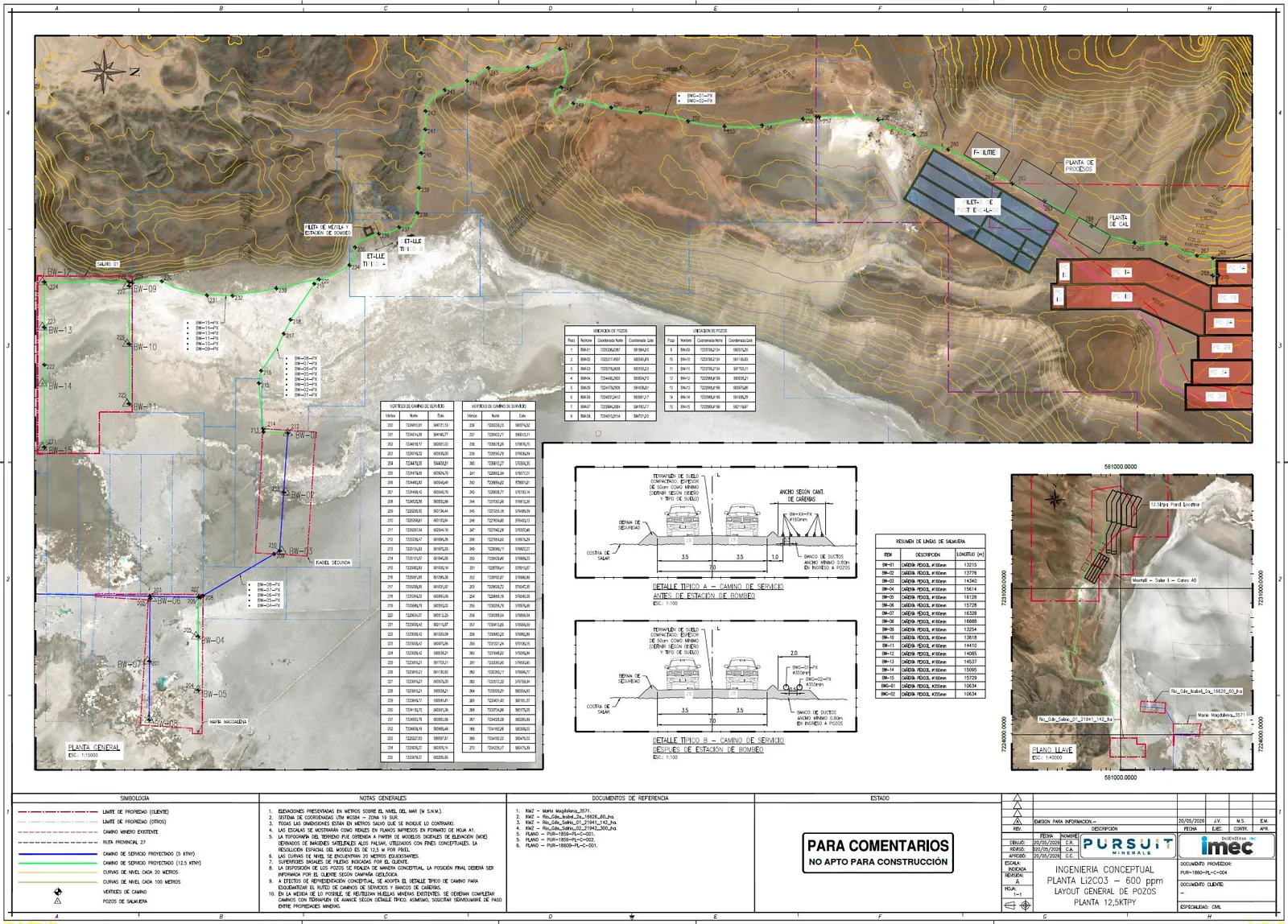
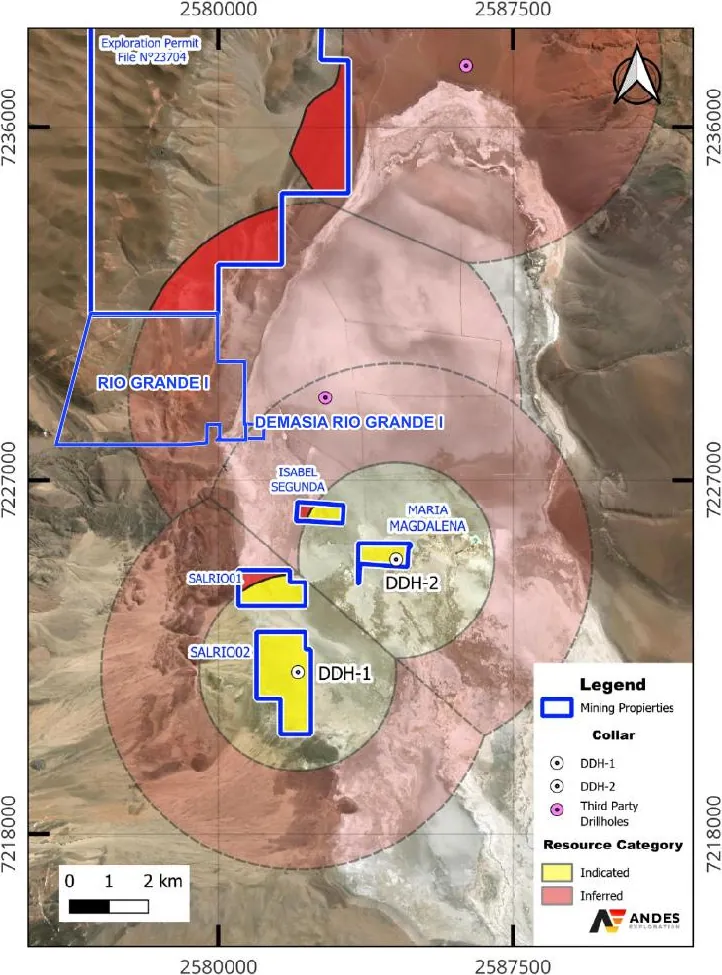
That is the central change in the pre-feasibility study addendum. Pursuit says the reserve supports roughly 27 years of production under the staged plan, while its unchanged mineral resource stands at 1.264 million tonnes LCE, including 559,000 tonnes classified as Inferred. That Inferred material is excluded from the production targets and financial forecasts, an important distinction in a study whose expansion case is already ambitious.
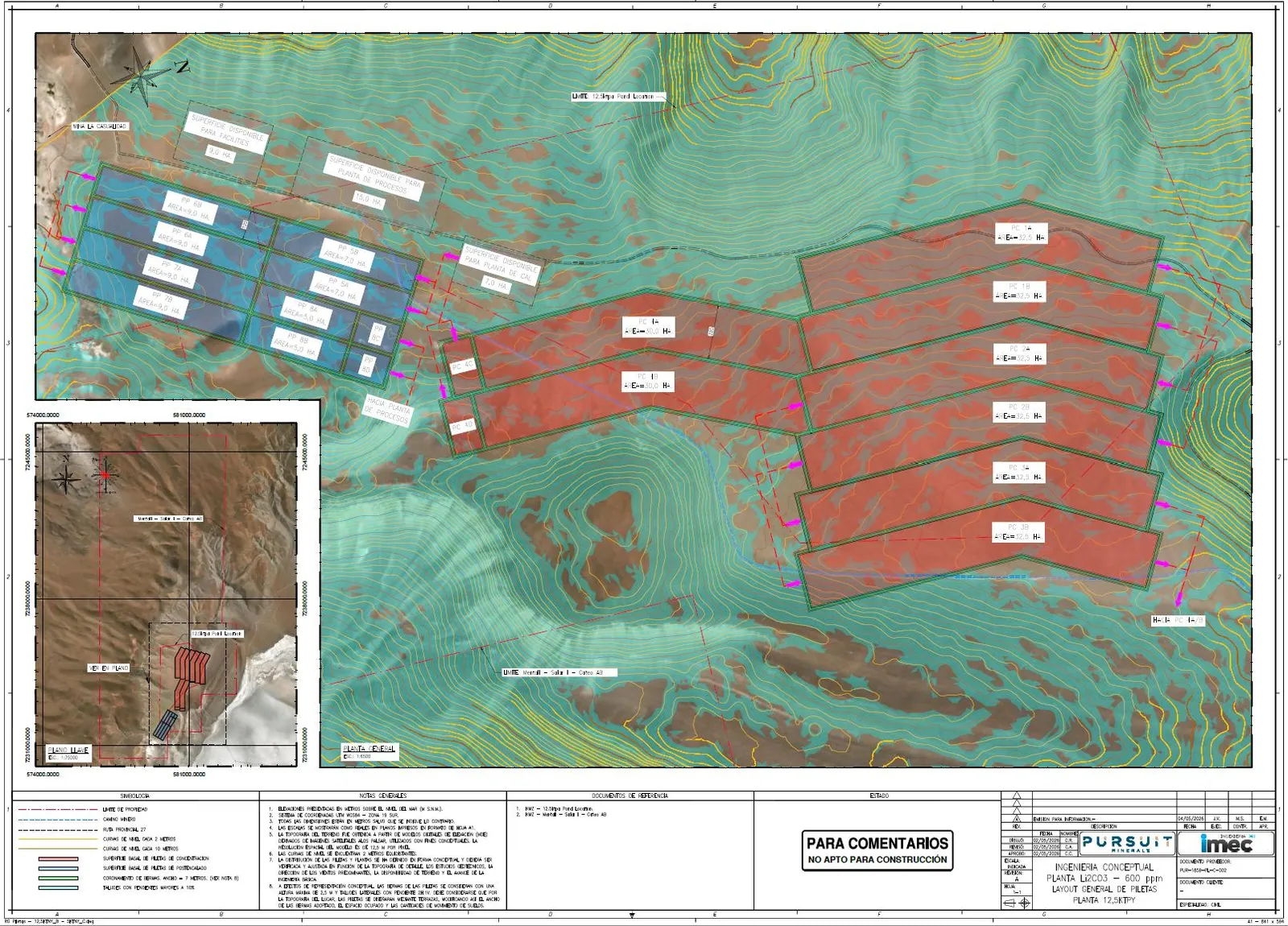
The updated development begins with the original 5,000 tpa carbonate operation, followed by a 12,500 tpa expansion. Stage 1 construction is modelled to start in January 2027, with first production in January 2030. The expansion would begin construction in 2033 and reach full production in June 2037, subject to a definitive feasibility study, approvals, financing and a final investment decision.
Two Product Routes, Two Different Trade-offs
Under the carbonate expansion case, Pursuit estimates gross revenue of US$9.315 billion, life-of-mine free cash flow to the firm of US$4.163 billion, a project NPV of US$1.086 billion and an IRR of 26.2%. The combined route requires estimated initial capital of US$570.7 million and carries blended operating costs of US$6,029 per tonne of LCE.
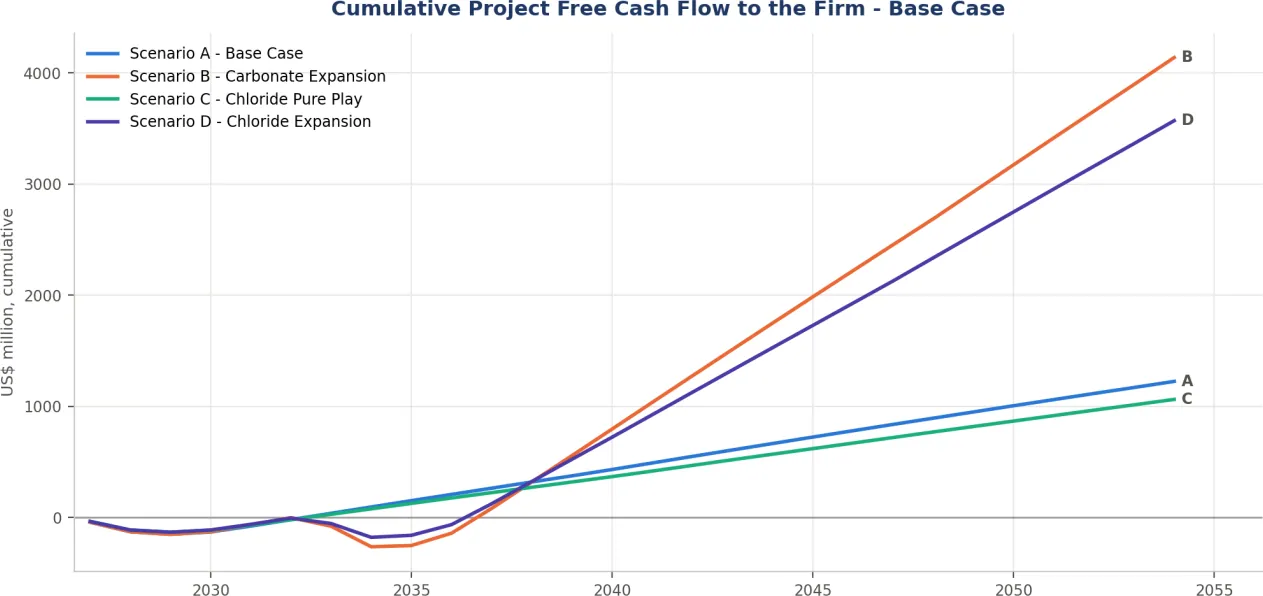
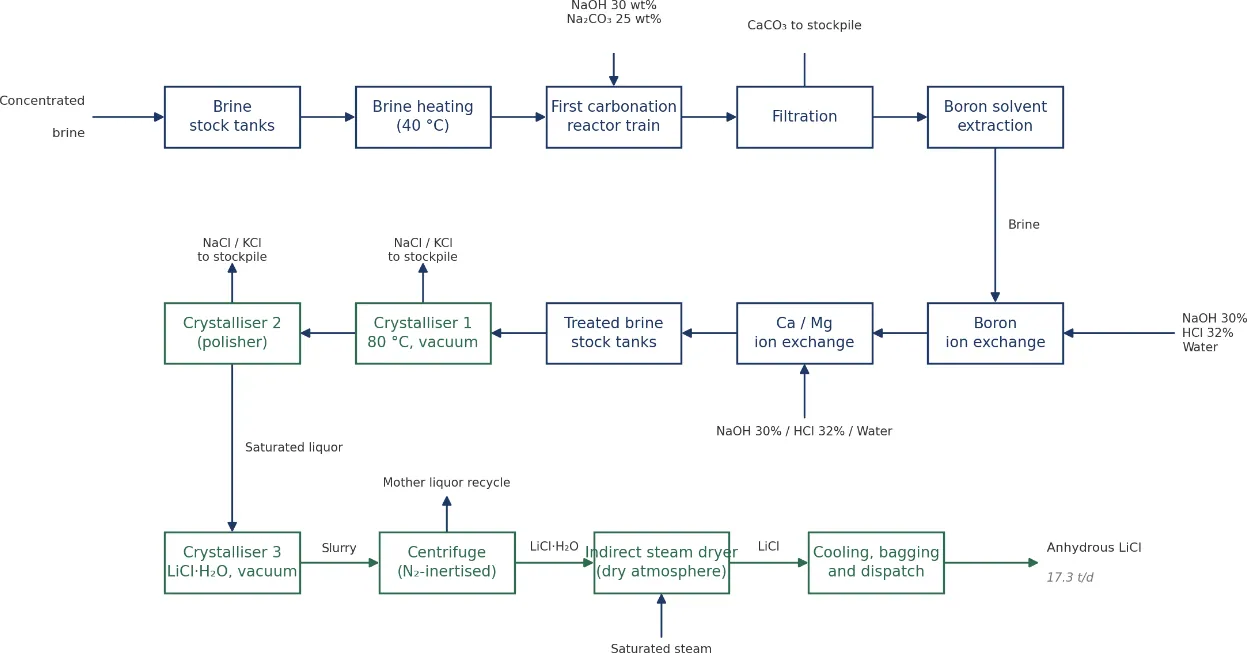
The alternative lithium chloride route is cheaper to build and operate, but less established commercially. It carries combined initial capital of US$432.9 million, blended operating costs of US$4,003 per tonne of LCE, an estimated NPV of US$951 million and an IRR of 27.1%. The route would produce technical-grade anhydrous lithium chloride rather than battery-grade carbonate, with the company assuming the product achieves 80% of the carbonate reference price on an LCE basis.
That assumption is not yet a market fact. Pursuit acknowledges that lithium chloride pricing and contract structures remain less mature, and says product specifications, customer qualification and pricing will need to be tested through further work and offtake engagement. The chloride option therefore offers lower capital intensity, but introduces a different commercial question before the product decision is made at DFS.
The Price Assumption Carries the Biggest Caveat
The financial models use a flat lithium carbonate reference price of US$27,300 per tonne of LCE. Pursuit says this is a modelling input based on five years of historical prices and five years of published forecasts, rather than a prediction of future spot prices. The announcement also cites a prevailing Chinese battery-grade lithium carbonate spot price of approximately US$13,707 per tonne, putting the study’s reference case at roughly twice that level.
Pursuit’s sensitivity analysis shows positive economics at prices 30% below the reference, with the carbonate expansion case producing an NPV of US$470 million and an IRR of 16.9%, while the chloride expansion case produces an NPV of US$459 million and an IRR of 18.6%. But a 30% discount still implies a carbonate price of about US$19,110 per tonne and a chloride-equivalent price of about US$15,288, both above the cited spot price. The sensitivity therefore demonstrates resilience within the study’s chosen range, rather than removing exposure to a materially weaker market.
Funding and Technical Work Still Stand Between Study and Mine
The staged structure is designed to limit future external equity. Pursuit’s model assumes 20% equity and 80% debt, with Stage 2 equity funded first from Stage 1 cash flow. Under the reference-price cases, the company says Stage 2 equity could be funded entirely from accumulated Stage 1 cash flow. No binding offtake, sales or financing agreements are currently in place, however, and the company cautions that funding remains subject to market conditions, further studies, approvals and acceptable terms.
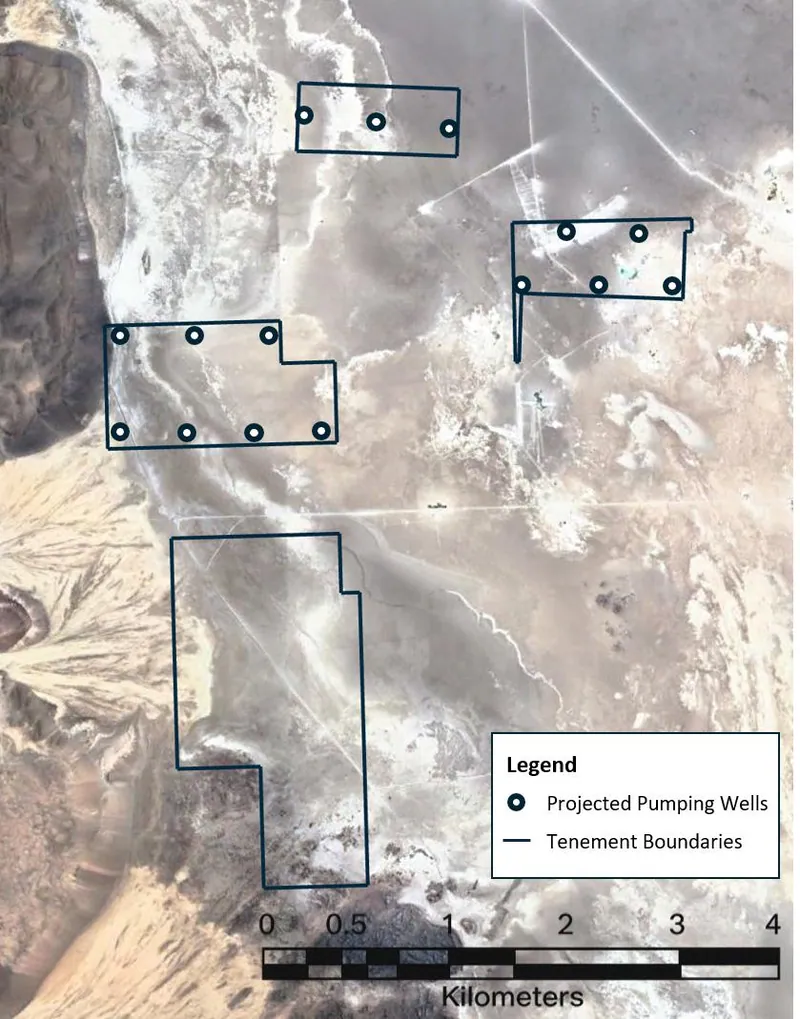
The expanded wellfield comprises 15 production wells with simulated capacity of approximately 33,196 cubic metres per day. Against the modelled 17,500 tpa carbonate development, that leaves a stated 45.1% capacity margin at the design feed grade. At a lower simulated grade of about 423 mg/L lithium, the margin narrows to 11.6%, underscoring why the planned long-duration pumping tests and updated groundwater model matter to the expansion case.
The next technical catalysts include incorporation of the Mito and Demasía drilling into updated resource and hydrogeological models, a planned 30-day pumping test at María Magdalena, further evaporation and process testwork, and qualification of lithium chloride product with prospective customers. The earlier Mito drilling results included an 809 mg/L lithium result at depth, while the latest announcement reports a peak assay of 995 mg/L from the completed DDH-3 program. Those results may support future resource growth, but they are not included in the current reserve or production targets.
Argentina’s RIGI investment regime could also improve the economics if the integrated project qualifies. The staged carbonate and chloride investments exceed the stated US$200 million threshold, but the benefits remain subject to eligibility and approval, and the study does not credit potential capital-cost savings from import-duty relief. For now, Rio Grande Sur has a much larger development case on paper; the harder test will be whether the DFS can validate the aquifer, product route and funding structure at prices the market can actually support.
Get ASX:PUR news the moment it breaks
 iPhone & iPad
 Android
Bottom Line?
The reserve increase and staged economics materially raise Rio Grande Sur’s ambition, but the investment case now hinges on reconciling a long-term price assumption of US$27,300/t with a cited spot price near US$13,707/t, while proving the aquifer and securing project finance.
Questions in the middle?
- Can the updated groundwater model and long-duration pumping tests support sustained 17,500 tpa production without materially reducing the reserve?
- Will lithium chloride customers accept the assumed 80% carbonate-linked price and complete product qualification before the DFS route decision?
- Can Stage 1 generate enough cash flow to fund Stage 2 equity if lithium prices remain well below the study’s reference case?
Sources
1-
Rio Grande Sur Pre-Feasibility Study & Ore Reserve Addendum (opens in a new tab)Official market announcement. Pursuit Minerals Ltd · 6 Nov 2026 · pursuitminerals.com.au