DTE Energy sharpens its utility bet with a US$3 billion Vantage sale

DTE Energy plans to sell substantially all of its Vantage assets for about US$3 billion and redirect the proceeds into regulated utility infrastructure. The strategy lifts its five-year utility investment plan to US$44.2 billion and raises its long-term operating earnings growth target above 9%.
- About US$3 billion Vantage sale targeted for completion in the first half of 2027
- Five-year utility investment plan lifted nearly 30% to US$44.2 billion
- Long-term operating EPS growth target raised to more than 9% through 2031
- Oracle and Google data centre agreements represent 2.4 GW of approved load
- 2026 operating EPS guidance reaffirmed at US$7.59 to US$7.73

 Add us as a preferred source on Google
Vantage sale funds a sharper utility strategy
DTE Energy Company (NYSE:DTE) is trading a diversified energy portfolio for a much larger bet on regulated electricity and gas infrastructure, with a planned sale of substantially all DTE Vantage assets for approximately US$3 billion. The transaction is targeted to close in the first half of 2027 and remains subject to closing conditions.
The proceeds are intended for DTE’s utility businesses, reducing the need for equity and debt funding as the company expands its capital programme. DTE said US$500 million of equity that had been expected to be sold under forward contracts in 2026 will instead be deferred to 2027, while debt repayment and future equity funding plans are still being finalised.
US$44.2 billion plan is built around data centres
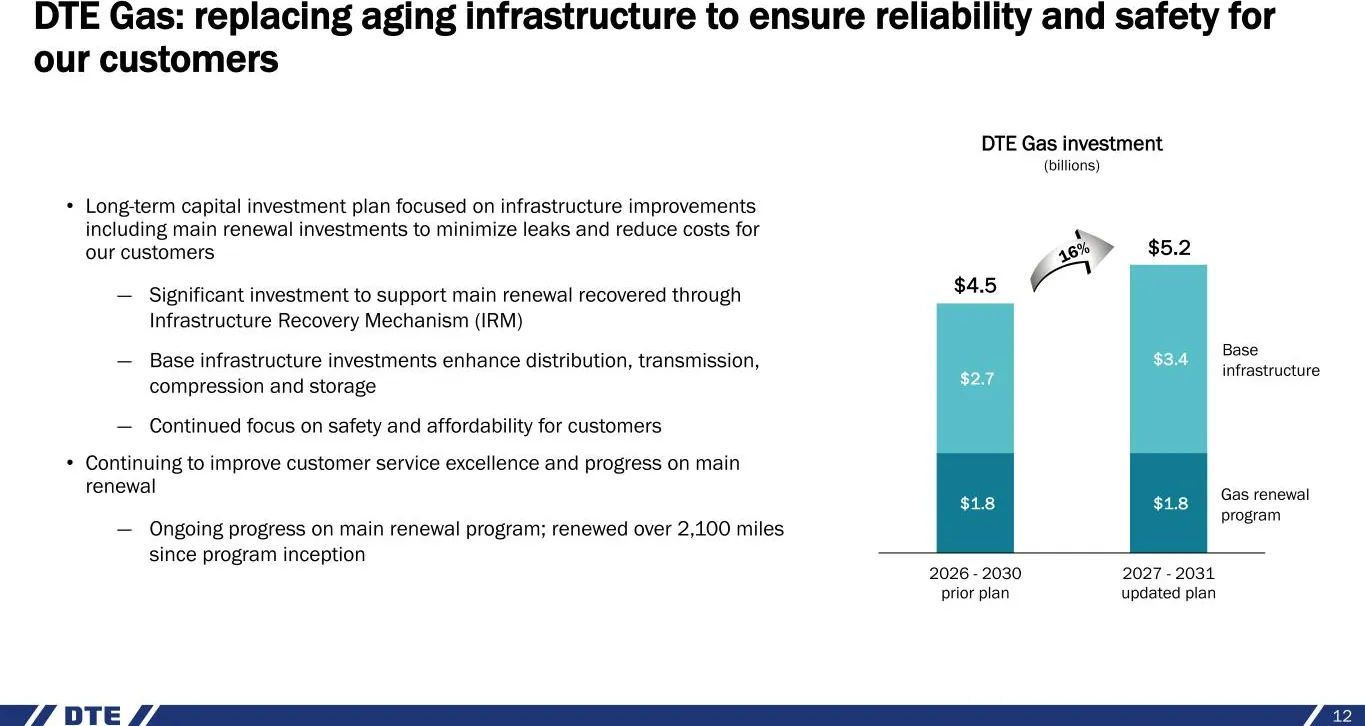
The revised plan calls for approximately US$44.2 billion of utility investment between 2027 and 2031, up nearly 30% from the previous five-year plan. DTE Electric accounts for US$39 billion, including US$23 billion for cleaner generation and US$12 billion for distribution infrastructure, while DTE Gas plans US$5.2 billion to modernise its network and renew ageing mains.
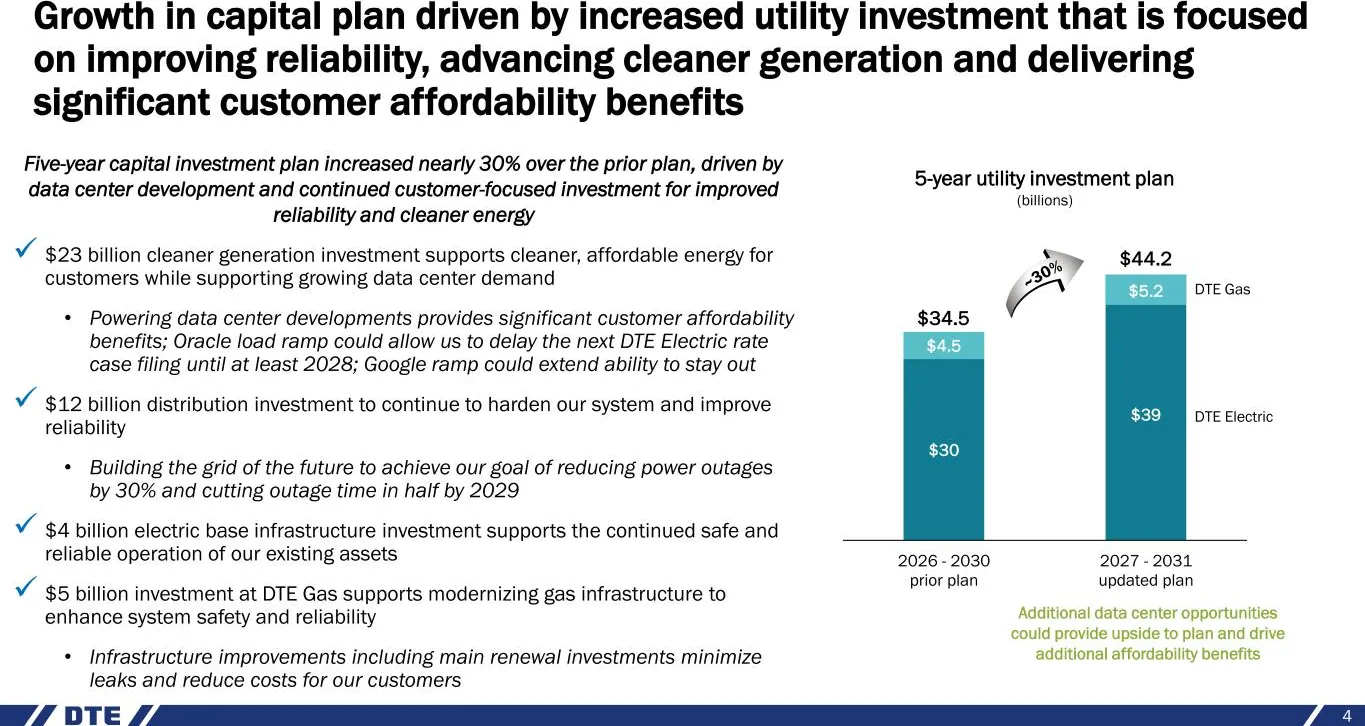
The immediate growth engine is data centre demand. DTE has approved agreements covering 1.4 GW for Oracle and 1 GW for Google, with load expected to ramp from 2027 and 2028 respectively. The company says the Oracle ramp could allow it to delay its next electric rate case until at least 2028, while the Google ramp could extend that period. A further 5 GW to 6 GW of opportunities is in the pipeline, including about 2 GW in advanced discussions.
The strategy follows the Vantage sale agreement, which earlier outlined the planned US$3 billion transaction and the shift towards data centre-led utility investment. In the new presentation, DTE framed the sale as a way to concentrate management and capital on regulated operations while using large-load customers to spread fixed costs across a broader base.
Higher growth target comes with a larger capital burden
DTE reaffirmed its 2026 operating EPS guidance of US$7.59 to US$7.73 and said it remains positioned to reach the top of that range. Operating EPS is a non-GAAP measure that excludes non-recurring items, certain mark-to-market adjustments and discontinued operations; DTE did not provide a comparable future GAAP earnings reconciliation.
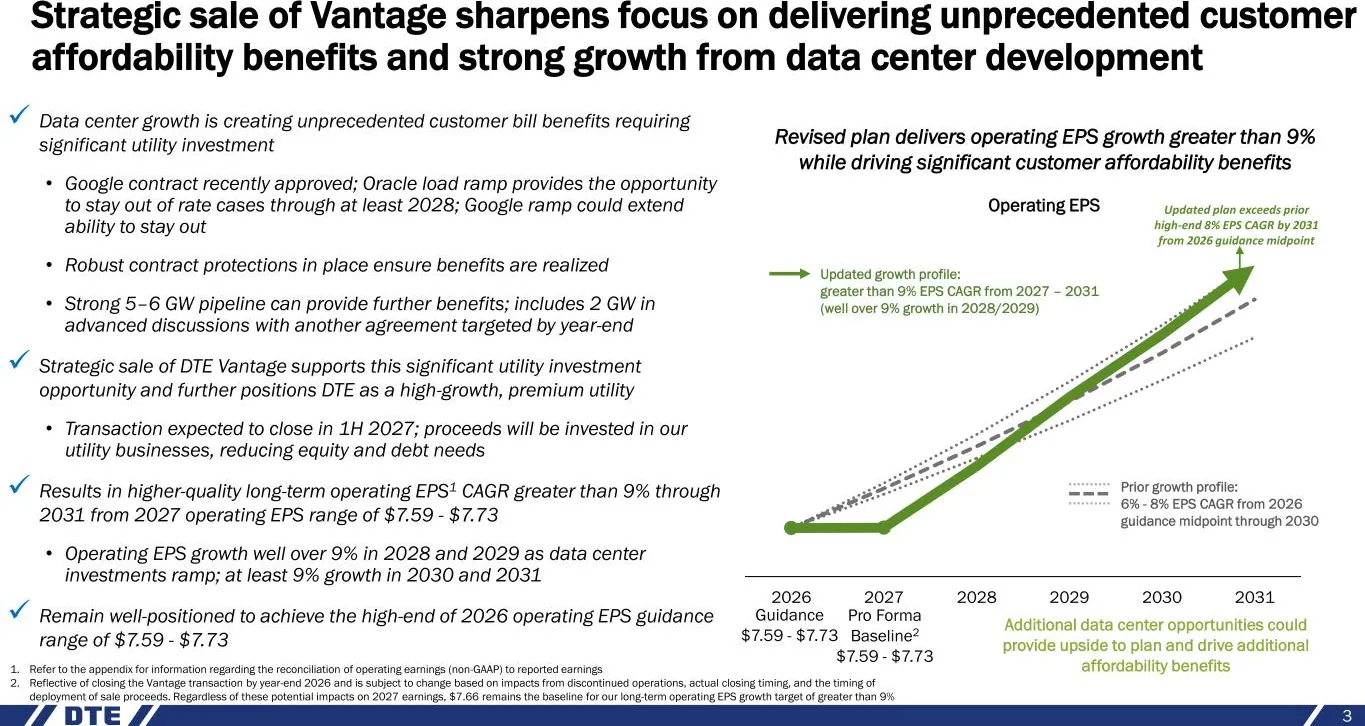
The company now targets operating EPS growth of more than 9% annually from 2027 through 2031, with growth expected to be well above 9% in 2028 and 2029 as data centre investments ramp up. It also plans to increase its dividend by 7% in 2027, while targeting average annual equity issuance of roughly US$1 billion between 2027 and 2031.
Coal retirement and execution remain key tests
The investment programme includes 7.6 GW of solar and wind additions, 2.7 GW of energy storage and 2.1 GW of natural gas generation over five years. DTE reaffirmed the retirement of all coal generation by 2032, including the retirement of 3 GW at the Monroe Power Plant between 2028 and 2032, alongside a planned 177 MW upgrade to the Fermi 2 nuclear plant.
The attraction of the plan is clear on paper: a simpler regulated utility, a large contracted-load opportunity and a higher earnings-growth target. The harder question is whether the Vantage sale closes on schedule and whether the promised affordability benefits survive the scale, timing and financing demands of US$44.2 billion in investment.
Get NYSE:DTE news the moment it breaks
 iPhone & iPad
 Android
Bottom Line?
The plan raises DTE’s growth ambitions, but its success now depends on closing Vantage and converting contracted data centre demand into timely, recoverable utility investment.
Questions in the middle?
- Will the Vantage transaction close in the first half of 2027 and deliver the expected funding flexibility?
- How quickly will Oracle and Google load ramps translate into utility earnings and customer affordability benefits?
- Can DTE execute the larger generation and grid programme without increasing financing pressure or delaying coal retirements?
Sources
1-
Regulation FD Disclosure (opens in a new tab)Official market announcement. SEC filing · DTE Energy Company · 6 Nov 2026 · sec.gov