Zeotech’s Toondoon resource expansion opens a larger AusPozz pathway

Zeotech has more than doubled the JORC-compliant Mineral Resource at its Toondoon Kaolin Project to 45.6 million tonnes, with Measured and Indicated material now accounting for about 80% of the estimate. The headline expansion strengthens the case for further AusPozz evaluation, but remains a resource upgrade rather than a mine plan or production forecast.
- 45.6 Mt Toondoon Mineral Resource, up 124% from June 2025
- 36.7 Mt classified as Measured or Indicated
- Theoretical AusPozz feedstock rises 103.5% to 29.94 Mt
- 135 new drillholes support resource expansion
- No updated pit optimisation, Ore Reserve or second-train development decision

 Add us as a preferred source on Google
Toondoon resource rises to 45.6 Mt
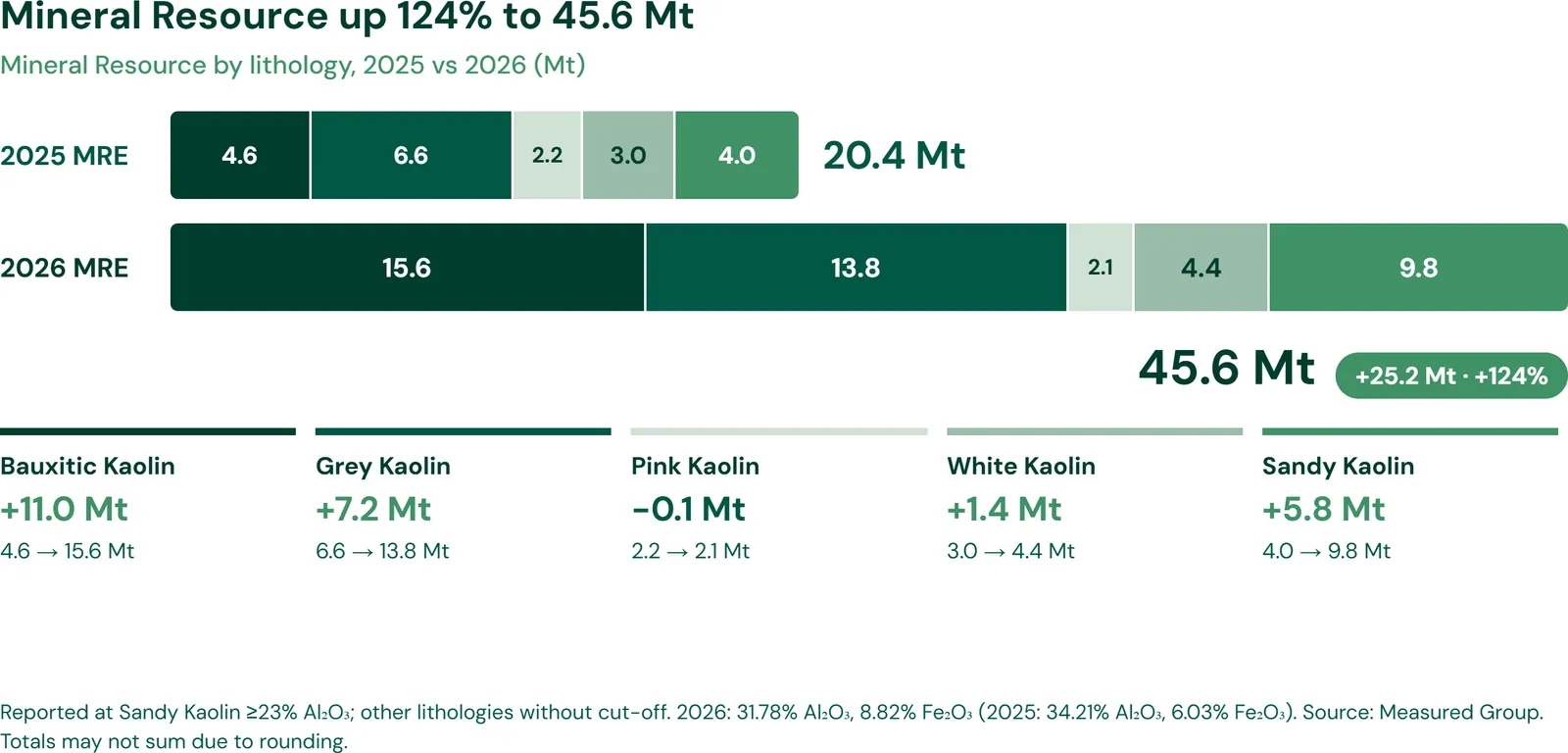
Zeotech Limited (ASX:ZEO) has more than doubled the reported scale of its flagship Toondoon Kaolin Project, lifting the Mineral Resource Estimate from 20.36 million tonnes in June 2025 to 45.6 Mt as at 9 November 2026. The 124% increase gives the Queensland project a substantially larger resource base for its Kaolin DSO and AusPozz strategies, although the average alumina grade has declined from 34.21% to 31.8% while iron oxide has risen from 6.03% to 8.8%.
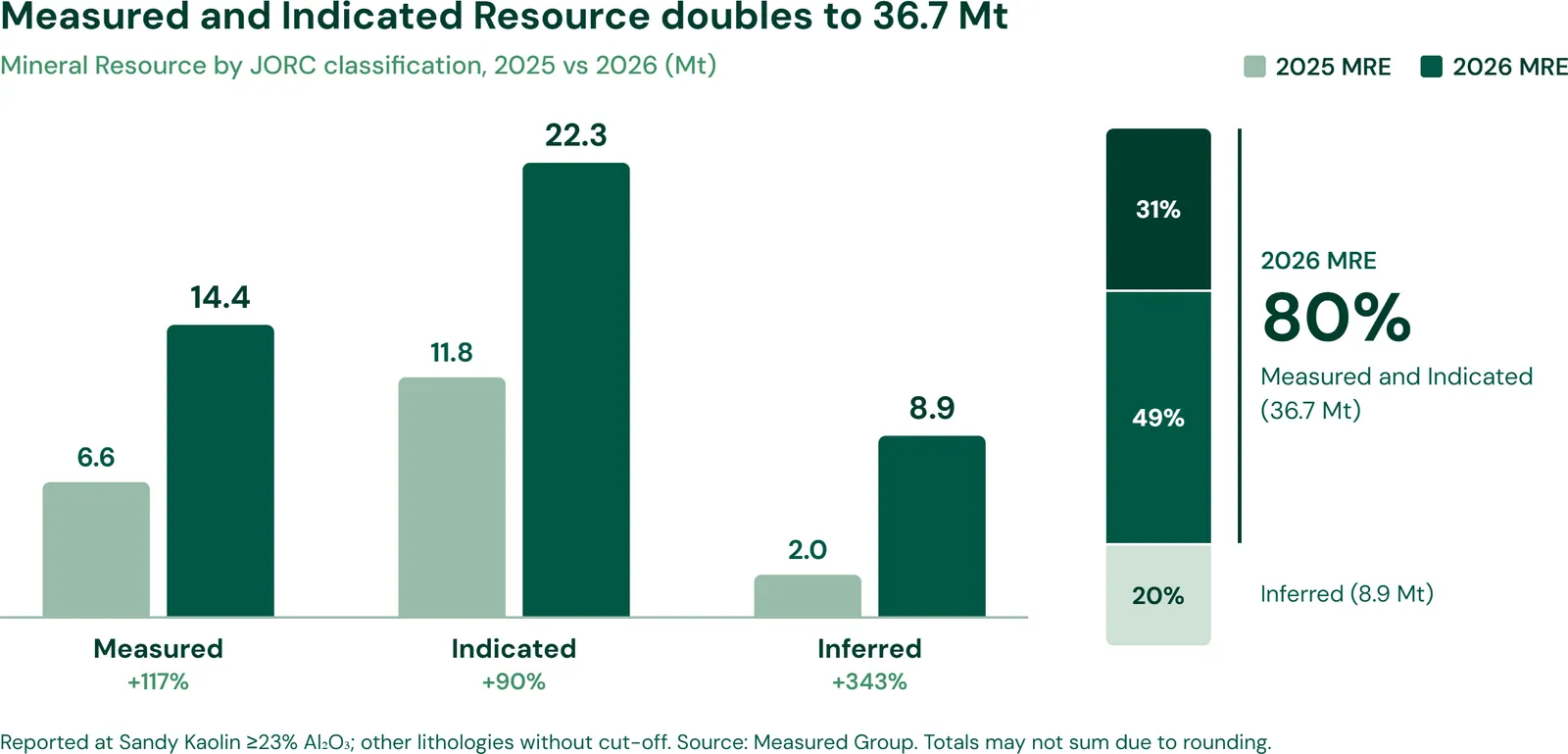
The confidence profile has improved alongside the tonnage. Measured Resources have grown from 6.60 Mt to 14.35 Mt, Indicated Resources from 11.75 Mt to 22.30 Mt, and the combined Measured and Indicated component now totals 36.7 Mt, or approximately 80% of the estimate. The remaining 8.9 Mt is Inferred, concentrated mainly around the margins where drilling is more widely spaced.
Drilling expands the shallow clay sequence
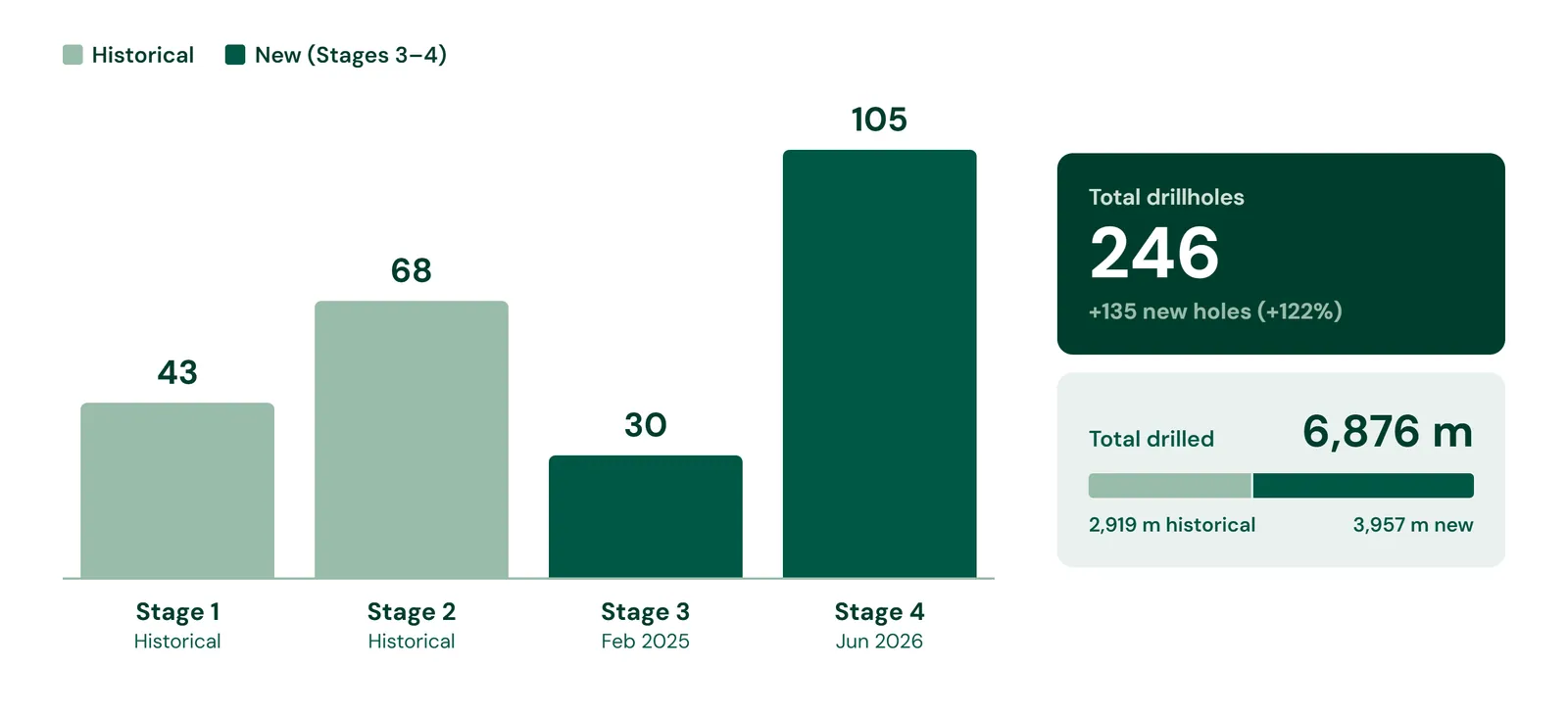
The update draws on 246 drillholes totalling 6,876 metres, including 135 holes for 3,957 metres added through the Stage 3 and Stage 4 campaigns. The work increased confidence within the existing resource footprint and extended the interpreted clay sequence beyond its previous boundaries. It builds on the 110-hole Toondoon drilling campaign, which earlier coverage said had supported resource expansion and operational progress.
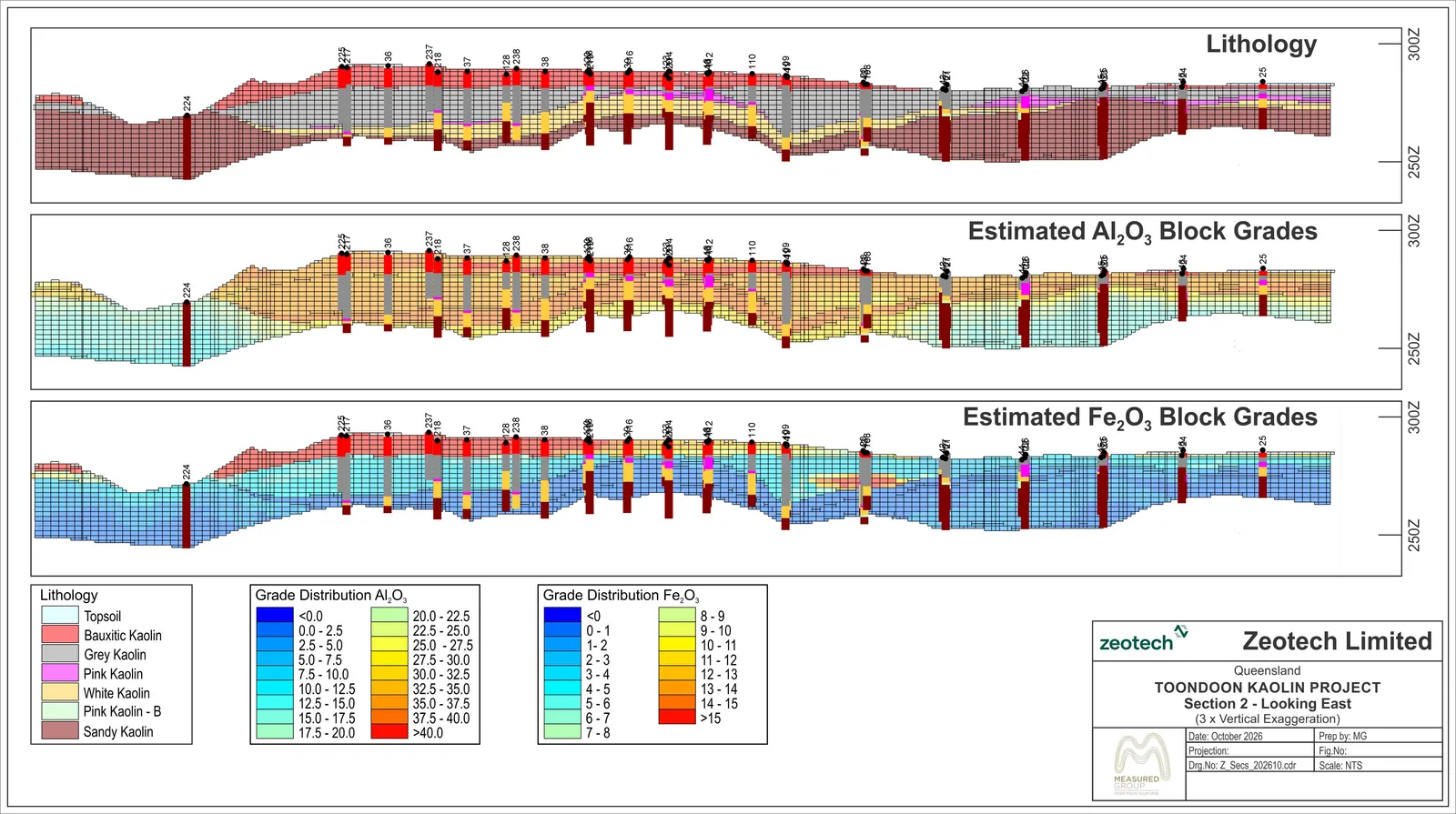
Measured Group's model covers five clay lithologies: Bauxitic, Grey, Pink, White and Sandy Kaolin. The deposit begins at or near surface, averages about 27 metres deep and is considered potentially amenable to conventional open-cut mining. Those characteristics support the project's geological case, but the estimate carries no mining dilution, mining recovery or metallurgical recovery factors, and no updated pit optimisation has been completed.
AusPozz feedstock doubles on a theoretical basis
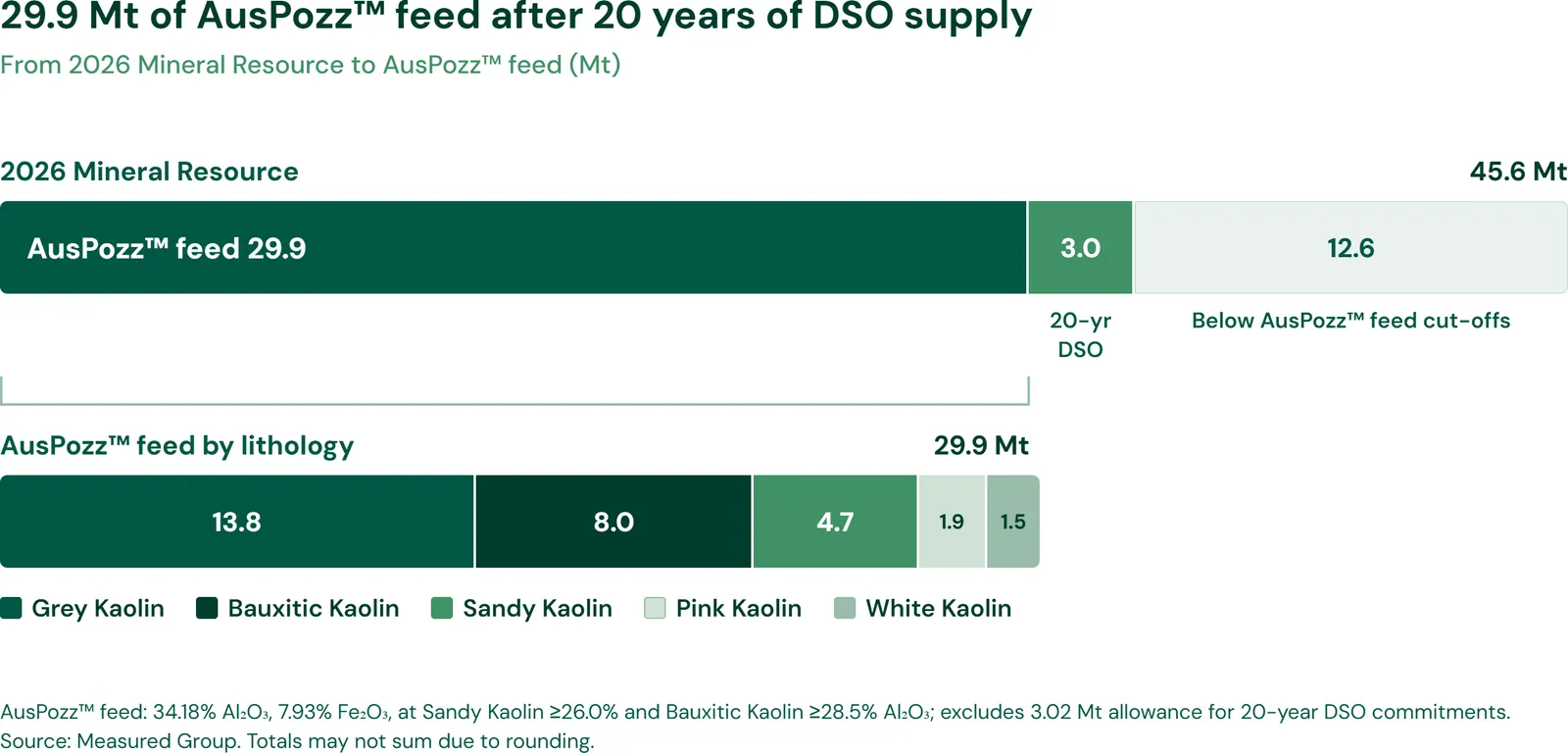
A like-for-like blending assessment increased theoretical AusPozz feedstock from 14.71 Mt to 29.94 Mt, a 103.5% rise. The material meets the assessment's global blended criteria of more than 34% alumina and less than 8% iron oxide, with the 2026 calculation averaging 34.18% alumina and 7.93% iron oxide. Measured and Indicated material accounts for 26.2 Mt, or 87.6% of the theoretical feedstock.
That figure is useful for scoping, but it is not an Ore Reserve, production target or mineable inventory. The calculation includes 3.7 Mt of Inferred material and broader material selections than the June 2025 Preliminary Feasibility Study. About 43% of the theoretical feedstock comes from Bauxitic and Sandy Kaolin, which were not part of the PFS AusPozz feed and require further metallurgical variability testing.
Second AusPozz train remains an option, not a decision
Zeotech said the larger theoretical feedstock base provides a basis for further studies into a second AusPozz manufacturing train beyond the 300,000 tonnes per annum single-train concept assessed in the 2025 PFS. The company has not made a development decision, updated the existing production target or forecast financial information, and has not completed the mine scheduling, vendor testwork, infrastructure review, market analysis or funding assessment that a second train would require.
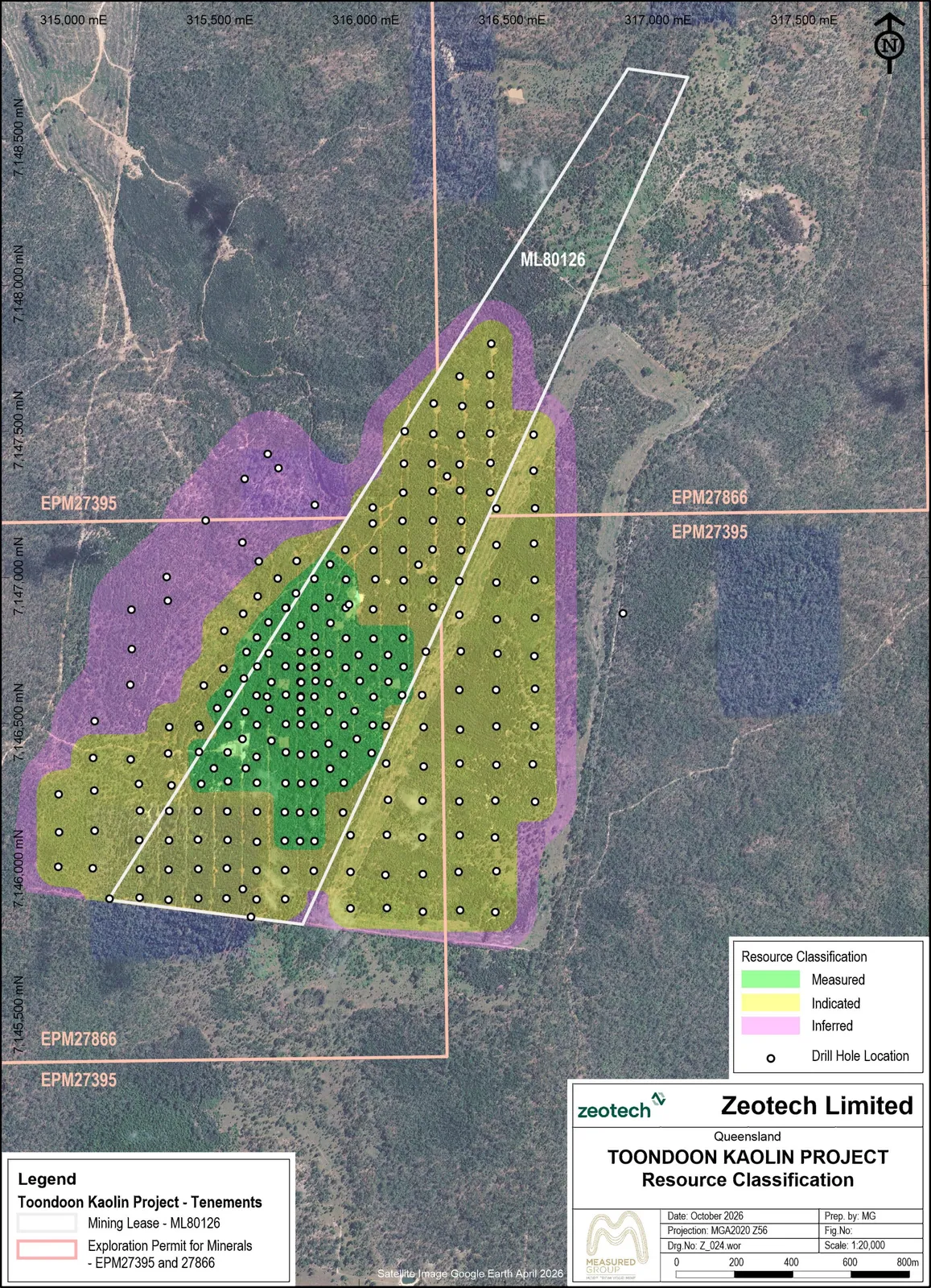
The next phase is therefore practical rather than promotional: updated mine planning and pit optimisation, metallurgical variability work, further density measurements, approvals and economic evaluation. Part of the expanded resource sits outside Mining Lease ML 80126 on EPM 27395 and EPM 27866, requiring additional mining tenure and approvals. ML 80126 itself is valid to 30 November 2030, while expanded operations would also require a site-specific Environmental Authority and a Progressive Rehabilitation and Closure Plan.
Get ASX:ZEO news the moment it breaks
 iPhone & iPad
 Android
Bottom Line?
The resource upgrade materially improves Toondoon’s scale and confidence profile, but the investment case now turns on how much of the 29.94 Mt theoretical feedstock survives mine planning, metallurgical testing, approvals and economic scrutiny.
Questions in the middle?
- How much of the expanded resource can be converted into a mineable inventory after pit optimisation and scheduling?
- Will Bauxitic and Sandy Kaolin perform consistently enough in metallurgical testing to support the broader AusPozz feedstock assessment?
- Can Zeotech secure the tenure, approvals, funding and customer demand needed to justify a second AusPozz production train?
Sources
1-
Mineral Resource Upgrade Delivers 124% Increase to 45.6 Mt (opens in a new tab)Official market announcement. Zeotech Limited · 9 Nov 2026 · zeotech.com.au