Alkane uncovers open copper-zinc sulphide system at Rockley

Alkane Resources has intersected copper-zinc-silver sulphide mineralisation in two holes 300 metres apart at its Rockley Project in New South Wales. The early-stage discovery remains open, with follow-up drilling and electromagnetic surveys planned to test its scale.
- 45.2 metres at 0.55% copper and 1.15% zinc in BEL001
- 33.1 metres at 0.44% copper and 0.54% zinc in BEL002
- Higher-grade intervals reached 4.74% copper and 5.64% zinc
- Mineralisation interpreted along an open 1.7-kilometre limestone horizon
- $102,000 NSW grant helped fund the 849-metre drilling program

 Add us as a preferred source on Google
Belmore East delivers first sulphide intersections
Alkane Resources Limited (ASX:ALK, TSX:ALK, OTCQX:ALKRY) has made a potentially significant exploration hit at its Rockley Project, with two first-pass diamond holes intersecting copper-zinc-silver skarn mineralisation roughly 300 metres apart. The company says the sulphide-bearing horizon remains open both along strike and down dip, although no Mineral Resource has yet been estimated.
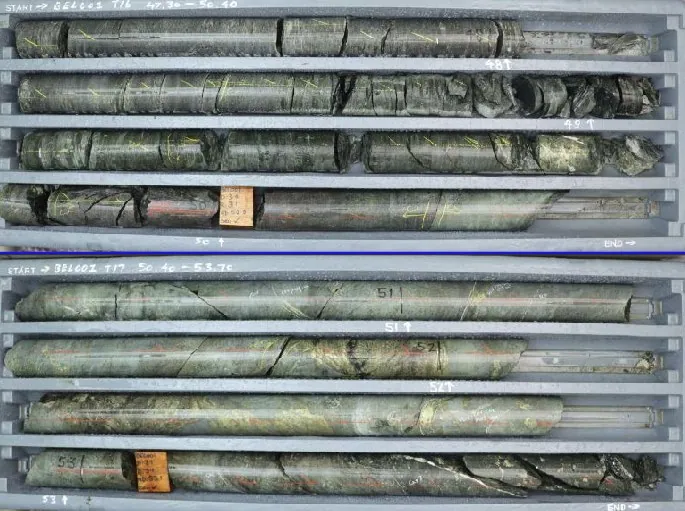
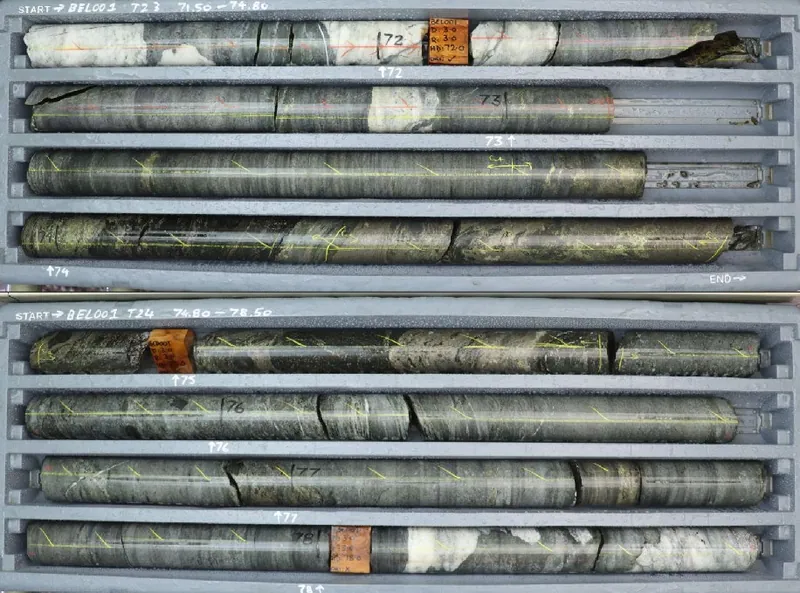
The strongest result came from BEL001, which returned 45.2 metres at 0.55% copper, 1.15% zinc, 0.05 grams per tonne gold and 4.8 grams per tonne silver from 48.3 metres downhole. That interval included 6.8 metres at 1.59% copper and 3.69% zinc, with a narrower 1.3-metre section grading 3.83% copper, 5.13% zinc, 0.54 grams per tonne gold and 23.1 grams per tonne silver.
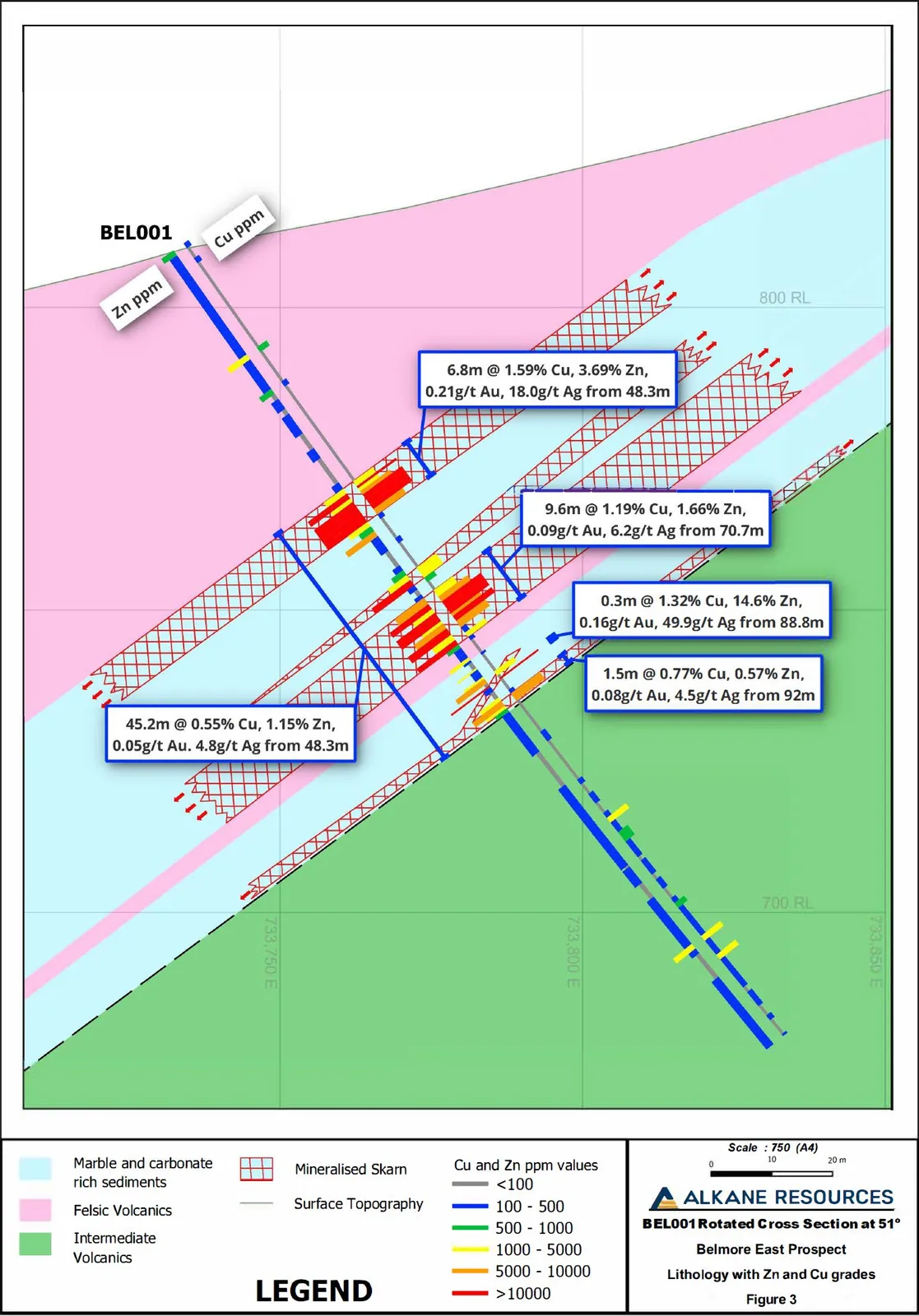
BEL001 also produced a second 9.6-metre zone grading 1.19% copper and 1.66% zinc, including 1.1 metres at 4.74% copper and 5.64% zinc. A separate 0.3-metre sample returned 14.6% zinc and 49.9 grams per tonne silver. True widths at Belmore East are estimated at about 85% of the reported downhole widths.
A second hole supports the geological interpretation
BEL002, drilled approximately 300 metres north of BEL001, intersected 33.1 metres at 0.44% copper, 0.54% zinc, 0.03 grams per tonne gold and 4.6 grams per tonne silver from 25 metres. Its 9.1-metre higher-grade section ran at 1.13% copper and 8.5 grams per tonne silver. Alkane interprets both holes as having cut the same stratigraphic horizon, where calcareous metasediments and limestone were altered to skarn beneath a felsic volcanic unit.
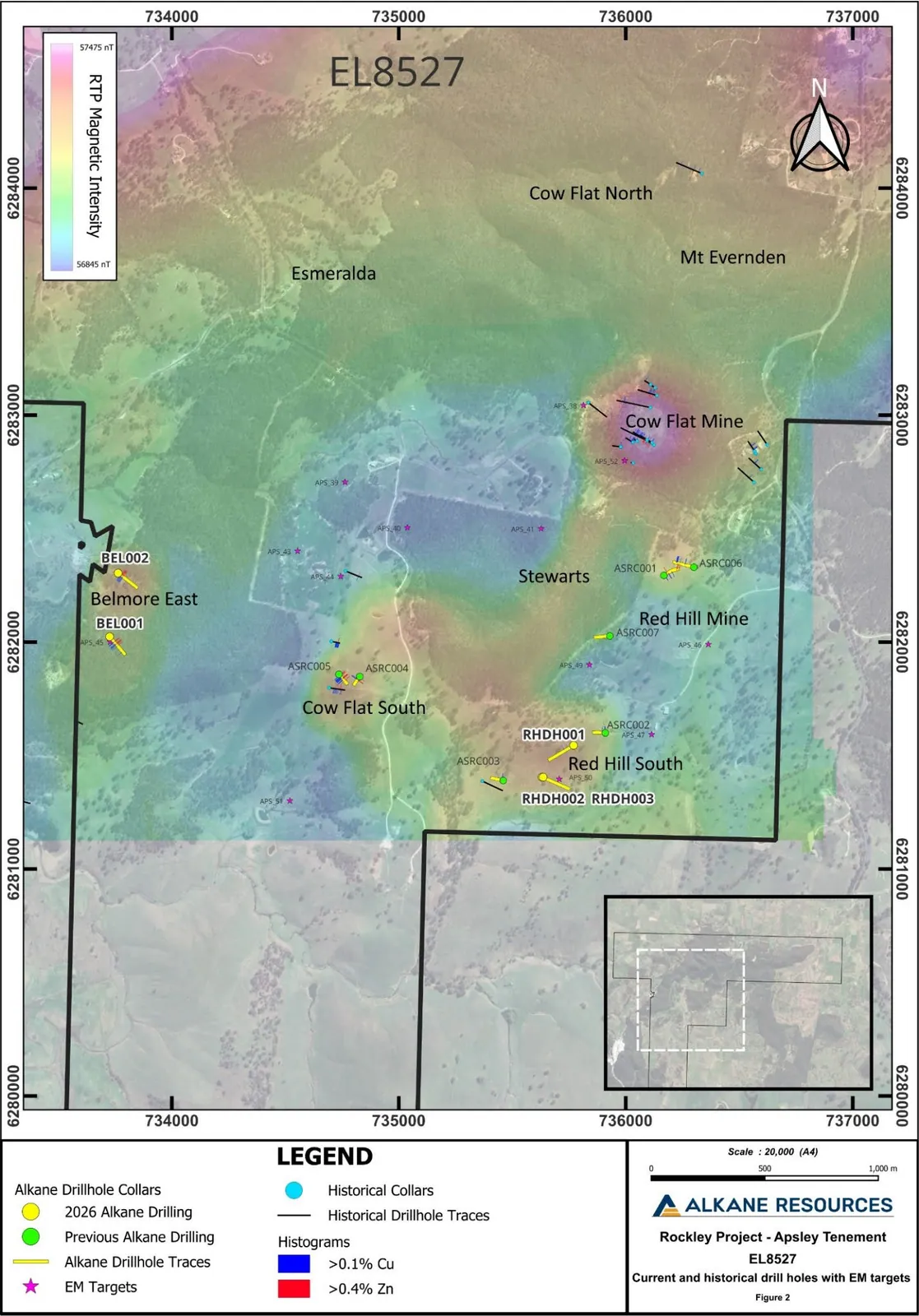
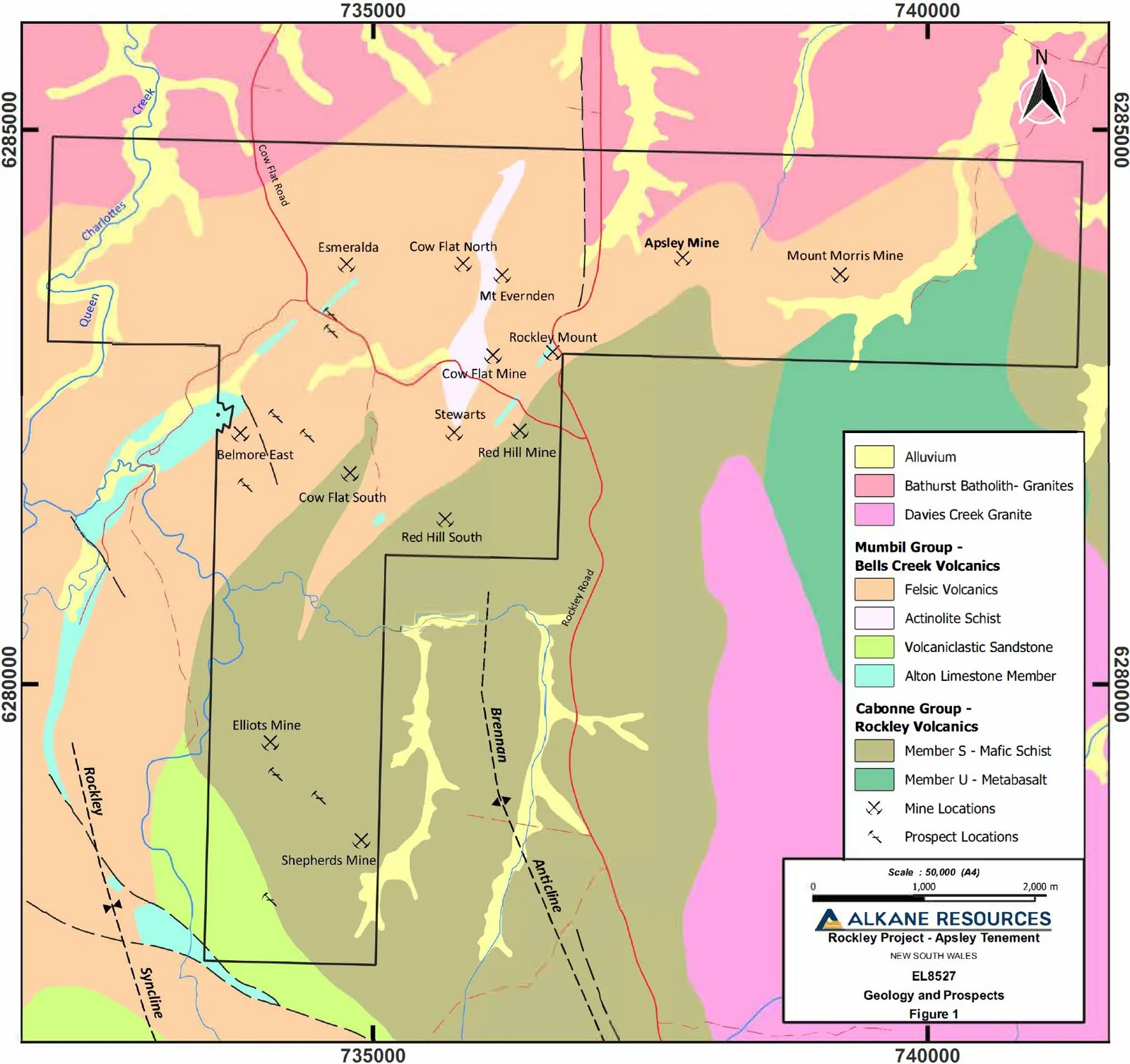
That interpretation matters because the mineralisation is not simply an isolated visible occurrence. Historical workings have been mapped between the holes, while the prospective limestone horizon extends for about 1.7 kilometres to the northeast. The felsic volcanic cover also obscures surface geochemistry across parts of the tenement, leaving several airborne electromagnetic anomalies untested.
Follow-up work shifts to scale and continuity
Alkane plans further drilling at Belmore East, supported by downhole electromagnetic surveys designed to better define massive sulphide accumulations. Fixed-loop ground EM will also test other airborne targets near mapped calc-silicate alteration, while a high-resolution drone magnetic survey and field mapping are planned across Belmore East, Cow Flat South, Stewarts, Red Hill South, Red Hill and Apsley.
The company completed five diamond holes for 849 metres under a $102,000 NSW Critical Minerals and High-Tech Metals Exploration Program grant. Results from Red Hill South were considerably weaker: RHDH001 returned narrow, low-grade intervals, while RHDH002 was not sampled and RHDH003 did not produce significant results. Nic Earner, Alkane's managing director and chief executive, said the team was “highly encouraged” and would now focus on building a picture of the mineralisation's scale (ASX:ALK).
The immediate test is whether the apparent continuity at Belmore East survives step-out drilling with consistent thickness and grade. Until then, the discovery is an exploration result with promising geometry, not yet a defined deposit or development proposition.
Get ASX:ALK news the moment it breaks
 iPhone & iPad
 Android
Bottom Line?
Belmore East has supplied the first meaningful test of a broader sulphide target, but the next drilling campaign must convert geological continuity into enough scale and grade to support a resource.
Questions in the middle?
- Will step-out drilling confirm that the two holes sit on a continuous mineralised horizon?
- Can downhole and ground EM identify additional massive sulphide lenses beneath the felsic volcanic cover?
- Will the Belmore East results ultimately support a maiden Mineral Resource, or remain a localised exploration occurrence?
Sources
1-
Massive Sulphide Discovery at the Rockley Project (opens in a new tab)Official market announcement. Alkane Resources Limited · 18 Nov 2026 · alkres.com