Hamelin finds Day Dawn gold extending beyond Aurora

Hamelin Gold has extended the known Day Dawn gold footprint up to 350 metres northwest of the Aurora Lodes, with anomalous gold in every regional drill hole. The strongest results came from the furthest northwest holes, although the early-stage drilling has not yet established continuity or true widths.
- 2m at 7.04 g/t Au within 12m at 1.35 g/t Au in PDR0054
- 1m at 9.83 g/t Au within 9m at 1.29 g/t Au in PDR0055
- Gold anomalism intersected in every regional RC hole
- Known footprint extended up to 350m northwest of Aurora
- Deeper RC drilling underway after core loss affected diamond tails

 Add us as a preferred source on Google
Regional drilling pushes Day Dawn beyond Aurora
Hamelin Gold Limited (ASX:HMG) has found its strongest regional gold results at the outer edge of the Day Dawn system, extending anomalous mineralisation as far as 350 metres northwest of the Aurora Lodes. Every hole drilled across two exploratory RC lines returned multiple zones above the company’s 0.1 g/t Au reporting cut-off, suggesting the mineralised footprint is broader than the established Aurora and Altus corridor.
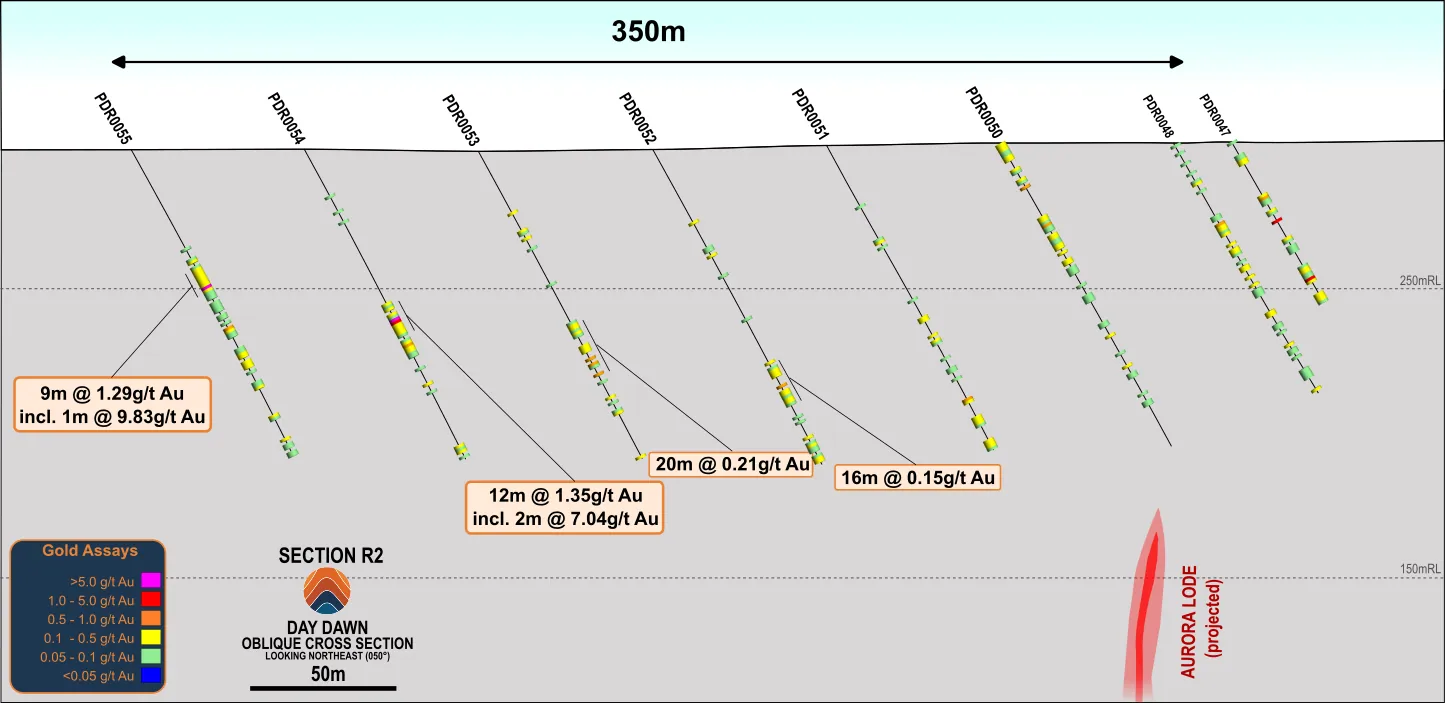
The standout assays came from the two most northwesterly holes on Line 2. PDR0054 returned 2 metres at 7.04 g/t Au from 66 metres within 12 metres at 1.35 g/t, while PDR0055 delivered 1 metre at 9.83 g/t from 54 metres within 9 metres at 1.29 g/t. The company says grades increased towards the northwest, with anomalous gold continuing to the end of Line 1.
High-grade veins sit inside a wider mineralised envelope
The result extends a thread established by the earlier high-grade Day Dawn drilling, which included a 101.5 g/t Au interval at Altus. At the regional lines, however, the picture is less about isolated headline grades than the combination of broad lower-grade anomalism and narrower higher-grade intervals.
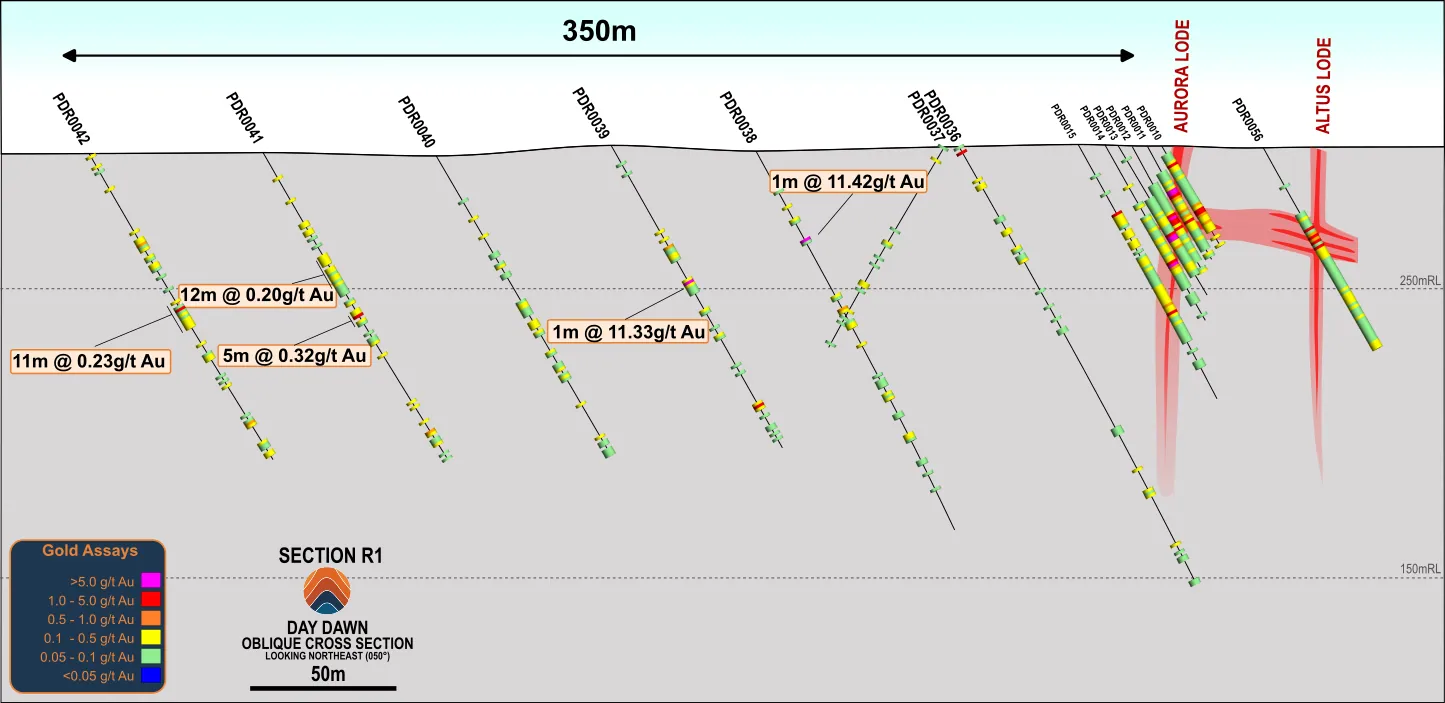
Line 2 included 16 metres at 0.15 g/t Au in PDR0052 and 20 metres at 0.21 g/t in PDR0053. On Line 1, holes more than 300 metres northwest of Aurora returned 12 metres at 0.20 g/t and 5 metres at 0.32 g/t in PDR0041, plus 11 metres at 0.23 g/t in PDR0042. Hamelin interprets that pattern as potentially lying within the mineralised envelope of a larger system, but says further drilling is needed to determine whether the higher-grade veins form continuous parallel lodes.
Exploration evidence remains short of a resource
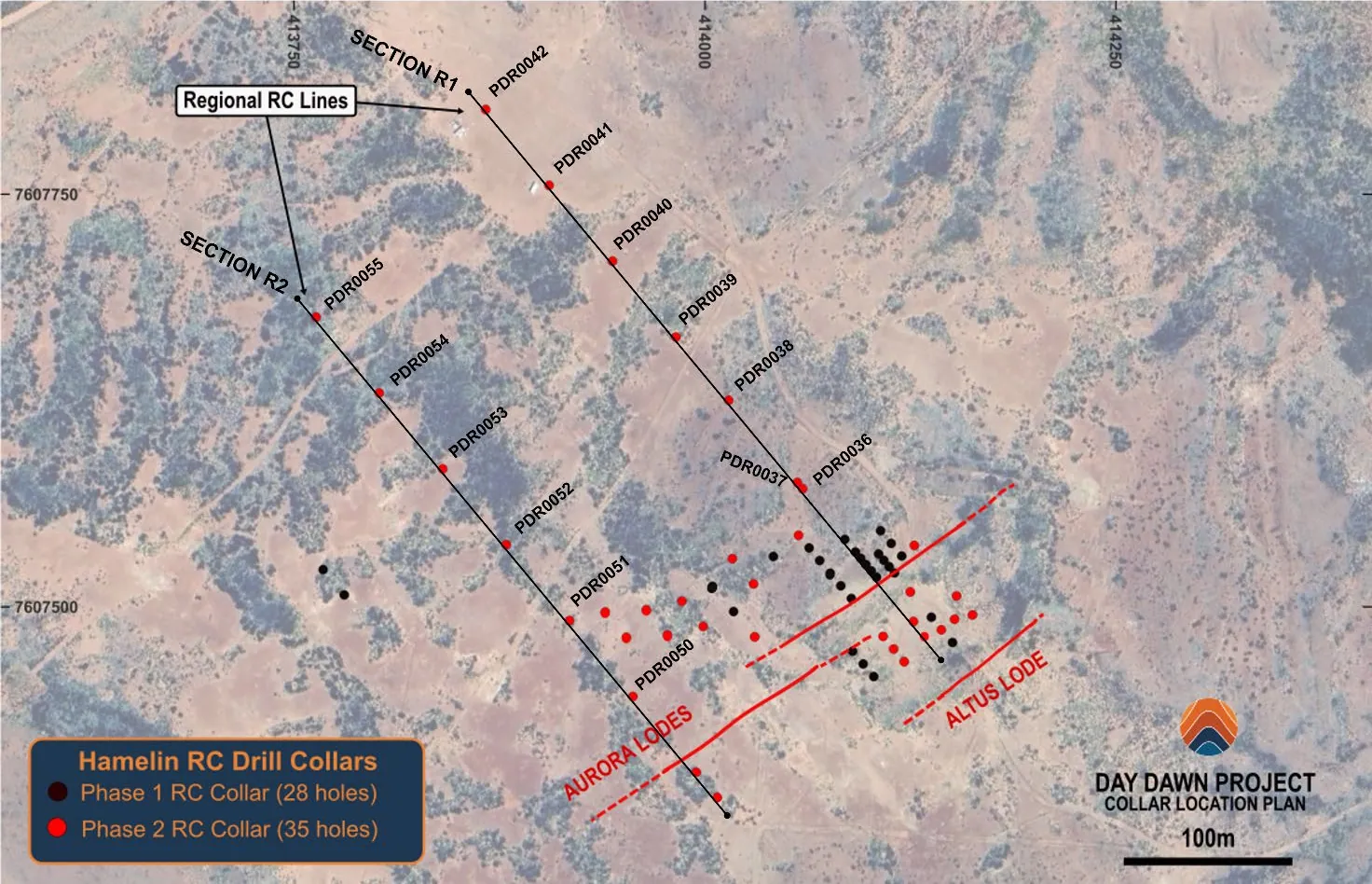
The results complete assays from all 35 holes in the approximately 4,000-metre Phase 2 RC program. Yet the regional lines were drilled at roughly 60-metre collar spacing and are explicitly described as exploratory, not sufficient to establish geological or grade continuity for resource estimation. All reported intersections are downhole lengths, with true widths still undetermined while televiewer data is interpreted.
That distinction matters. The latest assays expand the target and improve the geological case for more drilling, but they do not establish a mineral resource, economic viability or the continuity needed to support one. The company also notes that the orientation and persistence of the narrow high-grade veins remain unresolved.
Deeper Aurora drilling changes method after core loss
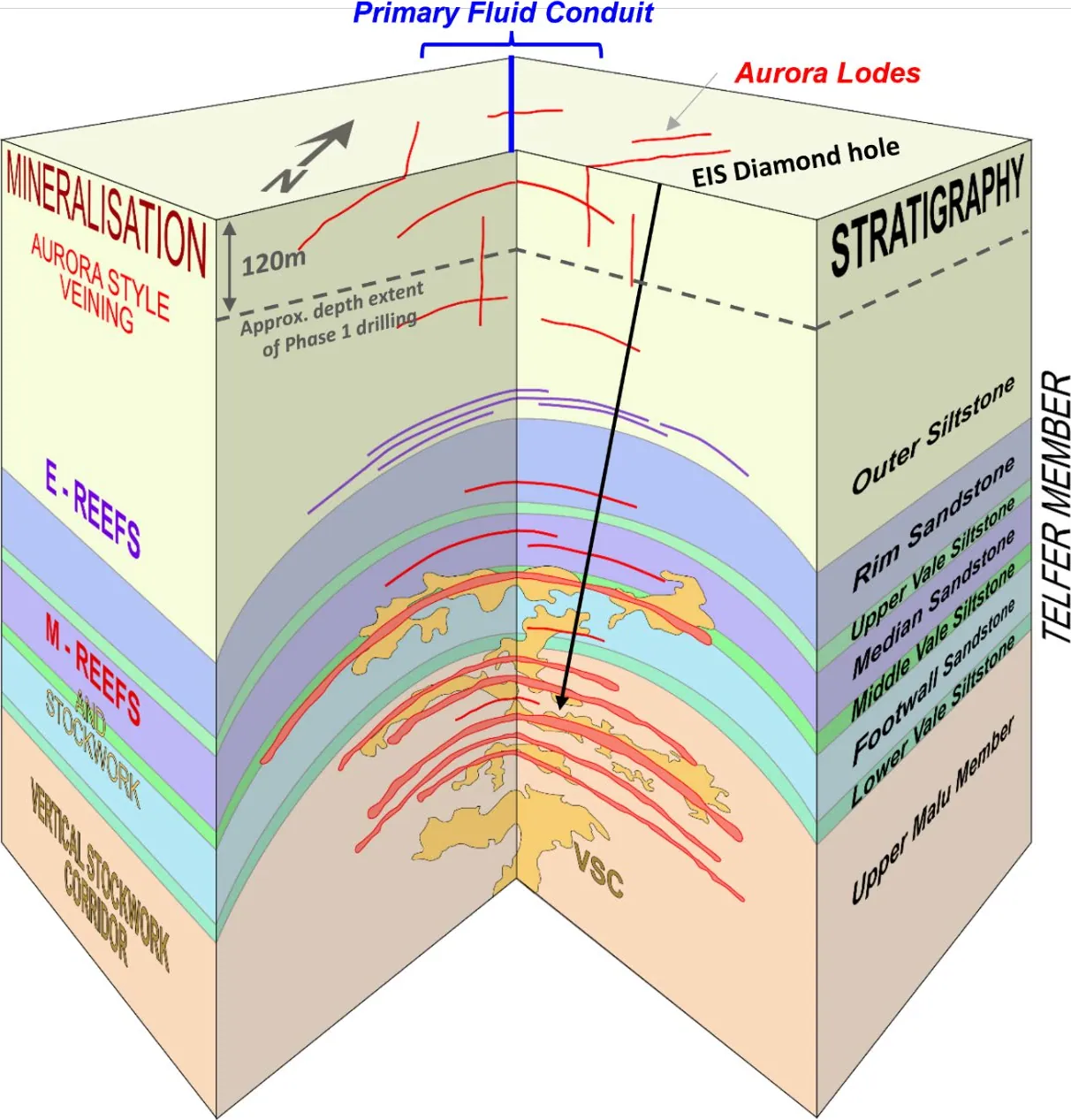
At Aurora, five RC pre-collars produced further anomalous intervals, including 2 metres at 1.67 g/t Au from 128 metres to the end of hole in PDR0025, with a 1-metre higher-grade section at 3.18 g/t. Diamond tails have intersected the interpreted deeper high-grade Aurora lode, but variable hardness between quartz veining and weathered sulphides caused significant core loss through parts of the lode.
Hamelin is responding by using a high-capacity RC rig and expanded drill sumps for the remaining down-plunge holes, with the aim of improving sample recovery through the mineralised zones. Those holes are due to be completed in early December, with results expected in January 2027. Follow-up regional drilling will be designed after the company integrates the new assays with structural modelling and televiewer data, while an EIS co-funded deep diamond program is scheduled for March 2027 to test the system at the prospective Telfer Formation.
Get ASX:HMG news the moment it breaks
 iPhone & iPad
 Android
Bottom Line?
The northwest extension is the clearest new exploration signal, but its value will depend on whether follow-up drilling converts scattered high-grade veins and broad anomalism into continuous, measurable lodes.
Questions in the middle?
- Will follow-up drilling confirm that the northwest high-grade intervals represent continuous parallel lodes?
- What true widths and grade continuity will emerge once the televiewer interpretation and structural model are complete?
- Can the revised RC drilling recover representative samples from the deeper Aurora lode after diamond core loss?
Sources
1-
High-Grade Day Dawn Gold Footprint Expands (opens in a new tab)Official market announcement. Hamelin Gold Limited · 18 Nov 2026 · hamelingold.com.au