Rio Tinto returns to fund LCL’s next PNG copper-gold test

Rio Tinto may spend up to A$46 million exploring LCL Resources’ Liamu project in Papua New Guinea for an eventual 80% stake. The initial programme will target undrilled gold-copper ground at Dada, while Rio Tinto weighs whether to advance the high-grade Ubei prospect.
- Rio Tinto can earn 51% with A$6 million of exploration and 3,000 metres of drilling
- A further A$40 million or a qualifying copper resource and scoping study could lift its stake to 80%
- Initial work centres on undrilled catchments around the Dada porphyry discovery
- Ubei’s Puma prospect has returned rock chips grading up to 367.7g/t gold and 4.29% copper
- LCL will operate the programme and receive a management fee of up to 10% of exploration spending

 Add us as a preferred source on Google
Rio Tinto takes a second look at LCL’s PNG portfolio
Rio Tinto is returning to LCL Resources Limited (ASX:LCL) with a second Papua New Guinea farm-in, this time targeting the Liamu project’s Dada porphyry discovery and Ubei epithermal prospect. Under a binding term sheet, Rio Tinto Exploration (PNG) may earn 51% by sole funding at least A$6 million of exploration, including 3,000 metres of drilling, over five years.
The agreement follows the parties’ Ono Project farm-in, announced in March, and gives LCL exposure to a second Rio Tinto-funded copper-gold programme. If Rio Tinto proceeds beyond the initial stage, it may earn a further 29% by spending A$40 million or by defining a JORC-compliant resource containing at least 1 million tonnes of copper or copper equivalent and completing a scoping study.
Dada becomes the first drilling priority
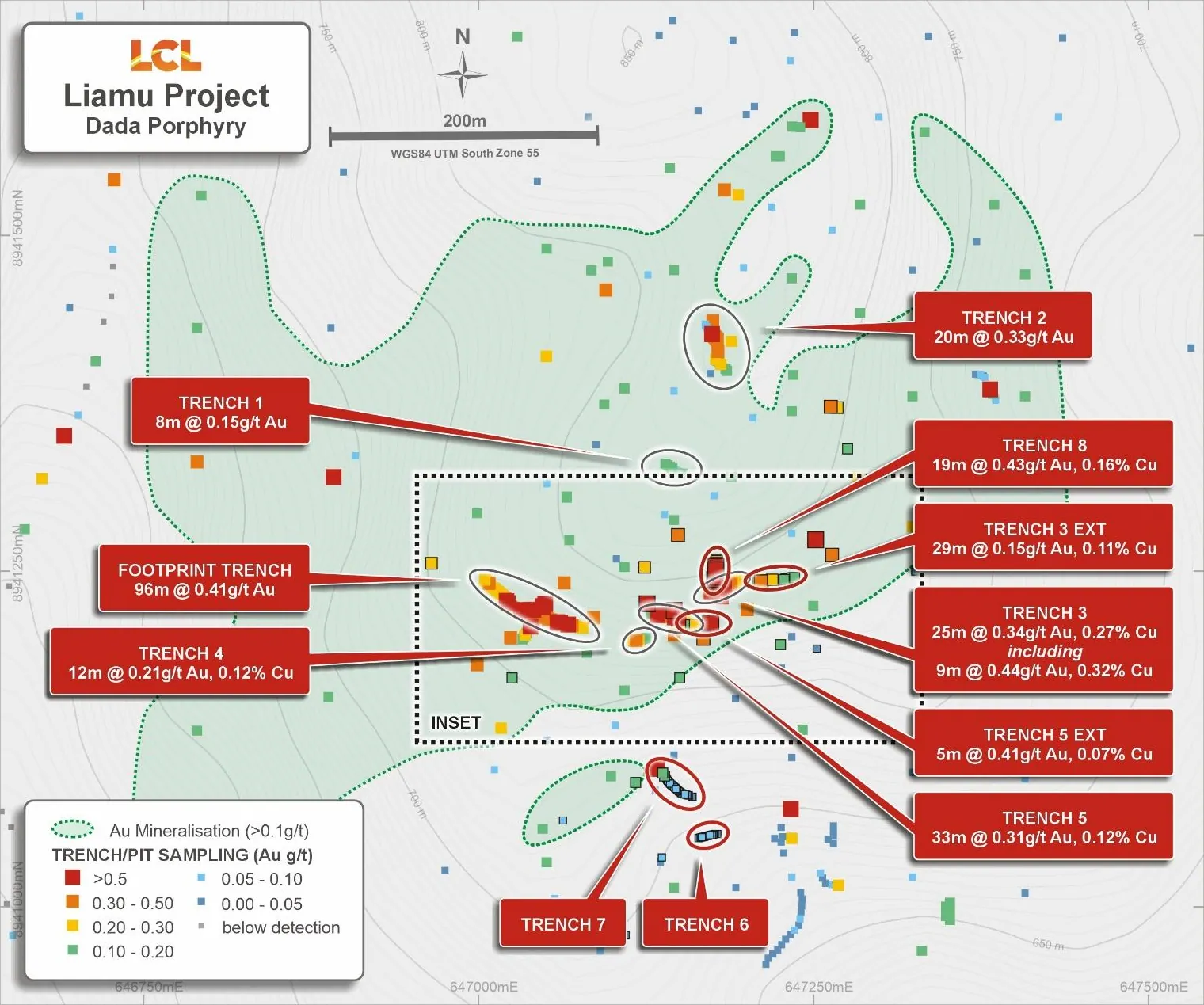
Rio Tinto’s initial focus is planned for anomalous, undrilled catchments around Dada. LCL says trenching has returned 96 metres at 0.41 grams per tonne gold, alongside intervals including 19 metres at 0.43 grams per tonne gold and 0.16% copper. The results sit within a broader soil and pit anomaly measuring about 600 metres by 400 metres, which remains open to the east and west.
The geological attraction is clear but still untested at depth: LCL says several mineralised porphyry intrusions and quartz stockwork veins have been mapped at surface, while the intrusion believed to be responsible for the system has not been identified. Stream sediment results elsewhere in the Liamu area include 5,860 parts per billion gold at the Movei trend and 3,580 parts per billion at Berefana, helping define the wider field Rio Tinto will assess.
Ubei offers a separate high-grade test
Ubei presents a different exploration proposition. The Puma vein corridor contains epithermal gold-copper veins spread across an area of about 4 kilometres by 4 kilometres, with historical rock chips grading as high as 367.7g/t gold and 4.29% copper. LCL’s more recent trenching returned grab samples of up to 7.95g/t gold, 0.51% copper and 31g/t silver, following the company’s high-grade Ubei results earlier this year.
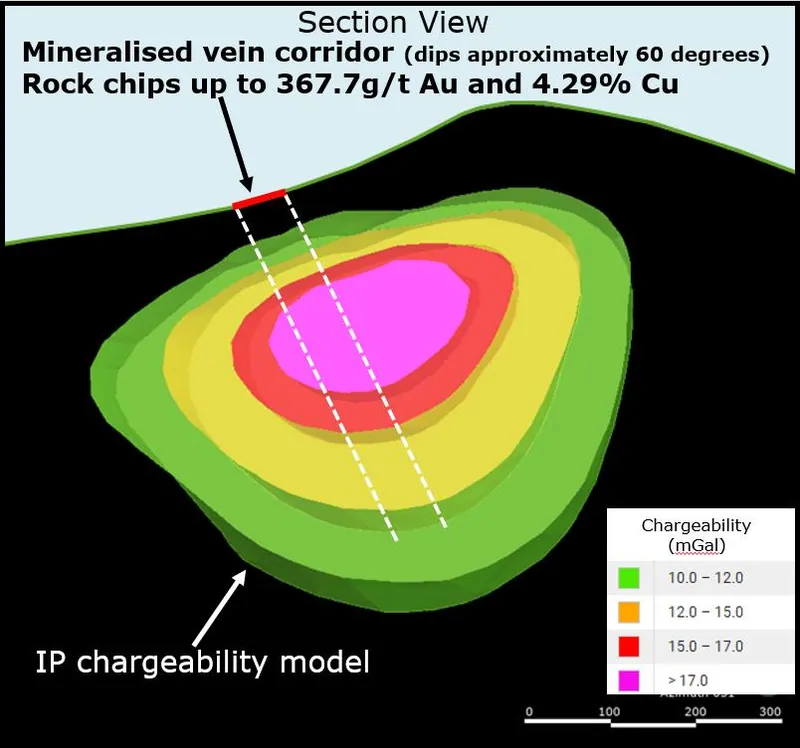
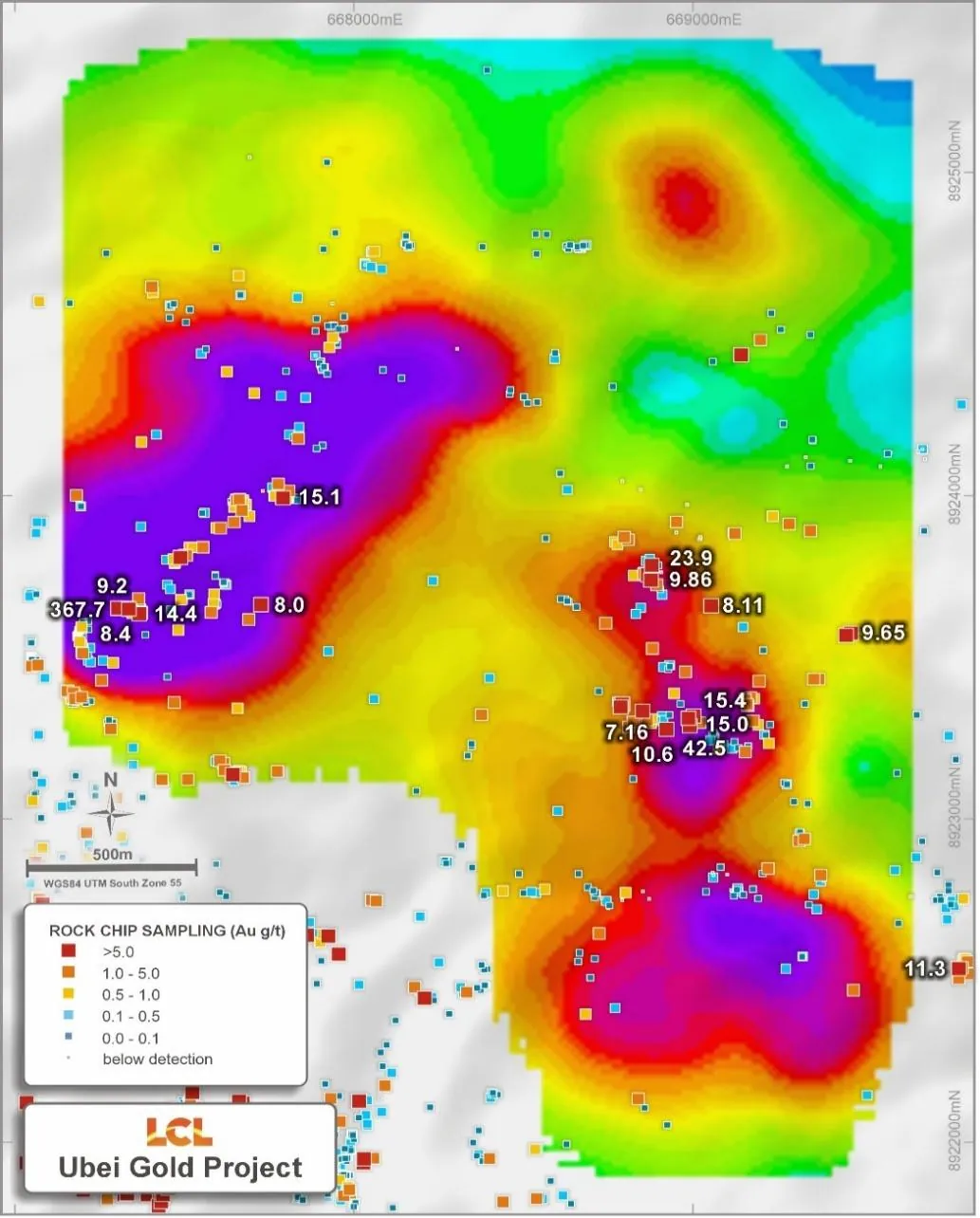
A reprocessed induced-polarisation survey identified a strong chargeability anomaly roughly 200 metres below the high-grade surface samples. The Puma corridor appears to dip towards that anomaly, but the target has never been drilled. Rio Tinto will review further work at Ubei during the first 12 months; if it declines to fund the prospect, the parties may arrange for Ubei to be excluded from the farm-in so LCL can pursue it independently.
Funding relief comes with conditions
LCL will remain operator during the farm-in and can charge a management fee of up to 10% of exploration expenditure, although Rio Tinto can assume operatorship or exercise customary step-in rights. Rio Tinto must first spend at least A$200,000 within 12 months of securing land access, but it can withdraw after meeting that minimum and before completing the initial farm-in.
The arrangement remains subject to PNG ministerial approval, registration against exploration licence EL2432, and the company’s tenure-extension applications not being rejected. Either party may terminate if those conditions are not satisfied or waived by 30 September 2027. LCL says an extension to 10 July 2026 has been recommended for approval and that it has applied for a further extension to 10 July 2028.
For LCL shareholders, the immediate value of the deal is not a defined resource or a guaranteed A$46 million spend. It is a funded path to drilling targets that have been constrained by PNG’s difficult terrain, helicopter costs and limited rig availability. The next meaningful markers are land access, the first A$200,000 commitment, Rio Tinto’s Dada programme and its decision on whether Ubei deserves a drill campaign.
Bottom Line?
The farm-in materially reduces LCL’s near-term drilling burden, but the investment case now turns on approvals, Rio Tinto’s minimum commitment and whether surface anomalies survive the move to drilling.
Questions in the middle?
- Will PNG approvals and the EL2432 tenure extension be completed in time for Rio Tinto to begin its planned work?
- How much of the initial A$6 million programme will be directed to drilling at Dada rather than regional target generation?
- Will Rio Tinto elect to fund Ubei, or will LCL need to advance the undrilled Puma anomaly on its own?
Sources
1-
Rio Tinto backs LCLs Liamu copper gold project in PNG (opens in a new tab)Verified source. Lcl Resources Limited · 26 Oct 2026